Testbank Anatomy and Physiology 2nd Edition from Openstax College
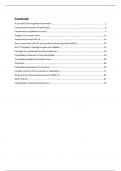
Testbank Anatomy and Physiology 2nd Edition from Openstax CollegeContents Chapter 1 ............................................................................................................................................................................. 1 Chapter 2 ............................................................................................................................................................................. 3 Chapter 3 ............................................................................................................................................................................. 4 Chapter 4 ............................................................................................................................................................................. 5 Chapter 5 ............................................................................................................................................................................. 7 Chapter 6 ............................................................................................................................................................................. 8 Chapter 7 ............................................................................................................................................................................. 9 Chapter 8 .......................................................................................................................................................................... 11 Chapter 9 .......................................................................................................................................................................... 13 Chapter 10 ....................................................................................................................................................................... 16 Chapter 11 ....................................................................................................................................................................... 17 Chapter 12 ....................................................................................................................................................................... 18 Chapter 13 ....................................................................................................................................................................... 19 Chapter 14 ....................................................................................................................................................................... 21 Chapter 15 ....................................................................................................................................................................... 22 Chapter 16 ....................................................................................................................................................................... 23 Chapter 17 ....................................................................................................................................................................... 24 Chapter 18 ....................................................................................................................................................................... 26 Chapter 19 ....................................................................................................................................................................... 27 Chapter 20 ....................................................................................................................................................................... 29 Chapter 21 ....................................................................................................................................................................... 30 Chapter 22 ....................................................................................................................................................................... 31 Chapter 23 ....................................................................................................................................................................... 34 Chapter 24 ....................................................................................................................................................................... 35 Chapter 25 ....................................................................................................................................................................... 36 Chapter 26 ....................................................................................................................................................................... 37 Chapter 27 ....................................................................................................................................................................... 39 Chapter 28 ....................................................................................................................................................................... 40 Chapter 1 1 | P a g e1 Fatty acid catabolism. 3 X-rays. 5 PET scans can indicate how patients are responding to chemotherapy. 6 C 8 A 10 D 12 C 14 C 16 C 18 C 20 D 22 D 24 D 26 C 28 An understanding of anatomy and physiology is essential for any career in the health professions. It can also help you make choices that promote your health, respond appropriately to signs of illness, make sense of health-related news, and help you in your roles as a parent, spouse, partner, friend, colleague, and caregiver. 30 Chemical, cellular, tissue, organ, organ system, organism. 32 When you are sitting at a campfire, your sense of smell adapts to the smell of smoke. Only if that smell were to suddenly and dramatically intensify would you be likely to notice and respond. In contrast, the smell of even a trace of smoke would be new and highly unusual in your residence hall, and would be perceived as danger. 34 In a sealed bottle of sparkling water, carbon dioxide gas is kept dissolved in the water under a very high pressure. When you open the bottle, the pressure of the gas above the liquid changes from artificially high to normal atmospheric pressure. The dissolved carbon dioxide gas expands, and rises in bubbles to the surface. When a bottle of sparkling water is left open, it eventually goes flat because its gases continue to move out of solution until the pressure in the water is approximately equal to atmospheric pressure. 36 The four components of a negative feedback loop are: stimulus, sensor, control center, and effector. If too great a quantity of the chemical were excreted, sensors would activate a control center, which would in turn activate an effector. In this case, the effector (the secreting cells) would be adjusted downward. 2 | P a g e38 If the body were supine or prone, the MRI scanner would move from top to bottom to produce frontal sections, which would divide the body into anterior and posterior portions, as in “cutting” a deck of cards. Again, if the body were supine or prone, to produce sagittal sections, the scanner would move from left to right or from right to left to divide the body lengthwise into left and right portions. be performed repeatedly. Chapter 2 1 The mass number is the total number of protons and neutrons in the nucleus of an atom. 3 The water hydrolyses, or breaks, the glycosidic bond, forming two monosaccharides. 4 D 6 A 8 B 10 C 12 B 14 A 16 C 18 A 20 B 22 D 24 B 26 A 28 B 30 D 32 B 33 These four elements—oxygen, carbon, hydrogen, and nitrogen—together make up more than 95 percent of the mass of the human body, and the body cannot make elements, so it is helpful to have them in consumables. 35 Magnesium’s 12 electrons are distributed as follows: two in the first shell, eight in the second shell, and two in its valence shell. According to the octet rule, magnesium is unstable (reactive) because its valence shell has just two electrons. It is therefore likely to 3 | P a g eparticipate in chemical reactions in which it donates two electrons. 37 Water is a polar molecule. It has a region of weakly positive charge and a region of weakly negative charge. These regions are attracted to ions as well as to other polar molecules. Oils are nonpolar, and are repelled by water. 39 It is not. An exchange reaction might be AB + CD → AC + BD or AB + CD → AD + BC . In all chemical reactions, including exchange reactions, the components of the reactants are identical to the components of the products. A component present among the reactants cannot disappear, nor can a component not present in the reactants suddenly appear in the products. 41 Lemon juice is one hundred times more acidic than orange juice. This means that lemon juice has a one hundred-fold greater concentration of hydrogen ions. 43 Maltose contains 12 atoms of carbon, but only 22 atoms of hydrogen and 11 atoms of oxygen, because a molecule of water is removed during its formation via dehydration synthesis. Chapter 3 1 Higher temperatures speed up diffusion because molecules have more kinetic energy at higher temperatures. 3 an enzyme 5 the spindle 6 B 8 C 10 D 12 A 14 A 16 C 18 A 20 C 22 C 24 B 26 B 28 C 30 Only materials that are relatively small and nonpolar can easily diffuse through the lipid 4 | P a g ebilayer. Large particles cannot fit in between the individual phospholipids that are packed together, and polar molecules are repelled by the hydrophobic/nonpolar lipids that line the inside of the bilayer. 32 These four phenomena are similar in the sense that they describe the movement of substances down a particular type of gradient. Osmosis and diffusion involve the movement of water and other substances down their concentration gradients, respectively. Filtration describes the movement of particles down a pressure gradient, and the movement of ions away from like charge describes their movement down their electrical gradient. 34 Peroxisomes and lysosomes are both cellular organelles bound by lipid bilayer membranes, and they both contain many enzymes. However, peroxisomes contain enzymes that detoxify substances by transferring hydrogen atoms and producing H2O2, whereas the enzymes in lysosomes function to break downand digest various unwanted materials. 36 During cell division, one cell divides to produce two new cells. In order for all of the cells in your body to maintain a full genome, each cell must replicate its DNA before it divides so that a full genome can be allotted to each of its offspring cells. If DNA replication did not take place fully, or at all, the offspring cells would be missing some or all of the genome. This could be disastrous if a cell was missing genes necessary for its function and health. 38 Transcription is really a “copy” process and translation is really an “interpretation” process, because transcription involves copying the DNA message into a very similar RNA message whereas translation involves converting the RNA message into the very different amino acid message. The two processes also differ in their location: transcription occurs in the nucleus and translation in the cytoplasm. The mechanisms by which the two processes are performed are also completely different: transcription utilizes polymerase enzymes to build mRNA whereas translation utilizes different kinds of RNA to build protein. 40 A cyclin is one of the primary classes of cell cycle control molecules, while a cyclin- dependent kinase (is one of a group of molecules that work together with cyclins to determine progression past cell checkpoints. By interacting with many additional molecules, these triggers push the cell cycle forward unless prevented from doing so by “stop” signals, if for some reason the cell is not ready. 42 Embryonic stem cells derive from human embryos, which are destroyed to obtain the cells. The destruction of human embryos is an ethical problem. And, the DNA in an embryonic stem cell would differ from the DNA of the person being treated, which could result in immune problems or rejected of tissue. Chapter 4 1 Most somatic stem cells give rise to only a few cell types. 3 Skeletal muscle cells are striated. 5 Approximately one month. 7 C 5 | P a g e9 B 11 A 13 C 15 B 17 B 19 B 21 A 23 D 25 B 27 C 29 B 31 The four types of tissue in the body are epithelial, connective, muscle, and nervous. Epithelial tissue is made of layers of cells that cover the surfaces of the body that come into contact with the exterior world, line internal cavities, and form glands. Connective tissue binds the cells and organs of the body together and performs many functions, especially in the protection, support, and integration of the body. Muscle tissue, which responds to stimulation and contracts to provide movement, is divided into three major types: skeletal (voluntary) muscles, smooth muscles, and the cardiac muscle in the heart. Nervous tissue allows the body to receive signals and transmit information as electric impulses from one region of the body to another. 33 Synovial membranes are a type of connective tissue membrane that supports mobility in joints. The membrane lines the joint cavity and contains fibroblasts that produce hyaluronan, which leads to the production of synovial fluid, a natural lubricant that enables the bones of a joint to move freely against one another. 35 Blood is a fluid connective tissue, a variety of specialized cells that circulate in a watery fluid containing salts, nutrients, and dissolved proteins in a liquid extracellular matrix. Blood contains formed elements derived from bone marrow. Erythrocytes, or red blood cells, transport the gases oxygen and carbon dioxide. Leukocytes, or white blood cells, are responsible for the defense of the organism against potentially harmful microorganisms or molecules. Platelets are cell fragments involved in blood clotting. Some cells have the ability to cross the endothelial layer that lines vessels and enter adjacent tissues. Nutrients, salts, and waste are dissolved in the liquid matrix and transported through the body. 37 The cells in the dish are cardiomyocytes, cardiac muscle cells. They have an intrinsic ability to contract. When they link up, they form intercalating discs that allow the cells to communicate with each other and begin contracting in synchrony. 39 Neurons are well suited for the transmission of nerve impulses because short 6 | P a g e
Escuela, estudio y materia
- Institución
- Chamberlian School Of Nursing
- Grado
- Desconocido
Información del documento
- Subido en
- 24 de noviembre de 2023
- Número de páginas
- 41
- Escrito en
- 2023/2024
- Tipo
- Examen
- Contiene
- Desconocido
Temas
-
testbank