Work in the 21st century
An introducti on to industrial and organizati onal psychology; fourth editi on
Frank J. Landy & Jeffrey M. Conte
1. What is industrial and organizational psychology
1.1 The importance of IO psychology
Work is important because it occupies much of our time, provides us with a livelihood(money), and
defines how we feel about ourselves. Work is defining their value to society, their family and
themselves characteristic of the way people gauge. ‘Good work’ enables workers to develop and use
skills to benefit others. Good work is work that exhibits a high level of expertise, and it entails regular
concern with the implications and applications of an individual’s work for the wider world (Gardner).
Compromised work: work that is not illegal or unethical, but that still undermines the core values of a
trade or a profession. The interesting aspect of good and bad work is that the individual worker and
the employer together have the power to define good work or to transform good work into bad and
vice versa. Authenticity is a trend of interest to IO psychologists: an emotionally appropriate,
significant, purposive and responsible mode of human life.
IO psychology applies psychological principles, theory and research to the workplace and to all
aspects of life that are touched by work. Personality has influence on work behavior, but also,
personality is often influenced by non-work events. IO psychologists have become increasingly
interested in building sustainable and environmentally conscious organizations. A broad and
ambitious extension of IO psychology is to bring their expertise to bear on humanitarian issues,
especially poverty reduction and the promotion of decent work. SIOP (society for industrial and
organizational psychology) is the primary professional membership organization for IO psychologists.
I-O psychologists are:
- Scientists : who derive principles of individual, group and organizational behavior through
research. They are employed at public organizations and private organizations
- Teachers: who train in the research and application of I-O psychology
- Consultants and staff psychologists: Who develop scientific knowledge and apply it to the
solution of problems at work. They are employed in public and private organizations and
consulting companies.
Common areas of concentration for IO psychologists:
- Selection and replacement; developing and validating tests, analyzing job content
- Training and development; identifying training and development needs, forming and
implementing training programs, career planning
- Organizational development; analyzing organizational structure, maximizing satisfaction and
effectiveness of employees, facilitating organizational change.
- Performance measurement
- Quality of work life; identifying factors associated with job satisfaction, reducing stress,
redesigning jobs to make them more meaningful.
- Engineering psychology; designing work environments, optimizing person-machine
effectiveness, making workplaces safer.
The bottom line in any organization is performance.
Performance (job performance, creativity), motivation, leadership and well-being are the key
dependent variables in the I-O research program at the RuG.
,Traditionally, IO psychology has been divided into three major concentrations:
- Personnel psychology (part of human resources management); addresses issues such as
recruitment, selection, training, performance appraisal, promotion, transfer and termination.
The approach assumes that people are consistently different in their attributes and work
behaviors and that information about these differences can be used to predict, maintain and
increase work performance and satisfaction, goal is to find the best person to the job.
- Organizational psychology; combines research and ideas form social psychology and
organizational behavior. It addresses the emotional and motivational side of work. It includes
topics as attitudes, fairness, motivation, stress, leadership, teams and broader aspects. It
concentrates on how people react to work and the action plans that develop as a result of
those reactions. The issue is the extent to which characteristics of people match the
characteristics or demands of the work.
- Human engineering/human factors psychology); the study of the capacities and limitations of
humans with respect to particular environment, task is to develop an environment that is
compatible with the characteristics of the worker (opposite of the personnel approach).
Scientist-practitioner model:
Using scientific tools and research in the practice of I-O psychology
(vs. relying on ‘best practices’ or experiences)
Newsletter of SIOP: TIP (the industrial organizational psychologist).
Common issues in I-O psychology
- Employment discrimination
- Psychosocial or physical health (stress, safety, joblessness)
- The concept of work-life balance
- The new world of work (the world is changing )
Special issues in I-O psychology:
- Sports (teamwork, coordination)
- Humanitarian (micro-credit, U.N. policy)
- Conflict areas (Iraqi Police Force ; terrorism)
- Special assessment (spy recruiting, need very special people for that)
Why study IO psychology?
Knowledge about IO psychology pays off for your own professional career, regardless of
profession
IO psychology applies theories, models, and principles from all areas of psychology
Studying IO psychology improves your understanding of how individuals and groups act, think
and feel in organizations.
Our lay theories and beliefs about I-O psychology may be false, or may be correct only under
a narrow set of circumstances.
The importance of understanding the younger worker:
A great deal of research is focused on older adults. It’s a mistake to ignore the young workers for
several reasons: (1) they represent a large portion of a population of part time workers, and part time
works becomes more common (2) one’s first job is likely to have a substantial influence on the filters
through which subsequent work experiences are viewed.
The little research focused on younger workers, suggest the following:
Satisfying: using current skills or develop new skills
If not: cynicism and lack of interest in the work can occur
, Education levels are higher than their parents’. They are more sophisticated technologically,
tend to see the world globally, they have no problems being connected 24 hours a day and
are used to multi-cultural environments.
1.2 the past, present and future of IO psychology
Hugo Munsterberg and James McKeen Cattell had a major influence on the eventual emergence of
IO psychology. Munsterberg was one of the first to measure abilities in workers and tie those to
performance. Cattell was one of the first to realize the importance of differences among individuals as
a way of predicting behavior. During WO I Scott and Bingham enlist in Army and develop group
intelligence tests. Lillian Gilbreth was the first PhD in industrial psychology for her research applying
the scientific management to educational institutions. Scientific management was based on the
principles of time and motion studies. Leaders of companies and government began to ask help from
industrial psychologists.
Industrial psychology underwent a change when Elton Mayo began studying not the efficiency of
workers, but their emotions. He proposed that there was a mental state knowns as revery obsession
(mind-numbing, repetitive and difficult work causes unhappiness, prone to resist management
attempts to increase productivity and sympathetic to labor unions (vakbonden). Then the Hawthorne
studies began. They discovered that attention affected behavior and not their others interventions.
The results of this studies resulted in a new movement known as the Human Relations Movement.
This movement was more interested in more complicated theories of motivation as well as the
emotional world. The WO II brought some new interesting problems, particularly in the Air Force,
psychologists suggested that cockpits be standardized. The war also brought renewed interest in
ability testing as well as the introduction of the assessment center. The Office of Strategic Services
(OSS) was the department of the government charged with gathering and analyzing military
intelligence. By 1950s, as employers realized that interests and attitudes and personality might be
contributors to desirable outcomes such as productivity and workforce stability, a glut of tests had
entered the marked. Title VII of the Civil Rights Act of 1964 required employees to justify testing and
other policies in terms of equal opportunity. In the 1960s industrial psychology became industrial and
organizational psychology, it became clear that there were broader influences as group behavior in
the workplace. This recognition provided the foundation for an approach to theory and data analysis,
called multi-level analysis.
The major professional organization for psychologists of all kinds in the US is the American
Psychological Association (APA), nearly a century later, the Association for Psychological Science (APS)
was formed to serve the needs of the more experimental and theoretical areas of psychology.
IO psychology in the 21st century needs to be relevant, useful (putting into practice), broadly focused
and grounded in the scientific method.
1.3 Multicultural and Cross-cultural Issues in IO psychology
Psychologists are concerned with the behavioral implications of nationality. Perhaps the most
important material for a psychologist is culture. Culture: a system in which individuals share meanings
and common ways of viewing events and objects. It is culture that distinguishes people more than
nationality. In IO psychology some of the most obvious cultural differences we need to address are
related to nationalities. People can bring different meanings and interpretations to an event or an
object. The opportunity for misunderstandings and ineffective or counterproductive human resource
applications grow as the number of different cultures grow.
Nowadays there is a global economy. The importance of connections between countries is that it
brings many different cultures into contact with one another at the workplace, particularly when it is
, a virtual one. Developing a uniform human resource system for such a diverse workforce is a
challenge.
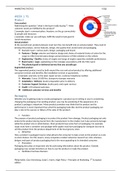
Erez and Gati make the point that individual behavior is the result of many different forces, and
culture is one of those forces (see figure below). They further distinguish between layers or levels of
culture. The broadest level is the global culture (dominated by Western societies). National cultures
have influence in the manner by which work gets done in individual domestic locations. The third
layer is that of the organization, then the work group, and finally the core, the extent to which the
individual identifies with these various cultures. Each layer has influence in some way.
Many cultures and subcultures overlap and interact
with one another, resulting in more complexity.
there is a tendency for researchers to develop theories
relevant to US situations, with less concern given to
their applicability in other countries (West versus the
Rest mentality).
Expatriate selection and training has become a
booming area for practice and has inspired many
effective programs. Expatriates are managers or
professionals assigned to work in a location outside of
his or her home country. Some expatriates fail because
they cannot/will not adapt to the new culture.
Some theories of cultural influence
Collectivist cultures value group more than the individual and the individualist culture vice versa.
Hofstede’s theory: he has developed a theory that proposes 5 basic elements on which cultures can
be distinguished (see figure below). By examining each of the 5 dimensions of culture, he has been
able to propose suggested characteristics of cultures that fall on one or the other end of this cultural
continua and the relationship of these to work behavior.
Noe and colleagues provide additional applications of Hofstede’s findings in contrasting countries.
They also identified several reasons why managers ought to be sensitive to cultures:
Cultures differ strongly on how subordinates expect leaders to lead and what motivates
individuals; selection and training of managers should vary across countries
Cultures influence human resource practices; example: hiring decisions in US depend heavily
on technical skills, whereas in collectivist cultures more on how well someone fits in the
group.
Compensation policies vary greatly across cultures; differences in earning among highest and
lowest paid individuals
In collectivist cultures, group decisions making is more highly valued, in individualist,
individual decision making is the norm.
An introducti on to industrial and organizati onal psychology; fourth editi on
Frank J. Landy & Jeffrey M. Conte
1. What is industrial and organizational psychology
1.1 The importance of IO psychology
Work is important because it occupies much of our time, provides us with a livelihood(money), and
defines how we feel about ourselves. Work is defining their value to society, their family and
themselves characteristic of the way people gauge. ‘Good work’ enables workers to develop and use
skills to benefit others. Good work is work that exhibits a high level of expertise, and it entails regular
concern with the implications and applications of an individual’s work for the wider world (Gardner).
Compromised work: work that is not illegal or unethical, but that still undermines the core values of a
trade or a profession. The interesting aspect of good and bad work is that the individual worker and
the employer together have the power to define good work or to transform good work into bad and
vice versa. Authenticity is a trend of interest to IO psychologists: an emotionally appropriate,
significant, purposive and responsible mode of human life.
IO psychology applies psychological principles, theory and research to the workplace and to all
aspects of life that are touched by work. Personality has influence on work behavior, but also,
personality is often influenced by non-work events. IO psychologists have become increasingly
interested in building sustainable and environmentally conscious organizations. A broad and
ambitious extension of IO psychology is to bring their expertise to bear on humanitarian issues,
especially poverty reduction and the promotion of decent work. SIOP (society for industrial and
organizational psychology) is the primary professional membership organization for IO psychologists.
I-O psychologists are:
- Scientists : who derive principles of individual, group and organizational behavior through
research. They are employed at public organizations and private organizations
- Teachers: who train in the research and application of I-O psychology
- Consultants and staff psychologists: Who develop scientific knowledge and apply it to the
solution of problems at work. They are employed in public and private organizations and
consulting companies.
Common areas of concentration for IO psychologists:
- Selection and replacement; developing and validating tests, analyzing job content
- Training and development; identifying training and development needs, forming and
implementing training programs, career planning
- Organizational development; analyzing organizational structure, maximizing satisfaction and
effectiveness of employees, facilitating organizational change.
- Performance measurement
- Quality of work life; identifying factors associated with job satisfaction, reducing stress,
redesigning jobs to make them more meaningful.
- Engineering psychology; designing work environments, optimizing person-machine
effectiveness, making workplaces safer.
The bottom line in any organization is performance.
Performance (job performance, creativity), motivation, leadership and well-being are the key
dependent variables in the I-O research program at the RuG.
,Traditionally, IO psychology has been divided into three major concentrations:
- Personnel psychology (part of human resources management); addresses issues such as
recruitment, selection, training, performance appraisal, promotion, transfer and termination.
The approach assumes that people are consistently different in their attributes and work
behaviors and that information about these differences can be used to predict, maintain and
increase work performance and satisfaction, goal is to find the best person to the job.
- Organizational psychology; combines research and ideas form social psychology and
organizational behavior. It addresses the emotional and motivational side of work. It includes
topics as attitudes, fairness, motivation, stress, leadership, teams and broader aspects. It
concentrates on how people react to work and the action plans that develop as a result of
those reactions. The issue is the extent to which characteristics of people match the
characteristics or demands of the work.
- Human engineering/human factors psychology); the study of the capacities and limitations of
humans with respect to particular environment, task is to develop an environment that is
compatible with the characteristics of the worker (opposite of the personnel approach).
Scientist-practitioner model:
Using scientific tools and research in the practice of I-O psychology
(vs. relying on ‘best practices’ or experiences)
Newsletter of SIOP: TIP (the industrial organizational psychologist).
Common issues in I-O psychology
- Employment discrimination
- Psychosocial or physical health (stress, safety, joblessness)
- The concept of work-life balance
- The new world of work (the world is changing )
Special issues in I-O psychology:
- Sports (teamwork, coordination)
- Humanitarian (micro-credit, U.N. policy)
- Conflict areas (Iraqi Police Force ; terrorism)
- Special assessment (spy recruiting, need very special people for that)
Why study IO psychology?
Knowledge about IO psychology pays off for your own professional career, regardless of
profession
IO psychology applies theories, models, and principles from all areas of psychology
Studying IO psychology improves your understanding of how individuals and groups act, think
and feel in organizations.
Our lay theories and beliefs about I-O psychology may be false, or may be correct only under
a narrow set of circumstances.
The importance of understanding the younger worker:
A great deal of research is focused on older adults. It’s a mistake to ignore the young workers for
several reasons: (1) they represent a large portion of a population of part time workers, and part time
works becomes more common (2) one’s first job is likely to have a substantial influence on the filters
through which subsequent work experiences are viewed.
The little research focused on younger workers, suggest the following:
Satisfying: using current skills or develop new skills
If not: cynicism and lack of interest in the work can occur
, Education levels are higher than their parents’. They are more sophisticated technologically,
tend to see the world globally, they have no problems being connected 24 hours a day and
are used to multi-cultural environments.
1.2 the past, present and future of IO psychology
Hugo Munsterberg and James McKeen Cattell had a major influence on the eventual emergence of
IO psychology. Munsterberg was one of the first to measure abilities in workers and tie those to
performance. Cattell was one of the first to realize the importance of differences among individuals as
a way of predicting behavior. During WO I Scott and Bingham enlist in Army and develop group
intelligence tests. Lillian Gilbreth was the first PhD in industrial psychology for her research applying
the scientific management to educational institutions. Scientific management was based on the
principles of time and motion studies. Leaders of companies and government began to ask help from
industrial psychologists.
Industrial psychology underwent a change when Elton Mayo began studying not the efficiency of
workers, but their emotions. He proposed that there was a mental state knowns as revery obsession
(mind-numbing, repetitive and difficult work causes unhappiness, prone to resist management
attempts to increase productivity and sympathetic to labor unions (vakbonden). Then the Hawthorne
studies began. They discovered that attention affected behavior and not their others interventions.
The results of this studies resulted in a new movement known as the Human Relations Movement.
This movement was more interested in more complicated theories of motivation as well as the
emotional world. The WO II brought some new interesting problems, particularly in the Air Force,
psychologists suggested that cockpits be standardized. The war also brought renewed interest in
ability testing as well as the introduction of the assessment center. The Office of Strategic Services
(OSS) was the department of the government charged with gathering and analyzing military
intelligence. By 1950s, as employers realized that interests and attitudes and personality might be
contributors to desirable outcomes such as productivity and workforce stability, a glut of tests had
entered the marked. Title VII of the Civil Rights Act of 1964 required employees to justify testing and
other policies in terms of equal opportunity. In the 1960s industrial psychology became industrial and
organizational psychology, it became clear that there were broader influences as group behavior in
the workplace. This recognition provided the foundation for an approach to theory and data analysis,
called multi-level analysis.
The major professional organization for psychologists of all kinds in the US is the American
Psychological Association (APA), nearly a century later, the Association for Psychological Science (APS)
was formed to serve the needs of the more experimental and theoretical areas of psychology.
IO psychology in the 21st century needs to be relevant, useful (putting into practice), broadly focused
and grounded in the scientific method.
1.3 Multicultural and Cross-cultural Issues in IO psychology
Psychologists are concerned with the behavioral implications of nationality. Perhaps the most
important material for a psychologist is culture. Culture: a system in which individuals share meanings
and common ways of viewing events and objects. It is culture that distinguishes people more than
nationality. In IO psychology some of the most obvious cultural differences we need to address are
related to nationalities. People can bring different meanings and interpretations to an event or an
object. The opportunity for misunderstandings and ineffective or counterproductive human resource
applications grow as the number of different cultures grow.
Nowadays there is a global economy. The importance of connections between countries is that it
brings many different cultures into contact with one another at the workplace, particularly when it is
, a virtual one. Developing a uniform human resource system for such a diverse workforce is a
challenge.
Erez and Gati make the point that individual behavior is the result of many different forces, and
culture is one of those forces (see figure below). They further distinguish between layers or levels of
culture. The broadest level is the global culture (dominated by Western societies). National cultures
have influence in the manner by which work gets done in individual domestic locations. The third
layer is that of the organization, then the work group, and finally the core, the extent to which the
individual identifies with these various cultures. Each layer has influence in some way.
Many cultures and subcultures overlap and interact
with one another, resulting in more complexity.
there is a tendency for researchers to develop theories
relevant to US situations, with less concern given to
their applicability in other countries (West versus the
Rest mentality).
Expatriate selection and training has become a
booming area for practice and has inspired many
effective programs. Expatriates are managers or
professionals assigned to work in a location outside of
his or her home country. Some expatriates fail because
they cannot/will not adapt to the new culture.
Some theories of cultural influence
Collectivist cultures value group more than the individual and the individualist culture vice versa.
Hofstede’s theory: he has developed a theory that proposes 5 basic elements on which cultures can
be distinguished (see figure below). By examining each of the 5 dimensions of culture, he has been
able to propose suggested characteristics of cultures that fall on one or the other end of this cultural
continua and the relationship of these to work behavior.
Noe and colleagues provide additional applications of Hofstede’s findings in contrasting countries.
They also identified several reasons why managers ought to be sensitive to cultures:
Cultures differ strongly on how subordinates expect leaders to lead and what motivates
individuals; selection and training of managers should vary across countries
Cultures influence human resource practices; example: hiring decisions in US depend heavily
on technical skills, whereas in collectivist cultures more on how well someone fits in the
group.
Compensation policies vary greatly across cultures; differences in earning among highest and
lowest paid individuals
In collectivist cultures, group decisions making is more highly valued, in individualist,
individual decision making is the norm.