Earthquakes and rivers
Donnerstag, 23. Juni 2022
18:35
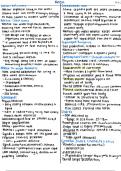
Earthquake:
What causes earthquakes?
Caused by plate movements: towards each other, away from each
other, or sliding each other
Stress builds up as the plates try to move
Sudden release of stress the plates are free
HUGE amounts of energy is released
Shock waves/vibrations travel through the earth as an earthquake
wave/seismic wave
Assessing earthquakes
Effects of earthquakes are assessed by Mercalli Scale/Ritcher Scale
Amount of damage that an earthquake causes will be affected:
The amount of energy released
The depth of the focus beneath the surface(The shallower the
focus is, the worse the shaking)
The density of the population
Buildings have been built to withstand earthquakes
How sold the bedrock is weak
Ability for an earthquake to recover is how wealthy the country is
Tsunamis
Series of waves generated by an earthquake when there is
displacement of the seabed
It is possible to provide warnings of its arrival because it can take
several hours to travel across an ocean
Monitoring to predict earthquakes
Tsunami warning system
Evacuation of people
Earthquake drills
Hazard mapping
Building design
Vocabulary:
Focus: the point within the Earth where the earthquake originates
Mercalli Scale:
Relates to found movement
Allow eyewitnesses to provide information
Ritcher Scale:
measure magnitude of an earthquake
seismometer and seismographs used for calculating.
Tsunami: a giant wave
, Where do most earthquakes occur? Mid-Atlantic ridge, Alpide belt
circum-pacific belt
What is the result on the earth's crust? It breaks the crust and have
earthquakes
Largest earthquake ever recorded? Valdivia, Chile and its magnitude
was 9.5
Another result from the earthquake was a tsunami which was 80ft. High.
In addition the earthquake left the region shaking. People can protect
themselves by being educated, buildings and bridges were meant to sway
with the earthquake. Lastly, the government drill to help other people.
Case Study, Japan
Pacific and Eurasian plates collided, as well as the Philippian plate, with a
magnitude of 9.0 in 2011 March 11. The plates moved at a rate of 83 millimeter
towards each other. Its epicenter was beneath the Pacific Ocean and the depth
was 32 km. There were a series a large foreshocks over the precious 2 days and
major aftershocks. The question is "How did Japan prepare for possible
earthquake/tsunami?" A system called "The Earthquake Early Warning" was
activated 1 minute before the earthquake which saved people lives. In addition
Donnerstag, 23. Juni 2022
18:35
Earthquake:
What causes earthquakes?
Caused by plate movements: towards each other, away from each
other, or sliding each other
Stress builds up as the plates try to move
Sudden release of stress the plates are free
HUGE amounts of energy is released
Shock waves/vibrations travel through the earth as an earthquake
wave/seismic wave
Assessing earthquakes
Effects of earthquakes are assessed by Mercalli Scale/Ritcher Scale
Amount of damage that an earthquake causes will be affected:
The amount of energy released
The depth of the focus beneath the surface(The shallower the
focus is, the worse the shaking)
The density of the population
Buildings have been built to withstand earthquakes
How sold the bedrock is weak
Ability for an earthquake to recover is how wealthy the country is
Tsunamis
Series of waves generated by an earthquake when there is
displacement of the seabed
It is possible to provide warnings of its arrival because it can take
several hours to travel across an ocean
Monitoring to predict earthquakes
Tsunami warning system
Evacuation of people
Earthquake drills
Hazard mapping
Building design
Vocabulary:
Focus: the point within the Earth where the earthquake originates
Mercalli Scale:
Relates to found movement
Allow eyewitnesses to provide information
Ritcher Scale:
measure magnitude of an earthquake
seismometer and seismographs used for calculating.
Tsunami: a giant wave
, Where do most earthquakes occur? Mid-Atlantic ridge, Alpide belt
circum-pacific belt
What is the result on the earth's crust? It breaks the crust and have
earthquakes
Largest earthquake ever recorded? Valdivia, Chile and its magnitude
was 9.5
Another result from the earthquake was a tsunami which was 80ft. High.
In addition the earthquake left the region shaking. People can protect
themselves by being educated, buildings and bridges were meant to sway
with the earthquake. Lastly, the government drill to help other people.
Case Study, Japan
Pacific and Eurasian plates collided, as well as the Philippian plate, with a
magnitude of 9.0 in 2011 March 11. The plates moved at a rate of 83 millimeter
towards each other. Its epicenter was beneath the Pacific Ocean and the depth
was 32 km. There were a series a large foreshocks over the precious 2 days and
major aftershocks. The question is "How did Japan prepare for possible
earthquake/tsunami?" A system called "The Earthquake Early Warning" was
activated 1 minute before the earthquake which saved people lives. In addition