MANAGEMENT & ORGANIZATION Y2Q2
Chapter 7
Motivation = The processes that account for an individual’s intensity, direction, and persistence of
effort towards attaining a goal. Three key dimensions:
• Intensity – How hard does a person try?
• Direction – Efforts are channelled towards organisational goals
• Persistence – How long does/can a person maintain the effort?
Theory
Maslow Hierarchy of Needs
McGregor Theory X and Theory Y
Herzberg Two-factor (motivation-hygiene) theory The Two-Factor theory implies
that the managers must stress upon guaranteeing the adequacy of the
hygiene factors to avoid employee dissatisfaction. Also, the managers must
make sure that the work is stimulating and rewarding so that the
employees are motivated to work and perform harder and better. This
theory emphasize upon job-enrichment so as to motivate the employees.
The job must utilize the employee’s skills and competencies to the
maximum. Focusing on the motivational factors can improve work-quality.
McClelland Theory of Needs (achievement, power and affiliation)
Maslow
Maslow (1943, 1954) stated that people are motivated to achieve
certain needs and that some needs take precedence over others.
Our most basic need is for physical survival, and this will be the
first thing that motivates our behavior. Once that level is fulfilled
the next level up is what motivates us, and so on. Aligns with US
Culture. Intuitively logical, but no empirical substantiation
McGregor
Theory X
Theory X managers tend to take a pessimistic view of their people, and assume that they are naturally
unmotivated and dislike work. As a result, they think that team members need to be
prompted, rewarded or punished constantly to make sure that they complete their tasks.
Work in organizations that are managed like this can be repetitive, and people are often motivated
with a "carrot and stick" approach. Performance appraisals and remuneration are usually based on
tangible results, such as sales figures or product output, and are used to control staff and "keep tabs"
on them. This style of management assumes that workers:
Dislike their work.
Avoid responsibility and need constant direction.
Have to be controlled, forced and threatened to deliver work.
Need to be supervised at every step.
Have no incentive to work or ambition, and therefore need to be enticed by rewards to
achieve goals.
According to McGregor, organizations with a Theory X approach tend to have several tiers of
managers and supervisors to oversee and direct workers. Authority is rarely delegated, and control
remains firmly centralized. Managers are more authoritarian and actively intervene to get things
done. Although Theory X management has largely fallen out of fashion in recent times, big
organizations may find that adopting it is unavoidable due to the sheer number of people that they
employ and the tight deadlines that they have to meet.
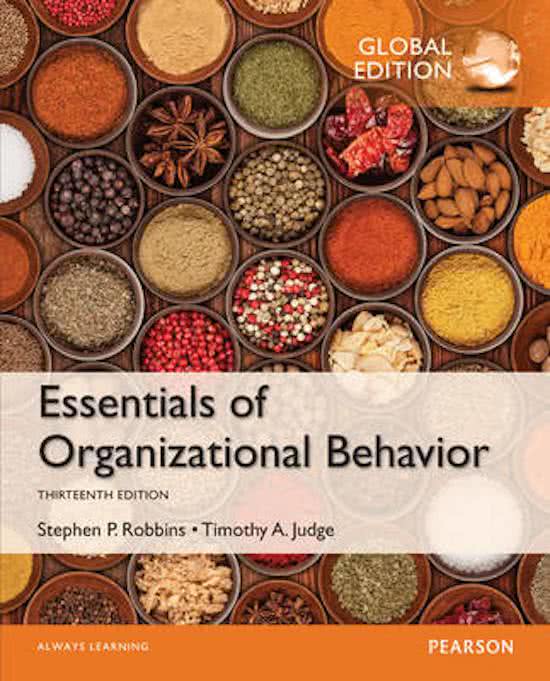
Stephen P. Robbins and Timothy A. Judge Essentials of Organizational Behavior
, MANAGEMENT & ORGANIZATION Y2Q2
Theory Y
Theory Y managers have an optimistic, positive opinion of their people, and they use a decentralized,
participative management style. This encourages a more collaborative , trust-based relationship
between managers and their team members. People have greater responsibility, and managers
encourage them to develop their skills and suggest improvements. Appraisals are regular but, unlike
in Theory X organizations, they are used to encourage open communication rather than control staff.
Theory Y organizations also give employees frequent opportunities for promotion.
This style of management assumes that workers are:
Happy to work on their own initiative.
More involved in decision making.
Self-motivated to complete their tasks.
Enjoy taking ownership of their work.
Seek and accept responsibility, and need little direction.
View work as fulfilling and challenging.
Solve problems creatively and imaginatively.
Theory Y has become more popular among organizations. This reflects workers' increasing desire for
more meaningful careers that provide them with more than just money.
It's also viewed by McGregor as superior to Theory X, which, he says, reduces workers to "cogs in a
machine," and likely demotivates people in the long term.
Herzberg
According to Herzberg, there are some job factors that result in satisfaction while there are other job
factors that prevent dissatisfaction. Herzberg classified these job factors into two categories-
a. Hygiene factors- Hygiene factors are those job factors which are essential for existence of
motivation at workplace. These do not lead to positive satisfaction for long-term. But if these
factors are absent / if these factors are non-existant at workplace, then they lead to
dissatisfaction. In other words, hygiene factors are those factors which when
adequate/reasonable in a job, pacify the employees and do not make them dissatisfied.
These factors are extrinsic to work. Hygiene factors are also called as dissatisfiers or
maintenance factors as they are required to avoid dissatisfaction. These factors describe the
job environment/scenario. The hygiene factors symbolized the physiological needs which the
individuals wanted and expected to be fulfilled. Hygiene factors include:
Pay - The pay or salary structure should be appropriate and reasonable. It must be equal
and competitive to those in the same industry in the same domain.
Company Policies and administrative policies - The company policies should not be too
rigid. They should be fair and clear. It should include flexible working hours, dress code,
breaks, vacation, etc.
Fringe benefits - The employees should be offered health care plans (mediclaim), benefits
for the family members, employee help programmes, etc.
Physical Working conditions - The working conditions should be safe, clean and hygienic.
The work equipments should be updated and well-maintained.
Status - The employees’ status within the organization should be familiar and retained.
Interpersonal relations - The relationship of the employees with his peers, superiors and
subordinates should be appropriate and acceptable. There should be no conflict or
humiliation element present.
Job Security - The organization must provide job security to the employees.
b. Motivational factors- According to Herzberg, the hygiene factors cannot be regarded as
motivators. The motivational factors yield positive satisfaction. These factors are inherent to
work. These factors motivate the employees for a superior performance. These factors are
called satisfiers. These are factors involved in performing the job. Employees find these
Stephen P. Robbins and Timothy A. Judge Essentials of Organizational Behavior
Chapter 7
Motivation = The processes that account for an individual’s intensity, direction, and persistence of
effort towards attaining a goal. Three key dimensions:
• Intensity – How hard does a person try?
• Direction – Efforts are channelled towards organisational goals
• Persistence – How long does/can a person maintain the effort?
Theory
Maslow Hierarchy of Needs
McGregor Theory X and Theory Y
Herzberg Two-factor (motivation-hygiene) theory The Two-Factor theory implies
that the managers must stress upon guaranteeing the adequacy of the
hygiene factors to avoid employee dissatisfaction. Also, the managers must
make sure that the work is stimulating and rewarding so that the
employees are motivated to work and perform harder and better. This
theory emphasize upon job-enrichment so as to motivate the employees.
The job must utilize the employee’s skills and competencies to the
maximum. Focusing on the motivational factors can improve work-quality.
McClelland Theory of Needs (achievement, power and affiliation)
Maslow
Maslow (1943, 1954) stated that people are motivated to achieve
certain needs and that some needs take precedence over others.
Our most basic need is for physical survival, and this will be the
first thing that motivates our behavior. Once that level is fulfilled
the next level up is what motivates us, and so on. Aligns with US
Culture. Intuitively logical, but no empirical substantiation
McGregor
Theory X
Theory X managers tend to take a pessimistic view of their people, and assume that they are naturally
unmotivated and dislike work. As a result, they think that team members need to be
prompted, rewarded or punished constantly to make sure that they complete their tasks.
Work in organizations that are managed like this can be repetitive, and people are often motivated
with a "carrot and stick" approach. Performance appraisals and remuneration are usually based on
tangible results, such as sales figures or product output, and are used to control staff and "keep tabs"
on them. This style of management assumes that workers:
Dislike their work.
Avoid responsibility and need constant direction.
Have to be controlled, forced and threatened to deliver work.
Need to be supervised at every step.
Have no incentive to work or ambition, and therefore need to be enticed by rewards to
achieve goals.
According to McGregor, organizations with a Theory X approach tend to have several tiers of
managers and supervisors to oversee and direct workers. Authority is rarely delegated, and control
remains firmly centralized. Managers are more authoritarian and actively intervene to get things
done. Although Theory X management has largely fallen out of fashion in recent times, big
organizations may find that adopting it is unavoidable due to the sheer number of people that they
employ and the tight deadlines that they have to meet.
Stephen P. Robbins and Timothy A. Judge Essentials of Organizational Behavior
, MANAGEMENT & ORGANIZATION Y2Q2
Theory Y
Theory Y managers have an optimistic, positive opinion of their people, and they use a decentralized,
participative management style. This encourages a more collaborative , trust-based relationship
between managers and their team members. People have greater responsibility, and managers
encourage them to develop their skills and suggest improvements. Appraisals are regular but, unlike
in Theory X organizations, they are used to encourage open communication rather than control staff.
Theory Y organizations also give employees frequent opportunities for promotion.
This style of management assumes that workers are:
Happy to work on their own initiative.
More involved in decision making.
Self-motivated to complete their tasks.
Enjoy taking ownership of their work.
Seek and accept responsibility, and need little direction.
View work as fulfilling and challenging.
Solve problems creatively and imaginatively.
Theory Y has become more popular among organizations. This reflects workers' increasing desire for
more meaningful careers that provide them with more than just money.
It's also viewed by McGregor as superior to Theory X, which, he says, reduces workers to "cogs in a
machine," and likely demotivates people in the long term.
Herzberg
According to Herzberg, there are some job factors that result in satisfaction while there are other job
factors that prevent dissatisfaction. Herzberg classified these job factors into two categories-
a. Hygiene factors- Hygiene factors are those job factors which are essential for existence of
motivation at workplace. These do not lead to positive satisfaction for long-term. But if these
factors are absent / if these factors are non-existant at workplace, then they lead to
dissatisfaction. In other words, hygiene factors are those factors which when
adequate/reasonable in a job, pacify the employees and do not make them dissatisfied.
These factors are extrinsic to work. Hygiene factors are also called as dissatisfiers or
maintenance factors as they are required to avoid dissatisfaction. These factors describe the
job environment/scenario. The hygiene factors symbolized the physiological needs which the
individuals wanted and expected to be fulfilled. Hygiene factors include:
Pay - The pay or salary structure should be appropriate and reasonable. It must be equal
and competitive to those in the same industry in the same domain.
Company Policies and administrative policies - The company policies should not be too
rigid. They should be fair and clear. It should include flexible working hours, dress code,
breaks, vacation, etc.
Fringe benefits - The employees should be offered health care plans (mediclaim), benefits
for the family members, employee help programmes, etc.
Physical Working conditions - The working conditions should be safe, clean and hygienic.
The work equipments should be updated and well-maintained.
Status - The employees’ status within the organization should be familiar and retained.
Interpersonal relations - The relationship of the employees with his peers, superiors and
subordinates should be appropriate and acceptable. There should be no conflict or
humiliation element present.
Job Security - The organization must provide job security to the employees.
b. Motivational factors- According to Herzberg, the hygiene factors cannot be regarded as
motivators. The motivational factors yield positive satisfaction. These factors are inherent to
work. These factors motivate the employees for a superior performance. These factors are
called satisfiers. These are factors involved in performing the job. Employees find these
Stephen P. Robbins and Timothy A. Judge Essentials of Organizational Behavior