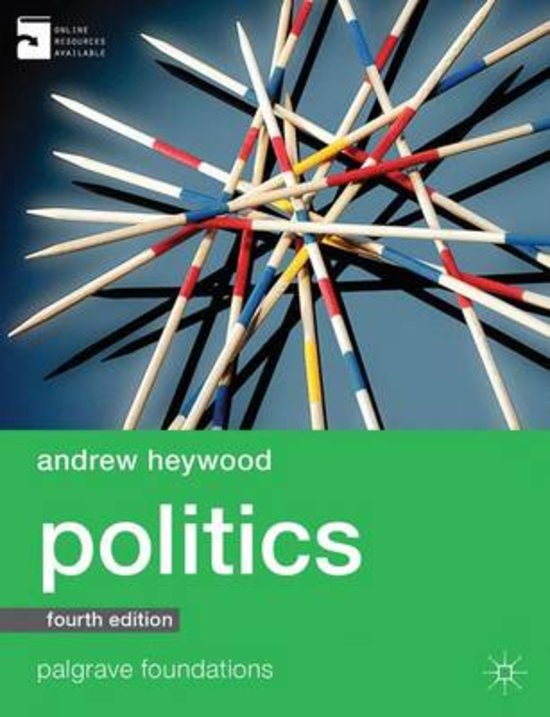
SUMMARY POLITICS
Andrew Heywood
Abstract
This is a summary of Chapters 1, 2, 3, 4 of Andrew Heywood's book Politics. This is best used as
preparation for exams in combination with the lectures. Not all terminology in the summary
corresponds exactly to that of the lecture.
© Copyright 2023, Jim Roest. All rights reserved.
, Table of contents
Politi cs – Andrew Heywood
Chapter 1................................................................................................................................................3
Defining politics..................................................................................................................................3
Politics as the art of governing.......................................................................................................3
Politics and public affairs................................................................................................................4
Politics as compromise and consensus...........................................................................................4
Politics as power.............................................................................................................................5
Studying Politics..................................................................................................................................5
Approaches to the study of politics................................................................................................5
Concepts, models and theories......................................................................................................6
Politics in the present day..................................................................................................................7
Beyond the domestic/international divide?...................................................................................7
Chapter 2................................................................................................................................................8
What is Political Ideology?..................................................................................................................8
Classical ideological traditions............................................................................................................8
Liberalism.......................................................................................................................................8
Conservatism..................................................................................................................................9
Socialism.......................................................................................................................................10
Other ideological traditions..............................................................................................................12
Anarchism.....................................................................................................................................12
Fascism.........................................................................................................................................12
Feminism......................................................................................................................................12
Green ideology.............................................................................................................................12
Cosmopolitanism..........................................................................................................................13
Religious fundamentalism............................................................................................................13
Populism.......................................................................................................................................13
Chapter 3..............................................................................................................................................14
Defining the state.............................................................................................................................14
Origin and development of the state............................................................................................14
Approaches to the state...............................................................................................................14
In debate about the state.................................................................................................................15
Rival theories about the state.......................................................................................................15
The role of the state.....................................................................................................................16
1
, Eclipse of the state...........................................................................................................................16
Fall and fall of the state................................................................................................................16
Return of the state?......................................................................................................................18
Chapter 4..............................................................................................................................................19
Legitimacy and political stability.......................................................................................................20
Legitimation of power..................................................................................................................20
Legitimation crisis and revolution.................................................................................................20
Democratic legitimacy......................................................................................................................21
Is democracy failing to deliver?....................................................................................................21
Non-democratic legitimacy...........................................................................................................22
Democracy........................................................................................................................................22
Understanding Democracy...........................................................................................................22
Models of democracy...................................................................................................................23
Democracy in Practice: Rival Visions.............................................................................................24
2
, Chapter 1.
What is Politi cs
Defining politics
Politics, defined in a broad sense, involves creating, preserving, and modifying the general rules that
govern society. It is inherently linked to conflict and cooperation, as differing opinions, needs, and
interests lead to disagreements over these rules. To influence or enforce these rules, individuals must
work together, emphasizing the cooperative aspect of politics. Conflict resolution is seen as central to
politics, although not all conflicts can be resolved. Diversity and scarcity make politics an inherent
aspect of human society.
The concept of politics is considered "essentially contentious," allowing for multiple legitimate
meanings or contrasting views of the same idea. Two primary approaches to defining politics exist:
one associates it with a specific arena or location, while the other views it as a process or mechanism
applicable in different social contexts. These different perspectives underlie different definitions of
politics and contribute to different schools of political analysis, reflecting deep intellectual and
ideological disagreements in the field.
Politics as an arena Politics as a process
Definitions of politics The Art of Governing Compromise by consensus
Publieke Business Power and the distribution of
resources
Approaches to the study Behaviorism Feminism
of politics Rational choice theory Marxism
Institutionalism Post-positivist approach
Approaches to Defi ning Politi cs
Politics as the art of governing
Chancellor Bismarck once said, "Politics is not science... but an art." He was referring to the art of
government, which involves controlling society through the creation and enforcement of collective
decisions. The modern interpretation of politics corresponds to "as far as the state is concerned."
This perspective often emphasizes the study of government personnel and apparatus, with politics
seen as the authoritative assignment of values in response to societal pressures. However, this view
offers a limited understanding, with a particular focus on the activities within a polity, such as
government institutions and legislative chambers. It excludes many other aspects of society, such as
businesses, schools, and community groups.
3
, Public Toilet
The state: Civil society:
The Device of Ruling Autonomous bodies – (companies, family, etc.)
Toilet Toilet
Public domain: Personal domain:
Politics, work, art, culture, etc. Family and cottage tree animal
Two visions of the division of public and private
The association between politics and state affairs has contributed to a negative perception of politics,
often linked to the actions of politicians. This view portrays politicians as power-seeking individuals
who can prioritize personal ambition over public service and ideological conviction. Such sentiments
have grown in modern times, amplified by increased media coverage of corruption and dishonesty,
which has led to the rise of anti-political sentiments.
Despite these negative perceptions, there is a general recognition that political activity is an enduring
and essential aspect of society. While politicians may be seen as self-interested, it is recognized that a
mechanism for assigning authoritative values is crucial to prevent societal disintegration. Thus, the
goal is to establish controls and restrictions that prevent abuse of government power, rather than
eliminating politics altogether.
Politics and public affairs
The second conception of politics extends beyond government to include "public life" or "public
affairs." This view, rooted in Aristotle's belief that humans are inherently political beings, emphasizes
the creation of a "just society" as an ethical activity. It considers politics to be the 'master science'.
The distinction between public and private life corresponds to the separation between the state and
civil society. The state manages the collective community organization funded by taxes, while civil
society includes private entities such as families, businesses, clubs, and community groups, driven by
individual interests. This division defines politics within the state and the responsibilities associated
with it, making territories that individuals manage for themselves considered "non-political."
An alternative perspective introduces the distinction between 'the political' and 'the personal'. This
vision broadens the concept of politics and brings economics into the public domain. However, it still
maintains a narrow understanding of politics, ruling out interference in personal affairs and
institutions.
Seeing politics as a public activity has produced both positive and negative images. Some, such as
Aristotle and Hannah Arendt, celebrate it as a noble and enlightening endeavor that gives meaning to
life and affirms individual uniqueness. Others, especially liberal theorists, favor civil society over the
state and value personal freedom and individual responsibility. They try to keep politics out of private
activities and see it as unwanted interference in personal choice and autonomy.
Politics as compromise and consensus
The third conception of politics shifts the focus from the arena where politics takes place to the
method of conflict resolution. It views politics as a means of resolving disagreements through
compromise, reconciliation, and negotiation, rather than resorting to violence or brute force. This
perspective is often summed up in the phrase 'the art of the possible'. This understanding of politics,
4
Andrew Heywood
Abstract
This is a summary of Chapters 1, 2, 3, 4 of Andrew Heywood's book Politics. This is best used as
preparation for exams in combination with the lectures. Not all terminology in the summary
corresponds exactly to that of the lecture.
© Copyright 2023, Jim Roest. All rights reserved.
, Table of contents
Politi cs – Andrew Heywood
Chapter 1................................................................................................................................................3
Defining politics..................................................................................................................................3
Politics as the art of governing.......................................................................................................3
Politics and public affairs................................................................................................................4
Politics as compromise and consensus...........................................................................................4
Politics as power.............................................................................................................................5
Studying Politics..................................................................................................................................5
Approaches to the study of politics................................................................................................5
Concepts, models and theories......................................................................................................6
Politics in the present day..................................................................................................................7
Beyond the domestic/international divide?...................................................................................7
Chapter 2................................................................................................................................................8
What is Political Ideology?..................................................................................................................8
Classical ideological traditions............................................................................................................8
Liberalism.......................................................................................................................................8
Conservatism..................................................................................................................................9
Socialism.......................................................................................................................................10
Other ideological traditions..............................................................................................................12
Anarchism.....................................................................................................................................12
Fascism.........................................................................................................................................12
Feminism......................................................................................................................................12
Green ideology.............................................................................................................................12
Cosmopolitanism..........................................................................................................................13
Religious fundamentalism............................................................................................................13
Populism.......................................................................................................................................13
Chapter 3..............................................................................................................................................14
Defining the state.............................................................................................................................14
Origin and development of the state............................................................................................14
Approaches to the state...............................................................................................................14
In debate about the state.................................................................................................................15
Rival theories about the state.......................................................................................................15
The role of the state.....................................................................................................................16
1
, Eclipse of the state...........................................................................................................................16
Fall and fall of the state................................................................................................................16
Return of the state?......................................................................................................................18
Chapter 4..............................................................................................................................................19
Legitimacy and political stability.......................................................................................................20
Legitimation of power..................................................................................................................20
Legitimation crisis and revolution.................................................................................................20
Democratic legitimacy......................................................................................................................21
Is democracy failing to deliver?....................................................................................................21
Non-democratic legitimacy...........................................................................................................22
Democracy........................................................................................................................................22
Understanding Democracy...........................................................................................................22
Models of democracy...................................................................................................................23
Democracy in Practice: Rival Visions.............................................................................................24
2
, Chapter 1.
What is Politi cs
Defining politics
Politics, defined in a broad sense, involves creating, preserving, and modifying the general rules that
govern society. It is inherently linked to conflict and cooperation, as differing opinions, needs, and
interests lead to disagreements over these rules. To influence or enforce these rules, individuals must
work together, emphasizing the cooperative aspect of politics. Conflict resolution is seen as central to
politics, although not all conflicts can be resolved. Diversity and scarcity make politics an inherent
aspect of human society.
The concept of politics is considered "essentially contentious," allowing for multiple legitimate
meanings or contrasting views of the same idea. Two primary approaches to defining politics exist:
one associates it with a specific arena or location, while the other views it as a process or mechanism
applicable in different social contexts. These different perspectives underlie different definitions of
politics and contribute to different schools of political analysis, reflecting deep intellectual and
ideological disagreements in the field.
Politics as an arena Politics as a process
Definitions of politics The Art of Governing Compromise by consensus
Publieke Business Power and the distribution of
resources
Approaches to the study Behaviorism Feminism
of politics Rational choice theory Marxism
Institutionalism Post-positivist approach
Approaches to Defi ning Politi cs
Politics as the art of governing
Chancellor Bismarck once said, "Politics is not science... but an art." He was referring to the art of
government, which involves controlling society through the creation and enforcement of collective
decisions. The modern interpretation of politics corresponds to "as far as the state is concerned."
This perspective often emphasizes the study of government personnel and apparatus, with politics
seen as the authoritative assignment of values in response to societal pressures. However, this view
offers a limited understanding, with a particular focus on the activities within a polity, such as
government institutions and legislative chambers. It excludes many other aspects of society, such as
businesses, schools, and community groups.
3
, Public Toilet
The state: Civil society:
The Device of Ruling Autonomous bodies – (companies, family, etc.)
Toilet Toilet
Public domain: Personal domain:
Politics, work, art, culture, etc. Family and cottage tree animal
Two visions of the division of public and private
The association between politics and state affairs has contributed to a negative perception of politics,
often linked to the actions of politicians. This view portrays politicians as power-seeking individuals
who can prioritize personal ambition over public service and ideological conviction. Such sentiments
have grown in modern times, amplified by increased media coverage of corruption and dishonesty,
which has led to the rise of anti-political sentiments.
Despite these negative perceptions, there is a general recognition that political activity is an enduring
and essential aspect of society. While politicians may be seen as self-interested, it is recognized that a
mechanism for assigning authoritative values is crucial to prevent societal disintegration. Thus, the
goal is to establish controls and restrictions that prevent abuse of government power, rather than
eliminating politics altogether.
Politics and public affairs
The second conception of politics extends beyond government to include "public life" or "public
affairs." This view, rooted in Aristotle's belief that humans are inherently political beings, emphasizes
the creation of a "just society" as an ethical activity. It considers politics to be the 'master science'.
The distinction between public and private life corresponds to the separation between the state and
civil society. The state manages the collective community organization funded by taxes, while civil
society includes private entities such as families, businesses, clubs, and community groups, driven by
individual interests. This division defines politics within the state and the responsibilities associated
with it, making territories that individuals manage for themselves considered "non-political."
An alternative perspective introduces the distinction between 'the political' and 'the personal'. This
vision broadens the concept of politics and brings economics into the public domain. However, it still
maintains a narrow understanding of politics, ruling out interference in personal affairs and
institutions.
Seeing politics as a public activity has produced both positive and negative images. Some, such as
Aristotle and Hannah Arendt, celebrate it as a noble and enlightening endeavor that gives meaning to
life and affirms individual uniqueness. Others, especially liberal theorists, favor civil society over the
state and value personal freedom and individual responsibility. They try to keep politics out of private
activities and see it as unwanted interference in personal choice and autonomy.
Politics as compromise and consensus
The third conception of politics shifts the focus from the arena where politics takes place to the
method of conflict resolution. It views politics as a means of resolving disagreements through
compromise, reconciliation, and negotiation, rather than resorting to violence or brute force. This
perspective is often summed up in the phrase 'the art of the possible'. This understanding of politics,
4