Parliament Timeline, 1625-1701:
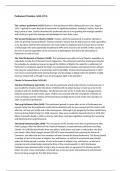
The ‘useless’ parliament (1625)-Charles I’s first parliament which sitting only from June- August
1625. It gained its name because it transacted no significant business, making it 'useless' from the
king's point of view. Charles dissolved this parliament due to it not granting him enough subsidies
and refusing to grant him tonnage and poundage for more than a year.
The Second Parliament of Charles I (1626)- Charles called this parliament as another attempt to
solve his growing money problems. Charles wanted to ensure that he didn’t have as much opposition
as he had done with his first parliament, the main tactic he employed was to ensure that a number
of the people who were potentially troublesome MPs were chosen to be sheriffs of their county. In
the end, it was the opposition of the Commons to Buckingham that led to the dissolution of
Parliament in June of 1626.
The Third Parliament of Charles I (1628)- This parliament was called to fund Charles’ expedition to
LaRochelle to help the Protestant French Huguenots. The parliament said they would grant Charles
the subsidies he needed as long as he signed the Petition of Rights, this asked for a settlement of
Parliament's complaints against the King's non-parliamentary taxation and imprisonments without
trial, plus the unlawfulness of martial law and forced billets. Charles dissolved parliament in 1629,
over issues around parliament viewing tonnage and poundage as illegal under the petition of right,
however Charles felt as though it was his prerogative right to be granted it.
Charles I’s Personal Rule (1629-40)
The Short Parliament (Apr.1640)- This was the parliament which ended Charles I’s personal rule, it
was recalled by Charles under the advice of Wentworth to obtain money to fund an army for his
problems with the Scottish Rebellion. This Parliament only sat for 3 weeks due to disagreements
between parliament and Charles, again. Charles was annoyed with the resumption of debate on
Crown privilege and the violation of Parliamentary privilege by the arrest of the nine members in
1629, he dissolved parliament.
The Long Parliament (Nov.1640)- This parliament gained its name after an Act of Parliament was
passed saying that the parliament could only be dissolved with its own consent and this wasn’t until
after the civil war and at the end of the interregnum. Although it got purged by the New Model Army
by force during Pride’s Purge’s in 1648. However, they were recalled by General Monck in 1659 after
Oliver Cromwell’s death in 1658, so that by 1660 they could pass legislation restoring the monarchy
and dissolving the Long Parliament.
The Rump Parliament (Dec.1648)- The remanence of the member from the Long Parliament after
Pride’s purges. After the failure of the Treaty of Newport, a treaty between parliament and King
Charles I in 1648 the New Model Army was able to seize power and start to take justice into their
own hands. After Pride’s purges around 230 MP’s were prevented from entering the House of
Commons, and after that the free members left over formed the Rump Parliament. The Rump passed
a number of acts in the areas of religion, law, and finance, as well as in commercial and colonial
policy the Rump passed a number of acts in the areas of religion, law, and finance, as well as in
commercial and colonial policy during the time of the commonwealth. In 1653 the Rumpe
Parliament were dissolved after trying to stay in session after an agreement to dissolve and the
failure to write a new constitution, Cromwell was on his last straw with parliament and declared
they’d sat long enough for the little they’d done.
The ‘useless’ parliament (1625)-Charles I’s first parliament which sitting only from June- August
1625. It gained its name because it transacted no significant business, making it 'useless' from the
king's point of view. Charles dissolved this parliament due to it not granting him enough subsidies
and refusing to grant him tonnage and poundage for more than a year.
The Second Parliament of Charles I (1626)- Charles called this parliament as another attempt to
solve his growing money problems. Charles wanted to ensure that he didn’t have as much opposition
as he had done with his first parliament, the main tactic he employed was to ensure that a number
of the people who were potentially troublesome MPs were chosen to be sheriffs of their county. In
the end, it was the opposition of the Commons to Buckingham that led to the dissolution of
Parliament in June of 1626.
The Third Parliament of Charles I (1628)- This parliament was called to fund Charles’ expedition to
LaRochelle to help the Protestant French Huguenots. The parliament said they would grant Charles
the subsidies he needed as long as he signed the Petition of Rights, this asked for a settlement of
Parliament's complaints against the King's non-parliamentary taxation and imprisonments without
trial, plus the unlawfulness of martial law and forced billets. Charles dissolved parliament in 1629,
over issues around parliament viewing tonnage and poundage as illegal under the petition of right,
however Charles felt as though it was his prerogative right to be granted it.
Charles I’s Personal Rule (1629-40)
The Short Parliament (Apr.1640)- This was the parliament which ended Charles I’s personal rule, it
was recalled by Charles under the advice of Wentworth to obtain money to fund an army for his
problems with the Scottish Rebellion. This Parliament only sat for 3 weeks due to disagreements
between parliament and Charles, again. Charles was annoyed with the resumption of debate on
Crown privilege and the violation of Parliamentary privilege by the arrest of the nine members in
1629, he dissolved parliament.
The Long Parliament (Nov.1640)- This parliament gained its name after an Act of Parliament was
passed saying that the parliament could only be dissolved with its own consent and this wasn’t until
after the civil war and at the end of the interregnum. Although it got purged by the New Model Army
by force during Pride’s Purge’s in 1648. However, they were recalled by General Monck in 1659 after
Oliver Cromwell’s death in 1658, so that by 1660 they could pass legislation restoring the monarchy
and dissolving the Long Parliament.
The Rump Parliament (Dec.1648)- The remanence of the member from the Long Parliament after
Pride’s purges. After the failure of the Treaty of Newport, a treaty between parliament and King
Charles I in 1648 the New Model Army was able to seize power and start to take justice into their
own hands. After Pride’s purges around 230 MP’s were prevented from entering the House of
Commons, and after that the free members left over formed the Rump Parliament. The Rump passed
a number of acts in the areas of religion, law, and finance, as well as in commercial and colonial
policy the Rump passed a number of acts in the areas of religion, law, and finance, as well as in
commercial and colonial policy during the time of the commonwealth. In 1653 the Rumpe
Parliament were dissolved after trying to stay in session after an agreement to dissolve and the
failure to write a new constitution, Cromwell was on his last straw with parliament and declared
they’d sat long enough for the little they’d done.