Unit 35 Land Navigation by Map and Compass
Complete a Route Card for a planned journey then review and make
recommendations on the route and the planning.
Due: 13.06.16
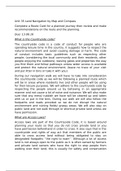
What is the Countryside code?
The countryside code is a code of conduct for people who are
spending leisure time in the country, it suggests how to respect the
natural environment and avoid causing damage or harm. The code
of conduct includes basic guidelines such as respecting other
people; (considering the local community and their residents, other
people enjoying the outdoors), leaving gates and properties the way
you find them and follow pathways unless wider access is available
and protect the natural environment; (leave no trace of your visit
and put litter in bins or take it with you).
During our navigation walk we will have to take into consideration
the countryside code as we will be following a planned route which
will be in areas where residents live and other people will be using
for their leisure purposes. We will adhere to the countryside code by
respecting the people around us by behaving in an appropriate
manner and not cause a lot of noise and nuisance. We will also make
sure that any mess/ rubbish we have will be cleared up and taken
with us or put in the bins. During our walk we will also follow the
footpaths and roads provided so we do not disrupt the natural
environment and ruining fields/ grassy areas. We will also stay on
public land and not walk through or shortcut private land unless we
have permission.
What are Access Laws?
Access laws are part of the Countryside Code, it is based around
planning your route so that you do not cross private land or you
have permission beforehand in order to cross. It also says that in the
countryside and rights of way act that members of the public are
able to cross access land without being obligated to stay on
designated footpaths ‘’the right to roam’’. Although a lot of access
land is not always open to the public as it is often owned by farmers
and private land owners who have the right to stop people from
walking over their land, this is usually for safety and conservation
Complete a Route Card for a planned journey then review and make
recommendations on the route and the planning.
Due: 13.06.16
What is the Countryside code?
The countryside code is a code of conduct for people who are
spending leisure time in the country, it suggests how to respect the
natural environment and avoid causing damage or harm. The code
of conduct includes basic guidelines such as respecting other
people; (considering the local community and their residents, other
people enjoying the outdoors), leaving gates and properties the way
you find them and follow pathways unless wider access is available
and protect the natural environment; (leave no trace of your visit
and put litter in bins or take it with you).
During our navigation walk we will have to take into consideration
the countryside code as we will be following a planned route which
will be in areas where residents live and other people will be using
for their leisure purposes. We will adhere to the countryside code by
respecting the people around us by behaving in an appropriate
manner and not cause a lot of noise and nuisance. We will also make
sure that any mess/ rubbish we have will be cleared up and taken
with us or put in the bins. During our walk we will also follow the
footpaths and roads provided so we do not disrupt the natural
environment and ruining fields/ grassy areas. We will also stay on
public land and not walk through or shortcut private land unless we
have permission.
What are Access Laws?
Access laws are part of the Countryside Code, it is based around
planning your route so that you do not cross private land or you
have permission beforehand in order to cross. It also says that in the
countryside and rights of way act that members of the public are
able to cross access land without being obligated to stay on
designated footpaths ‘’the right to roam’’. Although a lot of access
land is not always open to the public as it is often owned by farmers
and private land owners who have the right to stop people from
walking over their land, this is usually for safety and conservation