UNIT 1 What is empirical research?
After this unit, you will be able to...
explain what is meant with empirical research and which steps can be taken according to the
wheel of science;
differentiate between induction and deduction;
recognize and explain the steps that can be taken in the decision making process;
explain the relationship between systematic decision making and systematically answering
empirical questions;
formulate a relevant research question in the context of a specific phase in a decision making
process;
recognize and mention examples of confirmation bias;
explain how systematic empirical research helps avoiding the confirmation bias.
Research question
Design and (cycle of) decision-making
Problem & need analysis
Ex ante evaluation
Process evaluation
Ex post evaluation (effect / impact research)
Wheel of science / empirical cycle
Deduction
Induction
Confirmation bias
,What is empirical research?
Decision making and empirical research
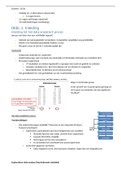
Six phases in decision-making
1 identify, describe and analyze a problem or
opportunity. Problem definition and - analysis.
2 Develop options / design options. Design.
3 Compare options, using criteria. Multi-
criteria analysis, ex ante evaluation.
4 Select a preferred alternative on the basis of
this evaluation. Decision-making rules.
5 Act on the decision/implement the decision.
Implementation.
6. Monitor and evaluate the consequences. Ex
post evaluation
Empirical questions are questions that can only be answered by observation
the ‘is-part’, sometimes called the ‘status quo’, sometimes people use the German word “Ist’)
and what is desired or what ought to be the case (the ‘norm’, the ‘aim’. If people are using the
word ‘Ist’ to describe the status quo, they will also use the word ‘Soll’ to refer to the norm or
aim), is called a problem.
The process of decision-making is often not strictly linear or one-time, but rather dynamic and
iterative. Decisions can involve skipping steps or not fully reflecting, potentially leading to poor
outcomes. Many decisions involve cycles of action and reflection, where adjustments are made based
on feedback and results.
Epistemology is the science of knowing;
methodology (a subfield of epistemology) might be called the science of finding out.
,Different types of research questions require different ways of finding the answer
1) Normative question : ( should we allow people with dementia yeet themselves?) – What
should be the case? What is correct?
* Cannot be answered with observations only
2) Conceptual question : ( what is democracy? What is intellectual efficiency?)
3) Empirical question : ( THINKING + OBSERVATIONS )
Systematically: Excluding that the other answer are better than answer we give (not just that we may be
wrong)
Observation: About things we can observe by using our senses, using things we can observe
Examples of empirical questions:
How intelligent are people? Are there difference in intelligence between men and women?
What is the job satisfaction among employees at this university?
Etc…
Two main types of emerical research questions
1) Descriptive ( Describe the shape of earth)
2) Explanatory / Casual ( This app is better than that app)
However: Predictive questions ( which are not casual but also not simply descriptive)
No clear connections – study relationships
Figure 1 Decision Making
, Descriptive Research Questions:
Descriptive research questions aim to provide a detailed account or summary of a particular
phenomenon or set of variables. They seek to describe the characteristics, behaviors, or attributes of a
subject or group without attempting to establish cause-and-effect relationships.
Examples:
"What is the average monthly income of residents in a specific neighborhood?"
"How do students in a particular school district perform on standardized math tests?"
Descriptive research focuses on collecting and analyzing data to provide an accurate portrayal of a
situation or population. It typically involves surveys, observations, and statistical analysis to
summarize and present the data in a meaningful way.
Explanatory Research Questions:
Explanatory research questions go beyond describing a phenomenon; they aim to understand the causes
or relationships between variables. They seek to explain why something occurs or how one variable
influences another.
Examples:
"What is the relationship between students' study habits and their academic performance?"
"How does exposure to air pollution impact respiratory health in urban areas?"
Explanatory research involves testing hypotheses and using statistical analysis to determine the
strength and direction of relationships between variables. It often includes experimental designs or
regression analysis to establish causal connections or associations.
In summary, descriptive research questions focus on describing and summarizing data, while
explanatory research questions delve into understanding why something happens or how variables are
related. The choice between these types of questions depends on the research objectives and the level
of understanding or depth of information required for a particular study.
After this unit, you will be able to...
explain what is meant with empirical research and which steps can be taken according to the
wheel of science;
differentiate between induction and deduction;
recognize and explain the steps that can be taken in the decision making process;
explain the relationship between systematic decision making and systematically answering
empirical questions;
formulate a relevant research question in the context of a specific phase in a decision making
process;
recognize and mention examples of confirmation bias;
explain how systematic empirical research helps avoiding the confirmation bias.
Research question
Design and (cycle of) decision-making
Problem & need analysis
Ex ante evaluation
Process evaluation
Ex post evaluation (effect / impact research)
Wheel of science / empirical cycle
Deduction
Induction
Confirmation bias
,What is empirical research?
Decision making and empirical research
Six phases in decision-making
1 identify, describe and analyze a problem or
opportunity. Problem definition and - analysis.
2 Develop options / design options. Design.
3 Compare options, using criteria. Multi-
criteria analysis, ex ante evaluation.
4 Select a preferred alternative on the basis of
this evaluation. Decision-making rules.
5 Act on the decision/implement the decision.
Implementation.
6. Monitor and evaluate the consequences. Ex
post evaluation
Empirical questions are questions that can only be answered by observation
the ‘is-part’, sometimes called the ‘status quo’, sometimes people use the German word “Ist’)
and what is desired or what ought to be the case (the ‘norm’, the ‘aim’. If people are using the
word ‘Ist’ to describe the status quo, they will also use the word ‘Soll’ to refer to the norm or
aim), is called a problem.
The process of decision-making is often not strictly linear or one-time, but rather dynamic and
iterative. Decisions can involve skipping steps or not fully reflecting, potentially leading to poor
outcomes. Many decisions involve cycles of action and reflection, where adjustments are made based
on feedback and results.
Epistemology is the science of knowing;
methodology (a subfield of epistemology) might be called the science of finding out.
,Different types of research questions require different ways of finding the answer
1) Normative question : ( should we allow people with dementia yeet themselves?) – What
should be the case? What is correct?
* Cannot be answered with observations only
2) Conceptual question : ( what is democracy? What is intellectual efficiency?)
3) Empirical question : ( THINKING + OBSERVATIONS )
Systematically: Excluding that the other answer are better than answer we give (not just that we may be
wrong)
Observation: About things we can observe by using our senses, using things we can observe
Examples of empirical questions:
How intelligent are people? Are there difference in intelligence between men and women?
What is the job satisfaction among employees at this university?
Etc…
Two main types of emerical research questions
1) Descriptive ( Describe the shape of earth)
2) Explanatory / Casual ( This app is better than that app)
However: Predictive questions ( which are not casual but also not simply descriptive)
No clear connections – study relationships
Figure 1 Decision Making
, Descriptive Research Questions:
Descriptive research questions aim to provide a detailed account or summary of a particular
phenomenon or set of variables. They seek to describe the characteristics, behaviors, or attributes of a
subject or group without attempting to establish cause-and-effect relationships.
Examples:
"What is the average monthly income of residents in a specific neighborhood?"
"How do students in a particular school district perform on standardized math tests?"
Descriptive research focuses on collecting and analyzing data to provide an accurate portrayal of a
situation or population. It typically involves surveys, observations, and statistical analysis to
summarize and present the data in a meaningful way.
Explanatory Research Questions:
Explanatory research questions go beyond describing a phenomenon; they aim to understand the causes
or relationships between variables. They seek to explain why something occurs or how one variable
influences another.
Examples:
"What is the relationship between students' study habits and their academic performance?"
"How does exposure to air pollution impact respiratory health in urban areas?"
Explanatory research involves testing hypotheses and using statistical analysis to determine the
strength and direction of relationships between variables. It often includes experimental designs or
regression analysis to establish causal connections or associations.
In summary, descriptive research questions focus on describing and summarizing data, while
explanatory research questions delve into understanding why something happens or how variables are
related. The choice between these types of questions depends on the research objectives and the level
of understanding or depth of information required for a particular study.