Lecture 1:
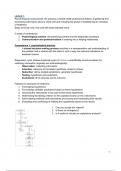
Psychological assessment: the process a mental health professional follows of gathering and
processing information about a client until and including the phase of establishing an indication
of treatment
Steps involved: why, how and with what intended result
2 areas of competence:
1. Psychological practice: the practicing scientist and the diagnostic processes
2. Communication and professionalism in entering into a helping relationship
Competence 1: psychological practice
- A shared decision-making process resulting in a representation and understanding of
the problem that is shared with the client in such a way that relevant indications for
treatment course
Diagnostic cycle (follows empirical cycle) De Groot: a scientifically sound procedure for
collecting information (logically and methodologically)
- Observation: collecting information
- Induction: inference to formulate hypothesis, based on theory
- Deduction: derive testable predictions, generate hypotheses
- Testing: hypothesis and predictions
- Evaluations of the process and its outcome
Followed in all phases of treatment:
1. Formulating hypotheses
2. Formulating verifiable predictions based on these hypotheses
3. Choosing the instruments to be used to test these hypotheses
4. Determining the testing criterion or the expected scores on the instruments
5. Administering methods and instruments and scoring and interpreting their results
6. Evaluating and confirming or refuting the hypotheses based on the results
1. Can you accept this referral?
2. Is there an emergency?
3. Is it useful to include an explanatory analysis?
1
,Several classification systems: DSM-5, ICD-II, HiTOP model, RDoC
Categorical vs dimensional approaches:
Prevailing categorical approach (professionals and laypeople)
- Presence / absence, should be predictive of symptoms course and development
- Cut-off based on number of symptoms distinguishing healthy from pathological
- Assumed homogeneity between categories
- Assumes mutually exclusive categories and exhaustive of all possibilities
All these assumptions are false
Psychopathology is dimensional by nature: no clear-cut difference between normal /
abnormal, overlap across dimensions, dynamic fluctuations over time (different diagnostic
systems)
-> RDOC: defines 5 transdiagnostic domains
- Negative valence systems (fear)
- Positive valence systems (reward learning)
- Cognitive systems (attention)
- Systems for social processes (attachment)
- Arousal / modulatory systems (sleep / wake)
Problem: disorders seen as “disorders of brain circuits”
-> Hierarchical Taxonomy of Psychopathology: taxonomy that describes 4 higher-order factors
of psychopathology or ”'spectra” (clusters consisting of internalizing, externalizing, somatoform
and cognitive disorders)
Define normal vs abnormal:
Normal / abnormal classification (=something is / is not present)
- Normality: successful adaptation to changing circumstances
- No conscious, intrinsic difficulty in defining human complexity
- Risk of stigma and overpathologizing
- Suffering and limitation in social, occupational and other important activities
- But what if justified by context?
- Impossible to objectively measure individual dysfunctions
- Statistical deviation from norm: cut-off will always be arbitrary
Competence 2: communication and professionalism
Underlying attitudes in helping: based on the client-centered approach of Carl Rogers
- Basic principle: self-actualization
- Certain conditions are needed to achieve this
- Therapeutic relationship creates conditions that enable client strengths, difficulties,
solutions
- Caregiver facilitates and helps client to help themselves
- Pitfall helper: “I have to do something syndrome”
2
,3 conditions of growth in therapy (Rogers):
1. Unconditional positive appreciation (acceptance): commitment and understanding
- Attitude helper to not reject thoughts / feelings client, not unconditional approval, do take
client’s point of view seriously, assume the client’s willingness / good intentions, helper
should check thoughts / feelings around client with themself
- Express warmth and proximity
- Reduces impersonal nature interventions or treatment
- Reflect on thought, feeling and behavior of the client, the counselor and the relationship
- Try to notice transference and countertransference
2. Genuineness (authenticity): helper is themself without playing a role
- Being human and working together with a client
- Reduces emotional distance to client
- Role behavior: no emphasis on your role, authority and status
- Congruence: words, behavior and feelings of helper are consistent
- Acknowledging negative / positive feelings is session
- Distrust by client when detecting incongruence
- Key facets: spontaneity, not articulating every thought that comes to mind, expressing
naturally and still dealing with client, openness and self-disclosure
3. Empathy: openness to the client, own vulnerability and personality, preferences and
circumstances, verbal and nonverbal communications
General clinical communication skills:
- Non selective listening skills: nonverbal following, vernal following and silences
- Selective listening skills: asking questions, paraphrasing of content, reflection of
feeling, concreteness, summarizing
- Regulating skills: opening the conversation and making initial contact, linking (back) to
goals, clarify the situation, thinking out loud, finishing the interview
- Closing: clarify in advance the time, announce when close to end, summarize,
meta-conversation (gauge client’s experience of session)
- Problems: client in the middle of problematic story (anticipate
near-conclusion), new hot topic brought up (door handle phenomenon -
acknowledge briefly and come back to it next time)
- Skills in nuancing: interpreting, content, positive relabeling, giving information
Goals of the intake interview:
- Establishing a trusting working relationship
- Clarify roles and expectations
- Gently explore the problem, bring a sense of order to the problems
- Basic skills useful for clarifying problems but also later stages
Diagnostic-prescription model: not very helpful when dealing with personal problems
3
, - Counselor takes control, doesn’t ask questions (client thinks their are thinking and
doesn’t talk)
- Roles are very clear, the helper presents themselves as a detached expert and play that
part openly
Cooperation model: counselor and client work together on the clarification and solution of
problems
- Existentialist perspective: each person must freely choose their own way of living
- Easier to describe doubts, worries, convictions and plans
- Counselor believes that people should be encouraged to be self-reliant in searching for
solutions to their problems, more about form (how we choose what to do) than content
(what we choose to do)
- Actively and attentively helps client to think through their problems
- Consciously aim to achieve greater insight into client’s thoughts, beliefs and feelings
- Clients learn problem-solving
- Counselor is less personally involved than friends or relatives
Criticism: it is manipulation, doesn’t work if client just seeks advice - unfounded
Observation methods: why? who? what? where? when? and how often?
- Do not interpret, but simply observe “the child is angry” vs “child is kicking the table”
Standardized observations: uses evaluation scales, reduces the probability of judgment errors
Unstandardized observations: risk judgment errors
- Fundamental attribution error: our own problematic behavior is attributed to external
factors, while the problematic behavior of others is attributed to their internal factors
Time sampling: marking how often a certain type of behavior occurs in specific period of time
Event sampling: from the behavior itself -> most suitable for infrequent and problematic behavior
Clinical interviews:
- Ideographic (person-oriented) approach: the uniqueness of the individual is key ->
clinical judgements (judgment errors)
- Nomothetic (norm-oriented) approach: emphasis lies on general laws, and the person is
understood through analytical thinking, theory formation and empirical testing ->
statistical judgements - leads to better predictions of human behavior
Semi-structured interviews: higher reliability of the diagnostic judgment (DSM-5),
time-consuming, does not always match what clients themselves want to tell the clinician or in
what order (does not facilitate development of a therapeutic relationship or alliance)
- Problem-oriented: used more often in research practice than in clinical practice
Psychological tests: an evaluative instrument that allows sampling a client's behavior in a given
domain, strong validity, provide unique information, easy to administer, compare the scores of
the client with those of a standard or norm group
- Self-report questionnaires: but many people have limited access to their own cognitive
processes
Lecture 2: Steps of the assessment process: Referral, Complaints, Classification,
Explanation
4
Psychological assessment: the process a mental health professional follows of gathering and
processing information about a client until and including the phase of establishing an indication
of treatment
Steps involved: why, how and with what intended result
2 areas of competence:
1. Psychological practice: the practicing scientist and the diagnostic processes
2. Communication and professionalism in entering into a helping relationship
Competence 1: psychological practice
- A shared decision-making process resulting in a representation and understanding of
the problem that is shared with the client in such a way that relevant indications for
treatment course
Diagnostic cycle (follows empirical cycle) De Groot: a scientifically sound procedure for
collecting information (logically and methodologically)
- Observation: collecting information
- Induction: inference to formulate hypothesis, based on theory
- Deduction: derive testable predictions, generate hypotheses
- Testing: hypothesis and predictions
- Evaluations of the process and its outcome
Followed in all phases of treatment:
1. Formulating hypotheses
2. Formulating verifiable predictions based on these hypotheses
3. Choosing the instruments to be used to test these hypotheses
4. Determining the testing criterion or the expected scores on the instruments
5. Administering methods and instruments and scoring and interpreting their results
6. Evaluating and confirming or refuting the hypotheses based on the results
1. Can you accept this referral?
2. Is there an emergency?
3. Is it useful to include an explanatory analysis?
1
,Several classification systems: DSM-5, ICD-II, HiTOP model, RDoC
Categorical vs dimensional approaches:
Prevailing categorical approach (professionals and laypeople)
- Presence / absence, should be predictive of symptoms course and development
- Cut-off based on number of symptoms distinguishing healthy from pathological
- Assumed homogeneity between categories
- Assumes mutually exclusive categories and exhaustive of all possibilities
All these assumptions are false
Psychopathology is dimensional by nature: no clear-cut difference between normal /
abnormal, overlap across dimensions, dynamic fluctuations over time (different diagnostic
systems)
-> RDOC: defines 5 transdiagnostic domains
- Negative valence systems (fear)
- Positive valence systems (reward learning)
- Cognitive systems (attention)
- Systems for social processes (attachment)
- Arousal / modulatory systems (sleep / wake)
Problem: disorders seen as “disorders of brain circuits”
-> Hierarchical Taxonomy of Psychopathology: taxonomy that describes 4 higher-order factors
of psychopathology or ”'spectra” (clusters consisting of internalizing, externalizing, somatoform
and cognitive disorders)
Define normal vs abnormal:
Normal / abnormal classification (=something is / is not present)
- Normality: successful adaptation to changing circumstances
- No conscious, intrinsic difficulty in defining human complexity
- Risk of stigma and overpathologizing
- Suffering and limitation in social, occupational and other important activities
- But what if justified by context?
- Impossible to objectively measure individual dysfunctions
- Statistical deviation from norm: cut-off will always be arbitrary
Competence 2: communication and professionalism
Underlying attitudes in helping: based on the client-centered approach of Carl Rogers
- Basic principle: self-actualization
- Certain conditions are needed to achieve this
- Therapeutic relationship creates conditions that enable client strengths, difficulties,
solutions
- Caregiver facilitates and helps client to help themselves
- Pitfall helper: “I have to do something syndrome”
2
,3 conditions of growth in therapy (Rogers):
1. Unconditional positive appreciation (acceptance): commitment and understanding
- Attitude helper to not reject thoughts / feelings client, not unconditional approval, do take
client’s point of view seriously, assume the client’s willingness / good intentions, helper
should check thoughts / feelings around client with themself
- Express warmth and proximity
- Reduces impersonal nature interventions or treatment
- Reflect on thought, feeling and behavior of the client, the counselor and the relationship
- Try to notice transference and countertransference
2. Genuineness (authenticity): helper is themself without playing a role
- Being human and working together with a client
- Reduces emotional distance to client
- Role behavior: no emphasis on your role, authority and status
- Congruence: words, behavior and feelings of helper are consistent
- Acknowledging negative / positive feelings is session
- Distrust by client when detecting incongruence
- Key facets: spontaneity, not articulating every thought that comes to mind, expressing
naturally and still dealing with client, openness and self-disclosure
3. Empathy: openness to the client, own vulnerability and personality, preferences and
circumstances, verbal and nonverbal communications
General clinical communication skills:
- Non selective listening skills: nonverbal following, vernal following and silences
- Selective listening skills: asking questions, paraphrasing of content, reflection of
feeling, concreteness, summarizing
- Regulating skills: opening the conversation and making initial contact, linking (back) to
goals, clarify the situation, thinking out loud, finishing the interview
- Closing: clarify in advance the time, announce when close to end, summarize,
meta-conversation (gauge client’s experience of session)
- Problems: client in the middle of problematic story (anticipate
near-conclusion), new hot topic brought up (door handle phenomenon -
acknowledge briefly and come back to it next time)
- Skills in nuancing: interpreting, content, positive relabeling, giving information
Goals of the intake interview:
- Establishing a trusting working relationship
- Clarify roles and expectations
- Gently explore the problem, bring a sense of order to the problems
- Basic skills useful for clarifying problems but also later stages
Diagnostic-prescription model: not very helpful when dealing with personal problems
3
, - Counselor takes control, doesn’t ask questions (client thinks their are thinking and
doesn’t talk)
- Roles are very clear, the helper presents themselves as a detached expert and play that
part openly
Cooperation model: counselor and client work together on the clarification and solution of
problems
- Existentialist perspective: each person must freely choose their own way of living
- Easier to describe doubts, worries, convictions and plans
- Counselor believes that people should be encouraged to be self-reliant in searching for
solutions to their problems, more about form (how we choose what to do) than content
(what we choose to do)
- Actively and attentively helps client to think through their problems
- Consciously aim to achieve greater insight into client’s thoughts, beliefs and feelings
- Clients learn problem-solving
- Counselor is less personally involved than friends or relatives
Criticism: it is manipulation, doesn’t work if client just seeks advice - unfounded
Observation methods: why? who? what? where? when? and how often?
- Do not interpret, but simply observe “the child is angry” vs “child is kicking the table”
Standardized observations: uses evaluation scales, reduces the probability of judgment errors
Unstandardized observations: risk judgment errors
- Fundamental attribution error: our own problematic behavior is attributed to external
factors, while the problematic behavior of others is attributed to their internal factors
Time sampling: marking how often a certain type of behavior occurs in specific period of time
Event sampling: from the behavior itself -> most suitable for infrequent and problematic behavior
Clinical interviews:
- Ideographic (person-oriented) approach: the uniqueness of the individual is key ->
clinical judgements (judgment errors)
- Nomothetic (norm-oriented) approach: emphasis lies on general laws, and the person is
understood through analytical thinking, theory formation and empirical testing ->
statistical judgements - leads to better predictions of human behavior
Semi-structured interviews: higher reliability of the diagnostic judgment (DSM-5),
time-consuming, does not always match what clients themselves want to tell the clinician or in
what order (does not facilitate development of a therapeutic relationship or alliance)
- Problem-oriented: used more often in research practice than in clinical practice
Psychological tests: an evaluative instrument that allows sampling a client's behavior in a given
domain, strong validity, provide unique information, easy to administer, compare the scores of
the client with those of a standard or norm group
- Self-report questionnaires: but many people have limited access to their own cognitive
processes
Lecture 2: Steps of the assessment process: Referral, Complaints, Classification,
Explanation
4