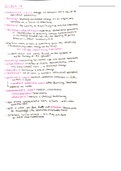
TOPIC 16: INHERITANCE
17.1 INHERITANCE
→Inheritance: the transmission of genetic information from generation to generation
17.2 CHROMOSOMES, GENES AND PROTEINS
→Chromosomes: thread-like structures of DNA, carrying genetic information in the form of genes (located in the nucleus of
cells)
→Gene: is a short length of DNA found on a chromosome that codes for a specific protein. (found in chromosomes)
-This could be a structural protein such as collagen found in skin cells, an enzyme or a hormone
-Genes control our characteristics as they code for proteins that play important roles in what our cells do
→Alleles: different versions of a particular gene. The ABO gene for blood group type has three alleles, IA, IB and IO
Diploid & Haploid Nuclei
→Haploid nucleus: a nucleus containing a single set of
unpaired chromosomes, e.g. in gametes.
→Diploid nucleus: a nucleus containing two sets of
chromosomes, e.g. in body cells.
-All humans have 23 different chromosomes in each cell
-In most body cells, not including the gametes (sex cells),
we have 2 copies of each chromosome, leading to a total of 46 chromosomes
-The gametes (egg and sperm cells) only have one copy of each chromosome, meaning they have a total of 23 chromosomes in
each cell
Inheritance of Sex
-Sex is determined by an entire chromosome pair (as opposed to most other characteristics that are just determined by one or a
number of genes)
→Females have the sex chromosomes XX
→Males have the sex chromosomes XY
-As only a father can pass on a Y chromosome, he is responsible for determining the sex of the child
-The inheritance of sex can be shown using a genetic diagram
(known as a Punnett square), with the X and Y chromosomes
taking the place of the alleles usually written in the boxes.
Transcription and Translocation
-Proteins are made by ribosomes with the sequence of amino acids controlled by the sequence of bases contained within DNA
-DNA cannot travel out of the nucleus to the ribosomes (it is far too big to pass through a nuclear pore) so the base code of each
gene is transcribed onto an RNA molecule called messenger RNA (mRNA).
-mRNA then moves out of the nucleus and attaches to a ribosome
-The ribosome ‘reads’ the code on the mRNA in groups of three
-Each triplet of bases codes for a specific amino acid
, -In this way the ribosome translates the sequence of bases into a
sequence of amino acids that make up a protein
-Once the amino acid chain has been assembled, it is released from
the ribosome so it can fold and form the final structure of the protein.
-In this way, DNA controls cell function by controlling the production
of proteins
-The proteins may be enzymes, antibodies, or receptors for
neurotransmitters
-Although all body cells in an organism contain the same genes, many
genes in a particular cell are not expressed because the cell only
makes the specific proteins it needs
17.3 MITOSIS
-Most body cells have two copies of each chromosome
-We describe these cells as diploid
-When cells divide their chromosomes double beforehand
-This ensures that when the cell splits in two, each new cell still has two copies of each chromosome (is still diploid)
-This type of cell division is used for growth, repair of damaged tissues, replacement of cells and asexual reproduction and is
known as mitosis
→Mitosis: nuclear division giving rise to genetically identical cells.
Process:
-Just before mitosis, each chromosome in the nucleus copies itself
exactly (forms x – shaped chromosomes)
-Chromosomes line up along the centre of the cell where cell fibres pull
them apart
-The cell divides into two; each new cell has a copy of each of the
chromosomes
Importance:
-All cells in the body (excluding gametes) are produced by mitosis of the
zygote
-Mitosis is important for replacing cells e.g., skin cells, red blood cells
and for allowing growth (production of new cells e.g. when a zygote
divides to form an embryo).
Occurs in:
→Growth: mitosis produces new cells
→Repair: to replace damaged or dead cells
→Asexual reproduction: mitosis produces offspring that are genetically
identical to the parent.
17.1 INHERITANCE
→Inheritance: the transmission of genetic information from generation to generation
17.2 CHROMOSOMES, GENES AND PROTEINS
→Chromosomes: thread-like structures of DNA, carrying genetic information in the form of genes (located in the nucleus of
cells)
→Gene: is a short length of DNA found on a chromosome that codes for a specific protein. (found in chromosomes)
-This could be a structural protein such as collagen found in skin cells, an enzyme or a hormone
-Genes control our characteristics as they code for proteins that play important roles in what our cells do
→Alleles: different versions of a particular gene. The ABO gene for blood group type has three alleles, IA, IB and IO
Diploid & Haploid Nuclei
→Haploid nucleus: a nucleus containing a single set of
unpaired chromosomes, e.g. in gametes.
→Diploid nucleus: a nucleus containing two sets of
chromosomes, e.g. in body cells.
-All humans have 23 different chromosomes in each cell
-In most body cells, not including the gametes (sex cells),
we have 2 copies of each chromosome, leading to a total of 46 chromosomes
-The gametes (egg and sperm cells) only have one copy of each chromosome, meaning they have a total of 23 chromosomes in
each cell
Inheritance of Sex
-Sex is determined by an entire chromosome pair (as opposed to most other characteristics that are just determined by one or a
number of genes)
→Females have the sex chromosomes XX
→Males have the sex chromosomes XY
-As only a father can pass on a Y chromosome, he is responsible for determining the sex of the child
-The inheritance of sex can be shown using a genetic diagram
(known as a Punnett square), with the X and Y chromosomes
taking the place of the alleles usually written in the boxes.
Transcription and Translocation
-Proteins are made by ribosomes with the sequence of amino acids controlled by the sequence of bases contained within DNA
-DNA cannot travel out of the nucleus to the ribosomes (it is far too big to pass through a nuclear pore) so the base code of each
gene is transcribed onto an RNA molecule called messenger RNA (mRNA).
-mRNA then moves out of the nucleus and attaches to a ribosome
-The ribosome ‘reads’ the code on the mRNA in groups of three
-Each triplet of bases codes for a specific amino acid
, -In this way the ribosome translates the sequence of bases into a
sequence of amino acids that make up a protein
-Once the amino acid chain has been assembled, it is released from
the ribosome so it can fold and form the final structure of the protein.
-In this way, DNA controls cell function by controlling the production
of proteins
-The proteins may be enzymes, antibodies, or receptors for
neurotransmitters
-Although all body cells in an organism contain the same genes, many
genes in a particular cell are not expressed because the cell only
makes the specific proteins it needs
17.3 MITOSIS
-Most body cells have two copies of each chromosome
-We describe these cells as diploid
-When cells divide their chromosomes double beforehand
-This ensures that when the cell splits in two, each new cell still has two copies of each chromosome (is still diploid)
-This type of cell division is used for growth, repair of damaged tissues, replacement of cells and asexual reproduction and is
known as mitosis
→Mitosis: nuclear division giving rise to genetically identical cells.
Process:
-Just before mitosis, each chromosome in the nucleus copies itself
exactly (forms x – shaped chromosomes)
-Chromosomes line up along the centre of the cell where cell fibres pull
them apart
-The cell divides into two; each new cell has a copy of each of the
chromosomes
Importance:
-All cells in the body (excluding gametes) are produced by mitosis of the
zygote
-Mitosis is important for replacing cells e.g., skin cells, red blood cells
and for allowing growth (production of new cells e.g. when a zygote
divides to form an embryo).
Occurs in:
→Growth: mitosis produces new cells
→Repair: to replace damaged or dead cells
→Asexual reproduction: mitosis produces offspring that are genetically
identical to the parent.