© 2023 J. de Jong
Food Microbiology (FHM20306)
This summary was written in the academic year 2023-2024. It is based on the book, lectures and dry-
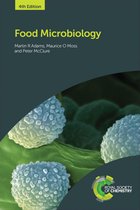
lab assignments. The book referenced to in the lectures is: Food Microbiology 4th edition by Adams,
Moss and McClure.
Contents
Food Microbiology (FHM20306) ............................................................................................................. 1
Introduction to Food Microbiology ......................................................................................................... 2
Microbial spoilage ................................................................................................................................... 3
Growth kinetics and factors influencing growth ..................................................................................... 8
Microbial inactivation ........................................................................................................................... 23
Introduction to foodborne illnesses...................................................................................................... 30
Gram positive pathogens ...................................................................................................................... 33
Gram negative pathogens ..................................................................................................................... 39
Non-bacterial agents of foodborne disease.......................................................................................... 43
Fermentation ........................................................................................................................................ 54
Sampling and testing ............................................................................................................................. 65
Hygiene ................................................................................................................................................. 68
Report writing in food technology ........................................................................................................ 75
Outbreak investigation .......................................................................................................................... 79
Factsheet pathogenic bacteria .............................................................................................................. 80
Cheat sheet definitions ......................................................................................................................... 81
, © 2023 J. de Jong
Introduction to Food Microbiology
Introduction
In food microbiology we study the significance of microorganisms in food (chains).
• The good → fermentation
▪ Taste, shelf-life, health
• The bad → pathogens
▪ Bacteria, viruses, parasites, (myco)toxins
▪ Food safety
• The ugly → food quality
▪ Bacteria, yeasts, moulds
▪ Food quality
The lectures are scheduled around four topics: spoilage, fermentation, foodborne illnesses and
hygiene & control. Post-class activities: study book + exercises for practicing.
• Additional materials per topic (not obligatory).
, © 2023 J. de Jong
Microbial spoilage
Spoilage
Spoilage = change of characteristics in a food, making it no longer acceptable.
• Important for pleasure, sustainability and food security.
• Security isn’t safety: a spoiled product can be safe and a fresh product can be risky.
Spoilage association = the specific spoilage flora of a specific product.
Spoilage types
Not all spoilage is microbial. Microbiological food spoilage can manifest itself in several ways, often
occurring as a combination. Visible microbial growth may be apparent in the form of surface slime or
colonies, or degradation of structural components of the food, but the most common manifestation
will be chemical products of microbial metabolism, gas, pigments, polysaccharides, off-odours and
flavours.
• Microbial (acidification, odor formation, taste defects, slime formation, visual defects)
• Chemical and enzymatic (browning, fat oxidation)
• Physical (drying, fat segregation)
• Mechanical (bruised, broken)
• Insects
• Physiology of the product (over-ripe)
Microbial spoilage = smell, slime, colour change, etc. by metabolic products of growth.
• Many organisms are required: 107 CFU1 per gram or ml
• Depends on contamination (N0) and proliferation (μ) (growth)
The world is not sterile; not even dry products (e.g.: flour). There is no growth, but they are present
(except for sterilized foods).
Contamination (N0) (chapter 2)
Contamination comes from raw materials (animals, plants) and processing/environment (water,
equipment, air, people, vermin).
Quantification: in optimal conditions from one to ten million (107) organisms in 8 hours.
Not only on a Log scale, but also in reality microbial growth is exponential.
1
Colony forming units.
, © 2023 J. de Jong
Quantification = express something in a number with a proper unit.
• Calculate correctly and use a well-chosen unit, with an appropriate number of significant
digits (example: shelf life is 1.63587*1012 seconds = 52.000 years).
Microbial growth
Kinetics are influenced by:
• Intrinsic factors: physico-chemical2 characteristics of food.
o Nutrients, pH, buffer capacity, redox, aw, antimicrobials, structure
• Extrinsic factors: characteristics of environment.
o T, %RH, gas
• Implicit factors: properties and interactions micro-organisms.
o μopt, mutualism, antagonism, commensalism, extracellular enzymes, succession
• Processing: contamination, change of in-/extrinsic factors.
o Slicing, washing, packing, irradiation, pasteurization, sterilization, freezing, cooling,
high pressure, pulsed electric fields
Examples:
• Cut vegetables have shorter shelf life than regular vegetables.
• Cut meats have a longer shelf life than regular meats.
• Salt which has passed the ‘best before’ date can still be used.
Spoilage by micro-organisms
Microbial spoilage is caused by certain bacteria, moulds and yeasts. Viruses and parasites do not
grow in food, and therefore do not spoil foods, but can cause infections.
Bacteria in food: morphology
2
Properties relating to the principles of both physics and chemistry.
, © 2023 J. de Jong
Spoilage associations
The ultimate judgement as to whether a food is spoiled remains subjective. Total microbial counts
are generally a poor indicator of spoilage potential. Many of the organisms enumerated may not
grow in the food and many of those that do will not be responsible for spoilage. The value of
microbial enumeration techniques can be improved if they are specific to those organisms (SSO).
Spoilage associations are determined by the raw material flora, the processing, the preservation and
the storage conditions of a food product. These factors influence the shelf life of a product and the
spoilage processes.
Spoilage of milk (products)
Contamination of raw cow’s milk can originate from these sources:
• Contamination of teats via feed, faeces, bedding and soil.
• Pathogens enter teat due to teat infection (=mastitis).
• Bacteria persist in equipment, e.g. in decayed rubber parts.
In certain cases cows eat farm-made silage (corn, grass), which is conserved by lactic acid
fermentation. Sometimes oxygen can enter the surface layer of the pile → yeasts and moulds grow
→ consume acid and oxygen → anaerobic niches with high pH (=hotspots). Bacterial spores can
easily develop on hotspots. The spores come into the faeces and then enter the milk via the teats or
the environment.
Spores from Bacillus and L. monocytogenes can naturally occur in the soil around cows. Pathogenic
bacteria from the environment, like Campylobacter, Salmonella and E. coli O157 can spread via the
intestinal tract of the animals.
If a cow’s udders are infected, microorganisms can contaminate the milk. Various causitive agents for
mastitis are: Staphylococcus aureus, E. coli, Streptococcus and Pseudomonas aeriginosa.
• Cow with acute mastitis: 108 cfu/ml
• Cow with subclinical mastitis: 105 cfu/ml
• Healthy cow: 102-103 cfu/ml
To keep the microorganisms out, the farmer should not feed mouldy silage, clean teats and milking
equipment to prevent transmission. The producer can impact this by managing a milk quality
payment system → penalty for ‘dirty’ milk, bonus for ‘clean’ milk. Once the milk enters the factory,
the producer can kill the microorganisms via pasteurisation or sterilisation, because even perfectly
handled raw milk is not sterile. Bactofugation (=centrifugation of milk) or microfiltration is also a
possibility. Pasteurisation, bactofugation and microfiltration will only reduce the contamination.
Measures to preserve the food product: low storage temperature, lower aw, acidify by fermentation.
Shelf stable products (e.g. UHT milk, milk powder) do not need to be stored cooled.
Food Microbiology (FHM20306)
This summary was written in the academic year 2023-2024. It is based on the book, lectures and dry-
lab assignments. The book referenced to in the lectures is: Food Microbiology 4th edition by Adams,
Moss and McClure.
Contents
Food Microbiology (FHM20306) ............................................................................................................. 1
Introduction to Food Microbiology ......................................................................................................... 2
Microbial spoilage ................................................................................................................................... 3
Growth kinetics and factors influencing growth ..................................................................................... 8
Microbial inactivation ........................................................................................................................... 23
Introduction to foodborne illnesses...................................................................................................... 30
Gram positive pathogens ...................................................................................................................... 33
Gram negative pathogens ..................................................................................................................... 39
Non-bacterial agents of foodborne disease.......................................................................................... 43
Fermentation ........................................................................................................................................ 54
Sampling and testing ............................................................................................................................. 65
Hygiene ................................................................................................................................................. 68
Report writing in food technology ........................................................................................................ 75
Outbreak investigation .......................................................................................................................... 79
Factsheet pathogenic bacteria .............................................................................................................. 80
Cheat sheet definitions ......................................................................................................................... 81
, © 2023 J. de Jong
Introduction to Food Microbiology
Introduction
In food microbiology we study the significance of microorganisms in food (chains).
• The good → fermentation
▪ Taste, shelf-life, health
• The bad → pathogens
▪ Bacteria, viruses, parasites, (myco)toxins
▪ Food safety
• The ugly → food quality
▪ Bacteria, yeasts, moulds
▪ Food quality
The lectures are scheduled around four topics: spoilage, fermentation, foodborne illnesses and
hygiene & control. Post-class activities: study book + exercises for practicing.
• Additional materials per topic (not obligatory).
, © 2023 J. de Jong
Microbial spoilage
Spoilage
Spoilage = change of characteristics in a food, making it no longer acceptable.
• Important for pleasure, sustainability and food security.
• Security isn’t safety: a spoiled product can be safe and a fresh product can be risky.
Spoilage association = the specific spoilage flora of a specific product.
Spoilage types
Not all spoilage is microbial. Microbiological food spoilage can manifest itself in several ways, often
occurring as a combination. Visible microbial growth may be apparent in the form of surface slime or
colonies, or degradation of structural components of the food, but the most common manifestation
will be chemical products of microbial metabolism, gas, pigments, polysaccharides, off-odours and
flavours.
• Microbial (acidification, odor formation, taste defects, slime formation, visual defects)
• Chemical and enzymatic (browning, fat oxidation)
• Physical (drying, fat segregation)
• Mechanical (bruised, broken)
• Insects
• Physiology of the product (over-ripe)
Microbial spoilage = smell, slime, colour change, etc. by metabolic products of growth.
• Many organisms are required: 107 CFU1 per gram or ml
• Depends on contamination (N0) and proliferation (μ) (growth)
The world is not sterile; not even dry products (e.g.: flour). There is no growth, but they are present
(except for sterilized foods).
Contamination (N0) (chapter 2)
Contamination comes from raw materials (animals, plants) and processing/environment (water,
equipment, air, people, vermin).
Quantification: in optimal conditions from one to ten million (107) organisms in 8 hours.
Not only on a Log scale, but also in reality microbial growth is exponential.
1
Colony forming units.
, © 2023 J. de Jong
Quantification = express something in a number with a proper unit.
• Calculate correctly and use a well-chosen unit, with an appropriate number of significant
digits (example: shelf life is 1.63587*1012 seconds = 52.000 years).
Microbial growth
Kinetics are influenced by:
• Intrinsic factors: physico-chemical2 characteristics of food.
o Nutrients, pH, buffer capacity, redox, aw, antimicrobials, structure
• Extrinsic factors: characteristics of environment.
o T, %RH, gas
• Implicit factors: properties and interactions micro-organisms.
o μopt, mutualism, antagonism, commensalism, extracellular enzymes, succession
• Processing: contamination, change of in-/extrinsic factors.
o Slicing, washing, packing, irradiation, pasteurization, sterilization, freezing, cooling,
high pressure, pulsed electric fields
Examples:
• Cut vegetables have shorter shelf life than regular vegetables.
• Cut meats have a longer shelf life than regular meats.
• Salt which has passed the ‘best before’ date can still be used.
Spoilage by micro-organisms
Microbial spoilage is caused by certain bacteria, moulds and yeasts. Viruses and parasites do not
grow in food, and therefore do not spoil foods, but can cause infections.
Bacteria in food: morphology
2
Properties relating to the principles of both physics and chemistry.
, © 2023 J. de Jong
Spoilage associations
The ultimate judgement as to whether a food is spoiled remains subjective. Total microbial counts
are generally a poor indicator of spoilage potential. Many of the organisms enumerated may not
grow in the food and many of those that do will not be responsible for spoilage. The value of
microbial enumeration techniques can be improved if they are specific to those organisms (SSO).
Spoilage associations are determined by the raw material flora, the processing, the preservation and
the storage conditions of a food product. These factors influence the shelf life of a product and the
spoilage processes.
Spoilage of milk (products)
Contamination of raw cow’s milk can originate from these sources:
• Contamination of teats via feed, faeces, bedding and soil.
• Pathogens enter teat due to teat infection (=mastitis).
• Bacteria persist in equipment, e.g. in decayed rubber parts.
In certain cases cows eat farm-made silage (corn, grass), which is conserved by lactic acid
fermentation. Sometimes oxygen can enter the surface layer of the pile → yeasts and moulds grow
→ consume acid and oxygen → anaerobic niches with high pH (=hotspots). Bacterial spores can
easily develop on hotspots. The spores come into the faeces and then enter the milk via the teats or
the environment.
Spores from Bacillus and L. monocytogenes can naturally occur in the soil around cows. Pathogenic
bacteria from the environment, like Campylobacter, Salmonella and E. coli O157 can spread via the
intestinal tract of the animals.
If a cow’s udders are infected, microorganisms can contaminate the milk. Various causitive agents for
mastitis are: Staphylococcus aureus, E. coli, Streptococcus and Pseudomonas aeriginosa.
• Cow with acute mastitis: 108 cfu/ml
• Cow with subclinical mastitis: 105 cfu/ml
• Healthy cow: 102-103 cfu/ml
To keep the microorganisms out, the farmer should not feed mouldy silage, clean teats and milking
equipment to prevent transmission. The producer can impact this by managing a milk quality
payment system → penalty for ‘dirty’ milk, bonus for ‘clean’ milk. Once the milk enters the factory,
the producer can kill the microorganisms via pasteurisation or sterilisation, because even perfectly
handled raw milk is not sterile. Bactofugation (=centrifugation of milk) or microfiltration is also a
possibility. Pasteurisation, bactofugation and microfiltration will only reduce the contamination.
Measures to preserve the food product: low storage temperature, lower aw, acidify by fermentation.
Shelf stable products (e.g. UHT milk, milk powder) do not need to be stored cooled.