Human
( ÚÍfiÎReproduction
2 !ÌÔÏ·Ú‡ÒÊÏÎ
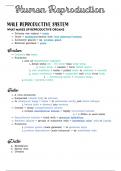
Male reproductive system
Ue^q!j^
WHAT hbp!rUP
MAKES m!oREPRODUCTiVE
bmolar`qfsb!lod^kp=!
ORGANS
Primary sex organs = testis
Ducts = epididymis/sperm duct (vas deferens)/urethra
Accessory glands = eg. prostate gland
External genitalia = penis
Scrotum:
Contains the testis
Functions:
↳ acts as temperature regulator
↳ keeps testis 2°C – 3°C lower than body temp.
↳ lower temp. = needed = form fertile sperm
↳ cold conditions = testis = pulled closer to abdomen = warmth
↳ warm conditions = testis = suspended well away from body
↳ developing sperm = constant temp.
↳ houses + protects testis
Testis:
2 oval structures
Suspended outside body in scrotum
In embryonic stage = testis = in abdominal cavity just below kidneys
↳ before birth = descend into scrotum
Consist = many compartments/ lobules
↳ contain seminiferous tubules = highly convoluted tubules
↳ = ± 250m in each testis
Seminiferous tubules = lined with = germinal epithelium
Between tubules = groups of endocrine cells = interstitial cells/ cells of Leydig
Functions:
↳ produce sperm (male gametes) = in germinal layer
↳ produce testosterone (male hormone) = by interstitial cells
Ducts:
a. Epididymis
b. Sperm duct
c. Urethra
, a. Epididymis
Seminiferous tubules join = form epididymis
Epididymis = highly convoluted tubule = ± 5m long
Functions:
↳ immature sperm enter epididymis where
↳ sperm = mature = become motile + fertile
↳ sperm = stored = several months
↳ eventually = broken down by epithelial cells of epididymis
↳ reabsorbed into body
b. Vas deferens (sperm duct)
Muscular duct
Continuation of epididymis
Leaves scrotum passes through prostate gland enters urethra
Function:
↳ pushes mature sperm = peristaltic waves = epididymis to urethra
↳ known as = ejaculation
*peristatic wave = strong contraction of smooth muscle in walls of duct
c. Urethra
= duct @ end of uro-genital system
Leads to exterior
Function:
↳ forms = common duct
↳ for transportation of = semen + urine
↳ 2 processes occur together
Prostate gland
Plum-sized gland
Surrounds urethra @ base of bladder
Function:
↳ secretes fluid = aids = transport sperm
= contains enzymes = make sperm = more active
= fluid = 1/3 of seminal fluid = semen
age = enlarges = pressure on urethra = slows down = emptying of bladder
Gland = can be surgically removed
,Cowper’s gland
2 Cowper’s glands = found = @ base of penis
Function:
↳ produces alkaline mucous-like fluid when sexually aroused
↳ fluid = neutralises acidic urine = that = may = still present = urethra
= lubricates urethra + external urethral opening
↳ protect sperm from = mechanical damage during ejaculation
Penis
Male external organ
Urethra passes through it
Consists = spongy tissue = erectile tissue
Running length of penis = 3 sections = erectile tissue
↳ 2 sections = dorsal side = corpus cavernosa
↳ 1 section = ventral side = corpus spongiosum
Erection = brought = = dilation = dorsal + central arteries = blood to penis
↳ allows more blood = fill 3 spongy erectile tissue chambers
↳ penis = lengthen + stiffen = erection
↳ without = sperm transfer to vagina = sexual intercourse
Head of penis = sensitive = protected = foreskin
↳ sometimes = removed = simple operation = circumcision
↳ for religious/cultural reasons
↳ if foreskin = too tight
Function:
↳ deposits semen with sperm into female’s vagina = during copulation
↳ = sperm brought closer to egg = for fertilisation
↳ = increases chances = fertilisation
Human penis is distinctive:
Human male = only mammal erectile bone (baculum) in penis
↳ entirely relies = engorgement (filling up) with blood = erect state
attached to abdominal wall = hangs free
↳ contrast to most mammals
↳ penis = stored internally until = erect
Semen (Seminal fluid):
Consists of = sperm from testis
= seminal fluid = from sperm duct + accessory glands (eg. prostate)
Ave. volume = semen for ejaculation = 2,5 ml to 5 ml
Ave. no. sperm ejaculated = 50 to 150 mil. per ml
↳ = 700 mil per ejaculation
Semen = sperm count = less than 20 mil. Per ml = infertile
, Erection vs. ejaculation:
Erection = stiffening of penis
Ejaculation = expulsion of semen
( ÚÍfiÎReproduction
2 !ÌÔÏ·Ú‡ÒÊÏÎ
Male reproductive system
Ue^q!j^
WHAT hbp!rUP
MAKES m!oREPRODUCTiVE
bmolar`qfsb!lod^kp=!
ORGANS
Primary sex organs = testis
Ducts = epididymis/sperm duct (vas deferens)/urethra
Accessory glands = eg. prostate gland
External genitalia = penis
Scrotum:
Contains the testis
Functions:
↳ acts as temperature regulator
↳ keeps testis 2°C – 3°C lower than body temp.
↳ lower temp. = needed = form fertile sperm
↳ cold conditions = testis = pulled closer to abdomen = warmth
↳ warm conditions = testis = suspended well away from body
↳ developing sperm = constant temp.
↳ houses + protects testis
Testis:
2 oval structures
Suspended outside body in scrotum
In embryonic stage = testis = in abdominal cavity just below kidneys
↳ before birth = descend into scrotum
Consist = many compartments/ lobules
↳ contain seminiferous tubules = highly convoluted tubules
↳ = ± 250m in each testis
Seminiferous tubules = lined with = germinal epithelium
Between tubules = groups of endocrine cells = interstitial cells/ cells of Leydig
Functions:
↳ produce sperm (male gametes) = in germinal layer
↳ produce testosterone (male hormone) = by interstitial cells
Ducts:
a. Epididymis
b. Sperm duct
c. Urethra
, a. Epididymis
Seminiferous tubules join = form epididymis
Epididymis = highly convoluted tubule = ± 5m long
Functions:
↳ immature sperm enter epididymis where
↳ sperm = mature = become motile + fertile
↳ sperm = stored = several months
↳ eventually = broken down by epithelial cells of epididymis
↳ reabsorbed into body
b. Vas deferens (sperm duct)
Muscular duct
Continuation of epididymis
Leaves scrotum passes through prostate gland enters urethra
Function:
↳ pushes mature sperm = peristaltic waves = epididymis to urethra
↳ known as = ejaculation
*peristatic wave = strong contraction of smooth muscle in walls of duct
c. Urethra
= duct @ end of uro-genital system
Leads to exterior
Function:
↳ forms = common duct
↳ for transportation of = semen + urine
↳ 2 processes occur together
Prostate gland
Plum-sized gland
Surrounds urethra @ base of bladder
Function:
↳ secretes fluid = aids = transport sperm
= contains enzymes = make sperm = more active
= fluid = 1/3 of seminal fluid = semen
age = enlarges = pressure on urethra = slows down = emptying of bladder
Gland = can be surgically removed
,Cowper’s gland
2 Cowper’s glands = found = @ base of penis
Function:
↳ produces alkaline mucous-like fluid when sexually aroused
↳ fluid = neutralises acidic urine = that = may = still present = urethra
= lubricates urethra + external urethral opening
↳ protect sperm from = mechanical damage during ejaculation
Penis
Male external organ
Urethra passes through it
Consists = spongy tissue = erectile tissue
Running length of penis = 3 sections = erectile tissue
↳ 2 sections = dorsal side = corpus cavernosa
↳ 1 section = ventral side = corpus spongiosum
Erection = brought = = dilation = dorsal + central arteries = blood to penis
↳ allows more blood = fill 3 spongy erectile tissue chambers
↳ penis = lengthen + stiffen = erection
↳ without = sperm transfer to vagina = sexual intercourse
Head of penis = sensitive = protected = foreskin
↳ sometimes = removed = simple operation = circumcision
↳ for religious/cultural reasons
↳ if foreskin = too tight
Function:
↳ deposits semen with sperm into female’s vagina = during copulation
↳ = sperm brought closer to egg = for fertilisation
↳ = increases chances = fertilisation
Human penis is distinctive:
Human male = only mammal erectile bone (baculum) in penis
↳ entirely relies = engorgement (filling up) with blood = erect state
attached to abdominal wall = hangs free
↳ contrast to most mammals
↳ penis = stored internally until = erect
Semen (Seminal fluid):
Consists of = sperm from testis
= seminal fluid = from sperm duct + accessory glands (eg. prostate)
Ave. volume = semen for ejaculation = 2,5 ml to 5 ml
Ave. no. sperm ejaculated = 50 to 150 mil. per ml
↳ = 700 mil per ejaculation
Semen = sperm count = less than 20 mil. Per ml = infertile
, Erection vs. ejaculation:
Erection = stiffening of penis
Ejaculation = expulsion of semen