Physical Defences :
·
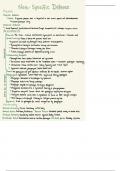
Callose: B
glucose polymer that is
deposited in cell walls , spaces
and plasmodesmata
↳ Prevents
pathogen entry
Chemical Defences :
↳ Insect
Repellant insectisides , ,
antibacterial/fungal components anti-comecyte enzymes
, ,
toxins
Barriers The :
skin , mucous membranes ,
lysozymes in tears/urine ,
Stomach acid
Blood
Clotting
:
forms a barrier and prevents blood loss
:Platelets activated by damaged tissue produces thromboplastin
2 .
Thromoplastin Catalyses prothrombin turning into thrombin
3
Thrombin
Catalyses fibrinogen turning into fibrin
.
- 4
[collagen fibers) are deposited forming a clot
.
Fibrin ,
- Inflammatory Response :
Damaged mast cens produce histamines and cytokines
.
2 Histamines cause vasodilation the temperature raises
so prevents pathogens reproducing
.
3 .
Histamines mane vessels more lealy forming more tissue fluid
4 blood
phagocytes / white
Cytokines ceus attract
.
-
pathogens and give optimum conditions for the specific immune system
Fevers Kill :
Phagocytosis Specialised white blood ceus engulf and destroy pathogens
.
:
1 .
Phagocyte attracted to the
pathogen by cytokines
2
Phagocyte foreign pathogen binds to the
.
.
3
I Phagocyte engulfs the
pathogen forming a phagosome
4
E Phagosome combines with
lysosome forming a phagolysosome a
S
break down the
Digestive enzymes
pathogens leaving the antigens
.
E Antigens combine with MHC in cytoplasm to form on MHC- antigen complex
6 .
complex is displayed making an antigen-presenting cen
7 MAC .
Opsonins Bind to pathogens for easier recognition by phagocytes
:
Natural
Immunity Occurs Naturally in the body
:
Natural Active Antibody Production Natural Passive : :
Antibodies passed along in breast milk
Artificial Immunity Provided by disease
medical science
against deadly
:
Artificial Active Vaccination with an inactive
pathogen Artificial passive Antibody injection
: :
·
Callose: B
glucose polymer that is
deposited in cell walls , spaces
and plasmodesmata
↳ Prevents
pathogen entry
Chemical Defences :
↳ Insect
Repellant insectisides , ,
antibacterial/fungal components anti-comecyte enzymes
, ,
toxins
Barriers The :
skin , mucous membranes ,
lysozymes in tears/urine ,
Stomach acid
Blood
Clotting
:
forms a barrier and prevents blood loss
:Platelets activated by damaged tissue produces thromboplastin
2 .
Thromoplastin Catalyses prothrombin turning into thrombin
3
Thrombin
Catalyses fibrinogen turning into fibrin
.
- 4
[collagen fibers) are deposited forming a clot
.
Fibrin ,
- Inflammatory Response :
Damaged mast cens produce histamines and cytokines
.
2 Histamines cause vasodilation the temperature raises
so prevents pathogens reproducing
.
3 .
Histamines mane vessels more lealy forming more tissue fluid
4 blood
phagocytes / white
Cytokines ceus attract
.
-
pathogens and give optimum conditions for the specific immune system
Fevers Kill :
Phagocytosis Specialised white blood ceus engulf and destroy pathogens
.
:
1 .
Phagocyte attracted to the
pathogen by cytokines
2
Phagocyte foreign pathogen binds to the
.
.
3
I Phagocyte engulfs the
pathogen forming a phagosome
4
E Phagosome combines with
lysosome forming a phagolysosome a
S
break down the
Digestive enzymes
pathogens leaving the antigens
.
E Antigens combine with MHC in cytoplasm to form on MHC- antigen complex
6 .
complex is displayed making an antigen-presenting cen
7 MAC .
Opsonins Bind to pathogens for easier recognition by phagocytes
:
Natural
Immunity Occurs Naturally in the body
:
Natural Active Antibody Production Natural Passive : :
Antibodies passed along in breast milk
Artificial Immunity Provided by disease
medical science
against deadly
:
Artificial Active Vaccination with an inactive
pathogen Artificial passive Antibody injection
: :