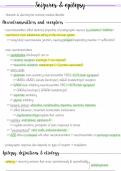
Seizures & epilepsy
- dramatic & alarming but common medical disorder
Neurotransmitters and receptors
- neurotransmitters affect electrical properties of postsynaptic neurons by excitation/ inhibition
- neurotoxins: toxic substances acting on the nervous system
=> many block neuromuscular junction, causing paralysis (respiratory muscles => suffocation)
- main neurotransmitters
=> acetylcholine (cholinergic): act on
=> nicotinic receptors: ionotropic (= ion-channel)
=> muscarinic receptors: metabotropic (= G-protein associated)
=> amino acids
=> glutamate: main excitatory neurotransmitter CNS (~60% brain synapses)
=> NMDA, AMPA, kainate (ionotropic), mGluR (metabotropic) receptors
=> GABA: main inhibitory neurotransmitter CNS (~40% brain synapses)
=> GABAa (ionotropic), GABAb (metabotropic)
=> aspartate: excitatory
=> glycine: inhibitory
=> biogenic amines: adrenaline, noradrenaline, dopamine, serotonin, histamine
=> affect behaviour, movement, homeostatic mechanisms
=> psychoactive drugs regulate their actions
=> peptides: endorphines, substance P
=> regulate emotions, perception of pain, responses to stress
=> “unconventional”: nitric oxide, endocannobinoids
=> ATP often co-released with other neurotransmitters + neurotransmitter on purinergic receptors
- postsynaptic response also depends on type of receptor + modulators
Epilepsy: definitions & etiology
- epilepsy = recurring seizures that occur spontaneously & unpredictably
epileptogenesis
, - seizure = ictus = transient alteration of behaviour due to an abnormal excessive and synchronous
neuronal activity in the cerebral cortex
- electroencephalography (EEG) = recording of electrical activity in the brain
=> detect sings of neurological dysfunction in epileptic patients febrile seizure
(young child)
- provoked seizures (brought by systemic/ environmental factor: flashing light, fever, alcohol...)
=> not epilepsy photosensitive seizure
- very common: 50-60m people worldwide (= 1% pop)
=> symptomatic epilepsy: anatomical/ pathological abnormalities (genetic) and/or clinical features
indicative of an underlying disease or condition (acquired: brain injury, infections, stroke, tumour)
=> idiopathic epilepsy: in 60-70% cases, cause is not known (probably genetic inheritance)
How is EEG used in epilepsy?
- EEG records abnormal electrical activity through electrodes attached to the scalp
=> each line = 1 electrode => activity of large groups of neurons active at the same time
=> measures postsynaptic potentials (not a.p.)
=> the greater amplitude of the signal, the more synchronous is the activity
- advantages: low cost/ fast & precise
- limitations: poor spatial precision/ limited to cortex region
Types of seizures
- originate primarily in cortex (frontal, parietal, occipital, temporal lobes: including hippocampus)
=> seizure may spread to other regions
- partial/ focal seizures = restricted area involved // generalised seizures = entire brain involved
- partial with secondary generalisation seizures: starts locally & later spreads to both hemispheres
- dramatic & alarming but common medical disorder
Neurotransmitters and receptors
- neurotransmitters affect electrical properties of postsynaptic neurons by excitation/ inhibition
- neurotoxins: toxic substances acting on the nervous system
=> many block neuromuscular junction, causing paralysis (respiratory muscles => suffocation)
- main neurotransmitters
=> acetylcholine (cholinergic): act on
=> nicotinic receptors: ionotropic (= ion-channel)
=> muscarinic receptors: metabotropic (= G-protein associated)
=> amino acids
=> glutamate: main excitatory neurotransmitter CNS (~60% brain synapses)
=> NMDA, AMPA, kainate (ionotropic), mGluR (metabotropic) receptors
=> GABA: main inhibitory neurotransmitter CNS (~40% brain synapses)
=> GABAa (ionotropic), GABAb (metabotropic)
=> aspartate: excitatory
=> glycine: inhibitory
=> biogenic amines: adrenaline, noradrenaline, dopamine, serotonin, histamine
=> affect behaviour, movement, homeostatic mechanisms
=> psychoactive drugs regulate their actions
=> peptides: endorphines, substance P
=> regulate emotions, perception of pain, responses to stress
=> “unconventional”: nitric oxide, endocannobinoids
=> ATP often co-released with other neurotransmitters + neurotransmitter on purinergic receptors
- postsynaptic response also depends on type of receptor + modulators
Epilepsy: definitions & etiology
- epilepsy = recurring seizures that occur spontaneously & unpredictably
epileptogenesis
, - seizure = ictus = transient alteration of behaviour due to an abnormal excessive and synchronous
neuronal activity in the cerebral cortex
- electroencephalography (EEG) = recording of electrical activity in the brain
=> detect sings of neurological dysfunction in epileptic patients febrile seizure
(young child)
- provoked seizures (brought by systemic/ environmental factor: flashing light, fever, alcohol...)
=> not epilepsy photosensitive seizure
- very common: 50-60m people worldwide (= 1% pop)
=> symptomatic epilepsy: anatomical/ pathological abnormalities (genetic) and/or clinical features
indicative of an underlying disease or condition (acquired: brain injury, infections, stroke, tumour)
=> idiopathic epilepsy: in 60-70% cases, cause is not known (probably genetic inheritance)
How is EEG used in epilepsy?
- EEG records abnormal electrical activity through electrodes attached to the scalp
=> each line = 1 electrode => activity of large groups of neurons active at the same time
=> measures postsynaptic potentials (not a.p.)
=> the greater amplitude of the signal, the more synchronous is the activity
- advantages: low cost/ fast & precise
- limitations: poor spatial precision/ limited to cortex region
Types of seizures
- originate primarily in cortex (frontal, parietal, occipital, temporal lobes: including hippocampus)
=> seizure may spread to other regions
- partial/ focal seizures = restricted area involved // generalised seizures = entire brain involved
- partial with secondary generalisation seizures: starts locally & later spreads to both hemispheres