Michelle van Diën – 413154md
Problem 4. Reading problems or dyslexia?
Part A: To play by the rules
DSM IV-R criteria
DSM 5 criteria
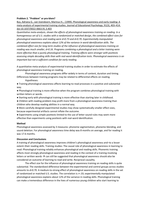
Snowling, M. J., & Hulme, C. (2012). Annual research review: The nature and classification of reading
disorders a commentary on proposals for DSM 5. The Journal of Child Psychology and Psychiatry, 53,
593–607. doi:10.1111/j.1469-7610.2011.02495.x
Reviews our understanding of reading disorders in children and relates it to current proposals for their
classification in DSM-5. Two different, commonly occurring, forms of reading disorder in children
which arise from different underlying language difficulties:
1. Dyslexia, or decoding difficulty: children who have difficulty in mastering the relationships between
the spelling patterns of words and their pronunciations. Typically read aloud inaccurately and slowly,
and experience additional problems with spelling. Appears to arise principally from a weakness in
phonological (speech sound) skills, and there is good evidence that it can be ameliorated by
systematic phonic teaching combined with phonological awareness training.
2. Reading comprehension impairment: children read aloud accurately and fluently, but have
difficulty understanding what they have read. Appears to arise from weaknesses in a range of oral
language skills including poor vocabulary knowledge, weak grammatical skills and difficulties in oral
language comprehension. Suggestion: the omission of reading comprehension impairment from DSM-
5 is a serious one that should be remedied.
Both dyslexia and reading comprehension impairment are dimensional in nature, and show strong
continuities with other disorders of language. Recognizing the continuities between reading and
language disorders has important implications for assessment and treatment, and the high rates of
comorbidity between reading disorders and other seemingly disparate disorders (incl. ADHD and
motor disorders) raises important challenges for understanding these disorders.
Introduction
Two forms of reading disorder: difficulties with decoding (dyslexia) and difficulties with
comprehension. Have different causes and require different treatments. Article discusses the
proposed classification of reading disorders in DSM-5 and highlights a concern that the focus is on
dyslexia. Important for DSM-5 to take a developmental perspective -> necessary to recognize the
continuities between language and reading disorders as well as co-morbidities with other disorders
that may increase the risk of learning disorder. Neither disorders of reading accuracy (dyslexia) nor of
reading comprehension (‘reading comprehension impairment’) lend themselves to categorical
diagnosis. -> An understanding of multiple risk factors and causal mechanisms is essential if
practitioners are to ensure that children’s reading difficulties are identified early, and timely
interventions are put in place.
DSM-5 proposals for the classification of reading disorders
In DSM-5, the category ‘Neurodevelopmental Disorders’ lists Learning Disorders and Communication
Disorders amongst a variety of other disorders that have their onset during the preschool or early
school years. Not clear from the listing in DSM-5 is that there are inter-relationships between the
different disorders.
The relationships between reading, speech and language impairments are not transparent.
Dyslexia: an impairment that affects the development of decoding skills in reading, and in
DSM-5 this term replaces ‘reading disorder’. ‘Decoding’: the component reading skills that reflect the
Problem 4. Reading problems or dyslexia?
Part A: To play by the rules
DSM IV-R criteria
DSM 5 criteria
Snowling, M. J., & Hulme, C. (2012). Annual research review: The nature and classification of reading
disorders a commentary on proposals for DSM 5. The Journal of Child Psychology and Psychiatry, 53,
593–607. doi:10.1111/j.1469-7610.2011.02495.x
Reviews our understanding of reading disorders in children and relates it to current proposals for their
classification in DSM-5. Two different, commonly occurring, forms of reading disorder in children
which arise from different underlying language difficulties:
1. Dyslexia, or decoding difficulty: children who have difficulty in mastering the relationships between
the spelling patterns of words and their pronunciations. Typically read aloud inaccurately and slowly,
and experience additional problems with spelling. Appears to arise principally from a weakness in
phonological (speech sound) skills, and there is good evidence that it can be ameliorated by
systematic phonic teaching combined with phonological awareness training.
2. Reading comprehension impairment: children read aloud accurately and fluently, but have
difficulty understanding what they have read. Appears to arise from weaknesses in a range of oral
language skills including poor vocabulary knowledge, weak grammatical skills and difficulties in oral
language comprehension. Suggestion: the omission of reading comprehension impairment from DSM-
5 is a serious one that should be remedied.
Both dyslexia and reading comprehension impairment are dimensional in nature, and show strong
continuities with other disorders of language. Recognizing the continuities between reading and
language disorders has important implications for assessment and treatment, and the high rates of
comorbidity between reading disorders and other seemingly disparate disorders (incl. ADHD and
motor disorders) raises important challenges for understanding these disorders.
Introduction
Two forms of reading disorder: difficulties with decoding (dyslexia) and difficulties with
comprehension. Have different causes and require different treatments. Article discusses the
proposed classification of reading disorders in DSM-5 and highlights a concern that the focus is on
dyslexia. Important for DSM-5 to take a developmental perspective -> necessary to recognize the
continuities between language and reading disorders as well as co-morbidities with other disorders
that may increase the risk of learning disorder. Neither disorders of reading accuracy (dyslexia) nor of
reading comprehension (‘reading comprehension impairment’) lend themselves to categorical
diagnosis. -> An understanding of multiple risk factors and causal mechanisms is essential if
practitioners are to ensure that children’s reading difficulties are identified early, and timely
interventions are put in place.
DSM-5 proposals for the classification of reading disorders
In DSM-5, the category ‘Neurodevelopmental Disorders’ lists Learning Disorders and Communication
Disorders amongst a variety of other disorders that have their onset during the preschool or early
school years. Not clear from the listing in DSM-5 is that there are inter-relationships between the
different disorders.
The relationships between reading, speech and language impairments are not transparent.
Dyslexia: an impairment that affects the development of decoding skills in reading, and in
DSM-5 this term replaces ‘reading disorder’. ‘Decoding’: the component reading skills that reflect the