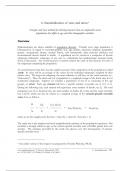
Epidemiology " All about Standardization of rates and ratios
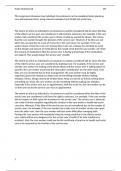
Overview Epidemiologists are always mindful of population diversity. Virtually every large population is heterogeneous in regard to sociodemographic (e.g., age, gender, education, religion), geographic, genetic, occupational, dietary, medical history, and innumerable other personal attributes and environmental factors related to health. A population can be viewed as a composite of diverse subgroups (ultimately, subgroups of size one, i.e., individuals, but epidemiologic measures break down at that point). Any overall measure or statistic reflects the value of that measure for each of the subgroups comprising the population. An overall measure that does not take explicit account of the composition of the population is called crude. Its value will be an average of the values for the individual subgroups, weighted by their relative sizes. The larger the subgroup, the more influence it will have on the crude measure (i.e., "democracy"). Thus, the death rate for a population is a weighted average of the death rates for its component subgroups. Suppose we consider a population of size N as consisting of five age groups, or strata. Each age stratum will have a specific number of people, say ni (i=1 to 5). During the following year, each stratum will experience some number of deaths, say di. The total population size, N, is therefore Σni, the total number of deaths, D, is Σdi, and the crude mortality rate is D/N, which can also be written as a weighted average of the stratum-specific mortality rates, di/ni, as follows
Escuela, estudio y materia
- Institución
- Epidemiology Course
- Grado
- Epidemiology Course
Información del documento
- Subido en
- 19 de septiembre de 2023
- Número de páginas
- 23
- Escrito en
- 2021/2022
- Tipo
- Notas de lectura
- Profesor(es)
- Dennis muya
- Contiene
- Standardization in epidemiology
Temas
-
epidemiology
-
standidization
-
odds ratio
-
crude
-
strata
-
crude rates
-
incidence
-
prevalence
-
adjustment and standardization
-
standardized ratios and differences

Documento también disponible en un lote