

exam 3 nur 155 with verified correct answers
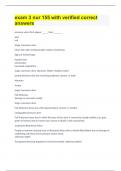
pressure ulcers first appear _____ then _______ pale red Stage 1 pressure ulcer intact skin with nonblanchable redness (erythema) Signs of hemorrhage hypotension tachycardia increased respirations stage 2 pressure ulcer (abrasion, blister, shallow crater) partial thickness skin loss involving epidermis, dermis, or both Abrasion scrape stage 3 pressure ulcer Full-thickness damage or necrosis to subQ stage 4 pressure ulcer Full-thickness tissue loss with exposed bone, muscle, or tendon unstageable pressure ulcer Full thickness tissue loss in which the base of the ulcer is covered by slough (yellow, tan, gray, green or brown) and/or eschar (tan, brown or black) in the wound bed. suspected deep tissue injury Purple or maroon localized area of discolored intact skin or blood-filled blister due to damage of underlying soft tissue from pressure and/or shear. unknown depth Transparent dressing (tegaderm) (semi-permeable, adhesive plastic) stage 1-2 friction and contamination protection facilitate cell migration and wound assessment provide insulation by preventing evaporation transparent dressings act as temporary skin and are left in place until healing has occurred or as long as they remain intact transparent dressing uses stage 1 pressure ulcer burns superficial wounds central line dressing iv dressing Hydrocolloid dressing (DuoDerm) (waterproof) absorbs exudate (contain wound odor) worn up to 7 days (3-7 days) produce moist environment shearing prevention protect from bacteria,foreign debris,urine/feces can be molded to uneven body surfaces hydrocolloid dressings should NOT be used for infected wounds or fistulas hydrocolloid dressing uses stage 2-4 pressure ulcer autolytic debridement of eschar partial thickness wounds alginate (exudate absorber) dressing pack wound support debridement require secondary dressing absorb up to 20x weight alginate uses pressure ulcer (stage 3/4) skin tear venous stasis ulcer surgical wound wounds undergoing chemical debridement wound healing interventions moist wound healing 2500 ml fluids daily receive sufficient protein vitamin C,A,B1,B5 zinc turn every 2 hours (move, cough, deep breathe) ROM standard precautions special mattress Dehiscence partial or total rupture of sutured wound before it heals suture removal requires (removed 7-10 days post op) sterile technique clients at high risk for skin breakdown old fever immobile Dehiscence risk factor poor nutrition (malnutrition, obesity, dehydration, excessive vomit) poor circulation excessive strain on suture line (coughing/sneezing) 4-5 days post op trauma poor suturing signs of dehiscence? increased drainage partial thickness The dermis and epidermis are broken full thickness requires connective tissue repair involves dermis, epidermis, subQ, possible muscle and bone Healing by regeneration regrowth of tissues (abrasions and wounds) Primary intention healing tissue surfaces are approximated (closed) and there is minimal or no tissue loss, formation of minimal granulation tissue and scarring primary healing example closed surgical incision (staples/stitches or glue) Secondary intention healing (extensive) cant be closed considerable tissue loss long repair time risk for infection greater scarring secondary intention example pressure ulcer Tertiary healing Intention wound left open 3-5 days before being closed with suture heat and cold therapy are applied to the body for local and systemic effects heat therapy (vasodilation) sedative increases capillary permeability and inflammation(result in edema) increases cellular metabolism heat therapy uses joint stiffness (muscoskeletal) pain contracture promote circulation (DVT) cold therapy (vasoconstriction) local anesthetic decreases inflammation, capillary permeability, cellular metabolism cold therapy uses limit postinjury swelling/bleeding sport injuries (sprains, strains, fractures) cold therapy is contraindicated (not used) when there is open wound impaired circulation diabetic neuropathy binder used to support large areas of the body (abdominal binder, triangle sling) abdominal binder is a concern for impaired circulation (cyanotic, tingling, numbness, cool temp) skin breakdown (remove q2hrs to assess underlying skin/wound) abdominal binders are used to reduce stress on abdominal incision in a patient with adequate ventilatory capacity abdominal binder placement upper border of binder at waist lower border at level of gluteal fold fasten from bottom up incorrect abdominal placement over waist interferes with respiration if placed too low it interferes with elimination and walking Red (RYB color code of wound) protect/cover (via gentle cleanse, alcohol free barrier film, filling dead space with alginate, providing/changing TRANSPARENT or HYDROCOLLOID dressing) Yellow (RYB color code of wound) cleanse (damp to damp saline dressing, irrigation, ALGINATE dressing, topical antimicrobial) Black (RYB color code of wound) debride (sharp = scapel/scissors to remove dead tissue mechanical = scrubbing force or damp to damp dressing chemical= collagenase enzyme agents, papainurea autolytic= hydrocolloid or acrylic dressing) Jackson-Pratt drain (closed drainage system) interventions measure temp BID discontinue 3-5 days postop drain excess exudate wear gloves empty,measure, record atleast once a day observe for signs of infection (elevated temp, redness, edema, tenderness, purulent drainage) JP drains should be cleaned _____ opened with and alcohol swab after sensory perception (stimulus, receptor, impulse conduction, perception) involves the conscious organization and translation of the data or stimuli into meaningful information sensory reception process of receiving stimuli or data tactile touch sensory alterations include sensory ________, ____________ & __________ deprivation overload deficits sensory deprivation decrease or lack of meaningful stimuli alteration in perception, cognition and emotion sensory deprivation examples preoccupation with somatic complaints such as palpitations impaired memory confusion (periodic disorientation, hallucinations or delusions) decreased attention span and problem solving (difficulty concentrating) excessive yawning (or drowsiness/ sleeping) emotional liability (crying, annoyance over small matters, depression) Clients at risk for sensory deprivation confined in a nonstimulating (monotonous) environment emotional disorder (depression) limited social contact with friends or family unable to process stimuli (brain damage or on CNS medication) hearing or vision impaired mobility restrictions (ON BED REST, quadriplegia, paraplegia, traction apparatus) sensory overload occurs when a person is unable to process or manage the amount or intensity of sensory stimuli sensory overload causes (overstimulation) increased quality/quantity of internal stimuli (pain, anxiety, dyspnea) increased quality/quantity of external stimuli (noise, strangers, intrusive diagnostic studies) inability to disregard stimuli selectively sensory overload examples Anxiety racing thoughts increased muscle tension complaints of fatigue (sleeplesness/restleness) reduced task performance (problem solving) periodic or general disorientation clients at risk for sensory overload (ICU) pain/discomfort decreased cognitive ability (head injury) intrusive tubes in place (IV, cath, NG tube, endotracheal tube) acute illness (or admitted to an acute care facility) sensory deficit (deafness/hearing loss, vision impairment/blindness) impaired reception, perception, or both, of one or more of the senses nursing interventions for impaired hearing address the client by name and touch encourage hearing aid and the use of their visual sense (devices that flash to sounds, lip reading, sign language, amplified devices) speak slowly and clearly (DO NOT SHOUT, speak at a normal tone, don't turn away in the middle of talking) articulate consonants with particular care (don't over articulate) use longer phrases (or simple words and short sentence) nursing interventions for impaired vision (braille or service dog if blind) announce your presence (always stay in pt field of vision explain before touching explain environment sounds orient client to the arrangement of room furniture keep pathways clear (uncluttered) assist with ambulation (walk 1 foot ahead allowing pt to grasp your arm organize self care articles encourage stimulation of hearing taste touch and smell provide adequate room lighting (night light) color code around the house impaired vision is an example of sensory deprivation delirium (acute confusion, fluctuating change in mental status) temporary worsens at night (may be alert and oriented during day but confused and disoriented at night) disturbed or reversed sleep cycle hallucinations delirium cause/risk factors hearing or vision impairment dehydration sleep deprived infections cerebral or cardiovascular disease dementia (chronic confusion/memory impairment) gradual irreversible disturbed sleep cycle (fragmented, awakens during night) impaired judgement normal alertness delusions (no hallucinations) gustatory (taste) impairment teaching eat foods separately (emphasizes taste sensation) take sips of water between food diets with a variety of temperatures, textures and flavors (sour, sweet, salty, spicy) notice expiration date isotonic exercise (dynamic, aerobic) muscle contracts and produces active movement increases muscle tone, mass, strength increases blood flow to all parts of the body maintain joint flexibility and circulation isotonic exercises include ADL's active ROM physical conditioning (running, walking, cycling, swimming) pushing/pulling against object using trapeze in bed isometric exercise (static/setting) muscle contraction without joint movement exerting pressure against a solid object isometric exercise example quad sets squeezing a pillow with knees while tightening the thighs and holding for several seconds push ups
Información del documento
- Subido en
- 19 de septiembre de 2023
- Número de páginas
- 24
- Escrito en
- 2023/2024
- Tipo
- Examen
- Contiene
- Preguntas y respuestas

