Advanced Cardiovascular Life Support Exam Solved 100%
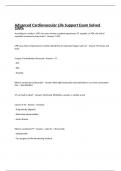
According to a study in 1993, for every minute a patient experiences VT, asystole, or PEA, the risk of mortality increases by how much? - Answer 7-10% CPR uses chest compressions to restore blood flow to important organs such as? - Answer The heart and brain 4 types of arrhythmias discussed - Answer - VT - PVT - PEA - Asystole What is ventricular tachycardia? - Answer Wide QRS tachycardia characterized by 3 or more consecutive PVC ~ 100-200 BPM VT can lead to what? - Answer Ventricular fibrillation, systole, or cardiac arrest Causes of VT - Answer - Ischemia - Drug toxicity (digoxin) - Electrolyte abnormalities - Heart disease What is sustained VT? - Answer - Lasts for > 30 seconds - Symptomatic - Can progress to life threatening incident What is unsustained VT? - Answer - Brief and self-limited - Asymptomatic How can V fib lead to death? - Answer No electric activity in the heart -> no cardiac output -> cardiac arrest -> death What is V fib caused by? - Answer - Scar tissue: MI or cardiomyopathy - Irritants: CAD, electrolyte abnormalities, hormones - Electrocution Tx for V-fib - Answer - ACLS - Correct underlying cause - ICD What is PEA and asystole? - Answer Absence of detectable pulse and the presence of some other form of electrical activity other than VT or PVT Tx for PEA/asystole - Answer CPR -> airway control -> IV access -> reconfirm asystole with a second lead -> do NOT defibrillate patient with asystole because the parasympathetic discharge that occurs with defibrillation reduces the change of ROSC and worsens outcomes Are the following recommended for PEA/asystole? Epinephrine Vasopressin Atropine - Answer Epinephrine is recommended; vasopressin and atropine are not In patients with PEA/asystole we must treat the underlying cause, which may include: - Answer - Hypovolemia - Hypoxia - Acidosis - Hyper/hypokalemia - Hypothermia - Hypoglycemia - Drug overdose - Tamponade - Thrombosis, coronary - Tension pneumothorax - PE - Trauma High quality CPR focuses on proper technique to ensure: - Answer - Adequate HR - Depth of compression -> 100-200 beats/minute - Full chest recoil after each compression (at least 2 inches) - Avoidance of excessive ventilation - Reduction in interruptions to increase compression fraction to 60% or above Basic life support focuses on what? (Hint: CAB) - Answer - Compressions - CAB = circulation, airway, and breathing
Escuela, estudio y materia
- Institución
- Acls
- Grado
- Acls
Información del documento
- Subido en
- 16 de septiembre de 2023
- Número de páginas
- 8
- Escrito en
- 2023/2024
- Tipo
- Examen
- Contiene
- Preguntas y respuestas
Temas
-
advanced cardiovascular life support stuvia
-
advanced cardiovascular life support exam solved 1
-
according to a study in 1993 for every minute a p
-
cpr uses chest compressions to restore blood flow

Documento también disponible en un lote