Human Anatomy and Physiology Exam 1 Questions & Answers Latest Updated
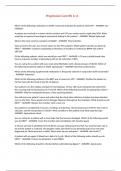
Anatomy - Answer the study of the structure of an organism Physiology - Answer the study of the functioning of an organism Cytology - Answer the study of cells Histology - Answer the study of tissues Molecular Biology - Answer the study of biological molecules Genetics - Answer The study of genes and inheritance Microbiology - Answer the study of bacteria, viruses, fungi, nematodes & protozoans Embryology - Answer the study of the development of embryos Pathology - Answer the study of the progression & effects of disease within an organism Epidemiology - Answer the study of the transmission of disease between organism Metabolism - Answer process of extracting and transforming energy Energy - Answer the capacity to do work Work - Answer a change in motion of matter Properties of Life - Answer 1. Water 2. Metabolism 3. Absorption 4. Growth 5. Repair 6. Capacity for Independent Reproduction 7.Circulation 8. Excretion 9. Environmental Interaction/Adaptation 10. Movement 11. Cellular Structure 12. Chemical Uniqueness Anabolic metabolism - Answer Synthesis of larger molecules from smaller Catabolic metabolism - Answer Reduction of larger molecules into smaller Circulation - Answer moving raw materials in and out of body Adaptation on Individual Level - Answer irritability (reaction to stimuli) homeostasis, heat & cold, thirst Adaptation on Species Level - Answer evolution of new forms, 24/7 changes in environment, gene pool allows adaptation; otherwise there is extinction Movement - Answer internal or external, e.g. sunflowers follow sun Chemical Uniqueness - Answer Life forms produce macromolecules nucleic acids - Answer composed of nucleotide subunits Proteins - Answer Composed of amino acid subunits Carbohydrate - Answer Composed of saccharide (sugars) subunits Lipids - Answer Composed of fatty acid subunits Disease - Answer the inability to return to the homeostatic range > constant inability results in death Homeostasis - Answer A dynamic state of equilibrium in which optimal parameters of the body are maintained Negative Feedback - Answer movement back towards the homeostatic set point Positive Feedback - Answer Movement away from the homeostatic set point Integumentary System - Answer Thermoregulation, sensory, interface w/ environment, vitamin D synthesis Skeletal System - Answer Organ protection, muscle attachment, blood production, mineral storage Muscle System - Answer Movement, thermoregulation, posture, venous circulation Cardiovascular System - Answer Pump and transport blood, nutrients, hormones and gases, thermoregulation Lymphatic System - Answer Interstitial fluid return, immunity, transport of fatty molecules Digestion System - Answer Food breakdown, absorption and elimination, H2O absorption, vitamin production Respiratory System - Answer Exchange of gases between environment and blood, release of toxins Urinary System - Answer Remove N wastes from blood, H2O and electrolyte balance, store and transport urine Nervous System - Answer Sensory reception and interpretation, stimulate muscles and glands Endocrine System - Answer Controls metabolic actives of organs and glands, homeostasis Pituitary Gland - Answer Regulate gonads, thyroid, adrenal cortex, lactation, H2O balance, growth; hangs from base of brain Thyroid & Parathyroid Glands - Answer regulate metabolic rate & blood calcium and phosphate
Escuela, estudio y materia
- Institución
- Human anatomy and physiology
- Grado
- Human anatomy and physiology
Información del documento
- Subido en
- 15 de septiembre de 2023
- Número de páginas
- 13
- Escrito en
- 2023/2024
- Tipo
- Examen
- Contiene
- Preguntas y respuestas
Temas
-
human anatomy and physiology stuvia
-
human anatomy and physiology exam 1 questions an
-
anatomy the study of the structure of an organism
-
physiology the study of the functioning of an orga

Documento también disponible en un lote