LATEST 2023 Module 5
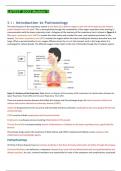
LATEST 2023 Module 5 5.1 : Introduction to Pulmonology The main function of the respiratory system is two-fold: (1) to deliver oxygen to the cells of the body and (2) remove carbon dioxide from the body. This is accomplished through the combination of the upper respiratory tract working in communication with the lower respiratory tract. A diagram of the anatomy of the respiratory tract is shown in Figure 5.1. The upper respiratory tract (URT) is outside the chest cavity and includes the nose, and nasopharynx (down to the larynx). The lower respiratory tract (LRT) includes the organs within the chest including the trachea, bronchial tree, and lungs. When a person breathes in air, oxygen diffuses across the alveoli (microscopic sacs) in the lungs where it is exchanged for carbon dioxide. The diffused oxygen is then taken to the rest of the body through the circulatory system. Figure 5.1 Anatomy of the Respiratory Tract. Above is a diagram of the anatomy of the respiratory tract broken down between the Upper Respiratory Tract (URT) and the Lower Respiratory Tract (LRT). There are several common diseases that affect the airways and this exchange of gas, the most common of which are asthma and chronic obstructive pulmonary disease (COPD). Asthma is the general term for recurrent and reversible shortness of breath resulting from the narrowing of the bronchi and bronchioles. COPD consists of both emphysema and chronic bronchitis. Emphysema is a disease process involving inflammation of the alveoli. Chronic Bronchitis is characterized by chronic inflammation or irritation on the lower respiratory tract, specifically the bronchi. The primary drugs used in the treatment of both asthma and COPD include bronchodilators and a variety of anti- inflammatory and antiallergic agents. Pathophysiology All three of these diseases have one primary similarity in that they all involve obstruction of airflow through the airways. Chemical Mediators are defined as a substance released from mast cells and white blood cells during inflammation and allergic reactions. As such, chemical mediators are responsible for most of the symptoms and complications associate
Escuela, estudio y materia
- Institución
- 2023 Module 5
- Grado
- 2023 Module 5
Información del documento
- Subido en
- 6 de septiembre de 2023
- Número de páginas
- 9
- Escrito en
- 2023/2024
- Tipo
- Examen
- Contiene
- Preguntas y respuestas
Temas
-
latest 2023 module 5
-
2023 module 5
-
latest 2023 module