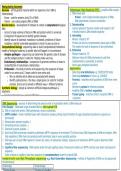
Excretion – the removal of metabolic waste from the body which Functions of Liver – detoxification of harmful substances
if accumulates would prevent homeostasis. Why excrete? 1. Excretion of Nitrogenous compounds
Excretory Excretory Product Prevent waste products - Body cannot store excess amino acids but must use its energy
Organ affecting metabolic activity - AA transported to the liver (in blood stream)
Lungs CO2, H2O (CO2 dissolves and become Deamination – removal of amino group forms toxic Keto group –
Liver Bile pigments, acidic, affecting pH & ammonia NH 3 carboxyl group &
urea enzyme activity) Amino acid ammonia + keto acid. side chain enters
Kidney Urea, water Ammonia enters Ornithine cycle to formless toxic, respiration
Skin Urea, water soluble urea CO(NH )
2 2 directly
Egestion – the expulsion of undigested food from the body Ornithine cycle (learn) (gluconeogenesi
CO2 excretion. (Synoptic link) 1. NH 3 + CO 2 CO(NH 2 ) 2 + s).
H 2O
2. Urea is reabsorbed back
into blood & transported to
kidneys
3. Urea is filtered into urine
which is stored in the
bladder until it is
released.
2. Hepatocytes for carbohydrate metabolism
- ↑glucose = ↑insulin = hepatocytes convert glucose into glycogen.
Structure of Liver - below the diaphragm - ↓glucose = ↑glucagon = hepatocytes convert glycogen back into
- Hepatocytes – Golgi apparatus (bile), mitochondria (metabolic glucose.
activity), ribosomes (protein synthesis), SER (lipid synthesis). 3. Detoxification – liver is where toxins are oxidised, reduced,
- Hepatocytes are arranged into cylindrical lobules, which make methylated to harmless products.
up the lobes of the liver. - Hepatocytes contain catalase to break down hydrogen peroxide
2 Blood supplies Blood leaves o hydrogen peroxide water + oxygen.
Branch of Hepatic artery – supplies Branch of Hepatic - Hepatocytes contain ethanol dehydrogenase to break down alcohol.
oxygenated blood from the heart to the vein – in the centre o Ethanol Ethanal ethanoic acid Acetyl CoA (respired)
liver. Oxygen supply for metabolic actives of each lobule o H+ ions released reduce NAD = Less NAD available for
Branch of Hepatic portal vein – brings how deoxygenated breakdown of fatty acids = ‘fatty liver’
deoxygenated blood from digestive system blood leaves the o Acetyl CoA from alcohol is respired instead of glucose = excess
(with toxic products) liver glucose stored = weight gain
1. Blood from hepatic artery & portal vein mix into Sinusoid
channels surrounded by hepatocytes.
- maximum contact & SA for rapid exchange of materials (Blood
delivers O2, glucose, amino acids and absorbs CO2 & urea)
- Kupffer cells – phagocytic cells ingest bacteria from blood &
breakdown bilirubin (old RBC’s)
- Hepatocytes – absorb insulin, glucose, minerals, toxins.
2. Blood moves towards the lobule centre into hepatic vein.
Bile canaliculus – hepatocytes secrete bile into the channel. Bile
moves counter current to blood, into bile duct & drains into gall
bladder
if accumulates would prevent homeostasis. Why excrete? 1. Excretion of Nitrogenous compounds
Excretory Excretory Product Prevent waste products - Body cannot store excess amino acids but must use its energy
Organ affecting metabolic activity - AA transported to the liver (in blood stream)
Lungs CO2, H2O (CO2 dissolves and become Deamination – removal of amino group forms toxic Keto group –
Liver Bile pigments, acidic, affecting pH & ammonia NH 3 carboxyl group &
urea enzyme activity) Amino acid ammonia + keto acid. side chain enters
Kidney Urea, water Ammonia enters Ornithine cycle to formless toxic, respiration
Skin Urea, water soluble urea CO(NH )
2 2 directly
Egestion – the expulsion of undigested food from the body Ornithine cycle (learn) (gluconeogenesi
CO2 excretion. (Synoptic link) 1. NH 3 + CO 2 CO(NH 2 ) 2 + s).
H 2O
2. Urea is reabsorbed back
into blood & transported to
kidneys
3. Urea is filtered into urine
which is stored in the
bladder until it is
released.
2. Hepatocytes for carbohydrate metabolism
- ↑glucose = ↑insulin = hepatocytes convert glucose into glycogen.
Structure of Liver - below the diaphragm - ↓glucose = ↑glucagon = hepatocytes convert glycogen back into
- Hepatocytes – Golgi apparatus (bile), mitochondria (metabolic glucose.
activity), ribosomes (protein synthesis), SER (lipid synthesis). 3. Detoxification – liver is where toxins are oxidised, reduced,
- Hepatocytes are arranged into cylindrical lobules, which make methylated to harmless products.
up the lobes of the liver. - Hepatocytes contain catalase to break down hydrogen peroxide
2 Blood supplies Blood leaves o hydrogen peroxide water + oxygen.
Branch of Hepatic artery – supplies Branch of Hepatic - Hepatocytes contain ethanol dehydrogenase to break down alcohol.
oxygenated blood from the heart to the vein – in the centre o Ethanol Ethanal ethanoic acid Acetyl CoA (respired)
liver. Oxygen supply for metabolic actives of each lobule o H+ ions released reduce NAD = Less NAD available for
Branch of Hepatic portal vein – brings how deoxygenated breakdown of fatty acids = ‘fatty liver’
deoxygenated blood from digestive system blood leaves the o Acetyl CoA from alcohol is respired instead of glucose = excess
(with toxic products) liver glucose stored = weight gain
1. Blood from hepatic artery & portal vein mix into Sinusoid
channels surrounded by hepatocytes.
- maximum contact & SA for rapid exchange of materials (Blood
delivers O2, glucose, amino acids and absorbs CO2 & urea)
- Kupffer cells – phagocytic cells ingest bacteria from blood &
breakdown bilirubin (old RBC’s)
- Hepatocytes – absorb insulin, glucose, minerals, toxins.
2. Blood moves towards the lobule centre into hepatic vein.
Bile canaliculus – hepatocytes secrete bile into the channel. Bile
moves counter current to blood, into bile duct & drains into gall
bladder