AQA A-LEVEL PSYCHOLOGY
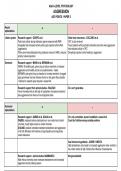
AGGRESSION
AO3 POINTS - PAPER 3
Neural + -
explanations
Limbic system Research support - GOSPIC et al. Other brain structures - COCCARO et al.
Ppts brain activity during ultimatum game measured with fMRI OFC is also involved
Amygdala had increased activity when ppts rejected unfair offers Found patients with psychiatric disorders and who were aggressive
(aggression) had reduced activity in OFC
When given benzodiazepine drug (reduces arousal of ANS), reduced Disrupting impulse control leading to aggression
activity, halved rejections
Serotonin Research support - MANN et al. BERMAN et al.
MANN: 35 healthy ppts, given drug to reduce serotonin, increased
aggression and hostility scores on questionnaires - males
BERMAN: ppts given drug or placebo to increase serotonin, drugged
ppts gave fewer and less intense shocks on lab game than placebo
= Berman’s research goes beyond a causal link
Research support from animal studies - RALEIGH CA: can’t generalise
Vervet monkeys fed on diet high in tryptophan (increases serotonin)
less aggressive than those on low tryptophan diets
Hormonal + -
explanations
Research support - DABBS et al. DOLAN et al. CA: only correlation, doesn’t establish a causal link
DABBS: analysed salivary testosterone in non-violent and violent Could be 3rd/intervening variable problem
criminals, found higher levels in violent criminals
DOLAND: positive correlation between testosterone and aggression
in 60 UK offenders with histories of psychopathy and impulsively
violent behaviour
Dual hormone hypothesis - CARRE + MEHTA
High testosterone only leads to increased aggression when cortisol is
low, when cortisol is high it blocks the influence of testosterone
Research support - animal studies GIAMMANCO Not generalisable
Male rhesus monkeys have increased testosterone and increased
aggression during mating season
, Castration of male rats decreased aggression seen in less
mouse-killing activity, female rats injected with testosterone did more
mouse-killing
Genetic + -
explanations
Twin studies Research support - COCCARO et al. Problems with twin studies - equal environment assumption
COCCARO: concordance rates for physical aggression:
MZ: 50%, DZ: 19%
Concordance rates for verbal aggression:
MZ: 28%, DZ: 7%
Adoption Research support - HUTCHINGS + MEDNICK: significant number CA: hard to draw valid conclusions if measures of depression
studies of Dutch boys with criminal convictions had bio parents with produce different findings
convictions for violent crimes RHEE + WALDMAN, found genetic factors had greatest influence in
RHEE + WALDMAN: meta-analysis of adoption studies of direct self-report studies than parent/teacher reports
aggression and anti-social behaviour, found genetic influence
accounts for 41% of variance in aggression
MAOA gene Research support - BRUNNER et al., MERTINS et al., LEA CA: MERTINS identified other factors
BRUNNER: 28 Dutch men from a family with convictions for When MAOA-Ls were told others were acting more cooperatively,
impulsively violent crimes had abnormally low levels of MAO-A and they started to do so as well, knowledge of social norms determined
the MAOA-L how they acted
LEA: 56% of NZ Maori men, reputation for being warriors had
MAOA-L vs 34% of caucasians
MERTINS: money distributing lab-game, MAOA-H were more
cooperative
Gene- Research support - FRAZETTO, CASPI et al.
environment FRAZZETTO: found association between MAOA-L and increased
interactions aggression in males, but only the case if MAOA-L had suffered
trauma in first 15 yrs of life
CASPI: 500 boys, MAOA-L only aggressive if maltreated as children
Ethological + -
explanation
Research support for claiming an innate, biological root
BRUNNER, RHEE and WALDMAN
WILSON + DALY see aggression as adaptive and genetically-based
, Research support from humans - CHAGNON Not always adaptive - GOODALL
Found ritualistic aggression is adaptive in human cultures - A monkey community systematically slaughtered another chimp
YANOMAMI people of South America, have club fighting community in a premeditated way even after appeasement displays
competitions and chest pound to resolve disputes, avoiding conflict = aggression hasn’t evolved into the self-limiting and harmless
behaviour ethologists proposed it has
Can’t explain cultural differences - NISBETT
Found higher homicide rates in southern US states than north - due
to culture of honour
NISBETT et al. study, where white American males were insulted,
those from south became more aggressive
= explaining aggression as innate doesn’t take into account cultural
differences
FAPs aren’t fixed - HUNT
Environmental factors are underestimated, they are made up of many
behaviours in a series, duration of which varies from person to
person even situation to situation meaning LEA’s criteria is wrong
= better term is ‘modal behaviour pattern’ suggesting they can be
modified by experience, not simply innate
Evolutionary + -
explanation
Practical applications - ELLIS et al.
Seeing bullying as adaptive since bullies get advantages led to dev.
Of interventions
ELLIS’ ‘meaningful roles’ anti-bullying intervention, gives bullies
responsibility - alternative source of status, increase costs of
anti-social behaviour and rewards of pro-social behaviour
Also couples therapy to prevent IPV if mate-retention strategies are
seen
Research support - SHACKLEFORD et al. Low internal validity
Assessed 107 straight married couples on IPV and mate-retention Self-report design may lead to a social desirability bias and therefore
strategies through questionnaire (males on mate-retention, females inaccurate data from self-report answers
on extent of partner’s violence)
Positive correlation found between mate-retention strategies and IPV
Can explain gender differences - CAMPBELL CA: may be due to socialisation experiences not evolutionary
Women are more verbally aggressive than physically because being bases - PRINZ
physically aggressive brings greater risks to offspring Boys are physically punished, whereas girls are spoken to
Different aggressive behaviours may just reflect social experiences
AGGRESSION
AO3 POINTS - PAPER 3
Neural + -
explanations
Limbic system Research support - GOSPIC et al. Other brain structures - COCCARO et al.
Ppts brain activity during ultimatum game measured with fMRI OFC is also involved
Amygdala had increased activity when ppts rejected unfair offers Found patients with psychiatric disorders and who were aggressive
(aggression) had reduced activity in OFC
When given benzodiazepine drug (reduces arousal of ANS), reduced Disrupting impulse control leading to aggression
activity, halved rejections
Serotonin Research support - MANN et al. BERMAN et al.
MANN: 35 healthy ppts, given drug to reduce serotonin, increased
aggression and hostility scores on questionnaires - males
BERMAN: ppts given drug or placebo to increase serotonin, drugged
ppts gave fewer and less intense shocks on lab game than placebo
= Berman’s research goes beyond a causal link
Research support from animal studies - RALEIGH CA: can’t generalise
Vervet monkeys fed on diet high in tryptophan (increases serotonin)
less aggressive than those on low tryptophan diets
Hormonal + -
explanations
Research support - DABBS et al. DOLAN et al. CA: only correlation, doesn’t establish a causal link
DABBS: analysed salivary testosterone in non-violent and violent Could be 3rd/intervening variable problem
criminals, found higher levels in violent criminals
DOLAND: positive correlation between testosterone and aggression
in 60 UK offenders with histories of psychopathy and impulsively
violent behaviour
Dual hormone hypothesis - CARRE + MEHTA
High testosterone only leads to increased aggression when cortisol is
low, when cortisol is high it blocks the influence of testosterone
Research support - animal studies GIAMMANCO Not generalisable
Male rhesus monkeys have increased testosterone and increased
aggression during mating season
, Castration of male rats decreased aggression seen in less
mouse-killing activity, female rats injected with testosterone did more
mouse-killing
Genetic + -
explanations
Twin studies Research support - COCCARO et al. Problems with twin studies - equal environment assumption
COCCARO: concordance rates for physical aggression:
MZ: 50%, DZ: 19%
Concordance rates for verbal aggression:
MZ: 28%, DZ: 7%
Adoption Research support - HUTCHINGS + MEDNICK: significant number CA: hard to draw valid conclusions if measures of depression
studies of Dutch boys with criminal convictions had bio parents with produce different findings
convictions for violent crimes RHEE + WALDMAN, found genetic factors had greatest influence in
RHEE + WALDMAN: meta-analysis of adoption studies of direct self-report studies than parent/teacher reports
aggression and anti-social behaviour, found genetic influence
accounts for 41% of variance in aggression
MAOA gene Research support - BRUNNER et al., MERTINS et al., LEA CA: MERTINS identified other factors
BRUNNER: 28 Dutch men from a family with convictions for When MAOA-Ls were told others were acting more cooperatively,
impulsively violent crimes had abnormally low levels of MAO-A and they started to do so as well, knowledge of social norms determined
the MAOA-L how they acted
LEA: 56% of NZ Maori men, reputation for being warriors had
MAOA-L vs 34% of caucasians
MERTINS: money distributing lab-game, MAOA-H were more
cooperative
Gene- Research support - FRAZETTO, CASPI et al.
environment FRAZZETTO: found association between MAOA-L and increased
interactions aggression in males, but only the case if MAOA-L had suffered
trauma in first 15 yrs of life
CASPI: 500 boys, MAOA-L only aggressive if maltreated as children
Ethological + -
explanation
Research support for claiming an innate, biological root
BRUNNER, RHEE and WALDMAN
WILSON + DALY see aggression as adaptive and genetically-based
, Research support from humans - CHAGNON Not always adaptive - GOODALL
Found ritualistic aggression is adaptive in human cultures - A monkey community systematically slaughtered another chimp
YANOMAMI people of South America, have club fighting community in a premeditated way even after appeasement displays
competitions and chest pound to resolve disputes, avoiding conflict = aggression hasn’t evolved into the self-limiting and harmless
behaviour ethologists proposed it has
Can’t explain cultural differences - NISBETT
Found higher homicide rates in southern US states than north - due
to culture of honour
NISBETT et al. study, where white American males were insulted,
those from south became more aggressive
= explaining aggression as innate doesn’t take into account cultural
differences
FAPs aren’t fixed - HUNT
Environmental factors are underestimated, they are made up of many
behaviours in a series, duration of which varies from person to
person even situation to situation meaning LEA’s criteria is wrong
= better term is ‘modal behaviour pattern’ suggesting they can be
modified by experience, not simply innate
Evolutionary + -
explanation
Practical applications - ELLIS et al.
Seeing bullying as adaptive since bullies get advantages led to dev.
Of interventions
ELLIS’ ‘meaningful roles’ anti-bullying intervention, gives bullies
responsibility - alternative source of status, increase costs of
anti-social behaviour and rewards of pro-social behaviour
Also couples therapy to prevent IPV if mate-retention strategies are
seen
Research support - SHACKLEFORD et al. Low internal validity
Assessed 107 straight married couples on IPV and mate-retention Self-report design may lead to a social desirability bias and therefore
strategies through questionnaire (males on mate-retention, females inaccurate data from self-report answers
on extent of partner’s violence)
Positive correlation found between mate-retention strategies and IPV
Can explain gender differences - CAMPBELL CA: may be due to socialisation experiences not evolutionary
Women are more verbally aggressive than physically because being bases - PRINZ
physically aggressive brings greater risks to offspring Boys are physically punished, whereas girls are spoken to
Different aggressive behaviours may just reflect social experiences