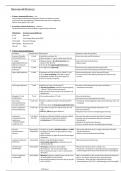
Immunodeficiency
• Primary immunodeficiency - rare
Genetic defects affecting development/function of immune system
Associated with autoimmunity, inflammation and risk of malignancy
Affects neutrophils, B & T cells
• Secondary immunodeficiency - common
Weakened immune system leading to opportunistic infections
WBC defect Increases susceptibility to:
B cell Bacterial
T cell Viral, fungal & bacterial (TB)
Neutrophil Bacterial & fungal
Macrophage Mycobacterial
NK cell Viral
❖ Primary Immunodeficiency:
Examples Classification Mechanism Symptoms, signs & treatment
Common Variable B cells • Inability to produce Ab • Recurrent resp and GI infections
Immunodeficiency • Most common 1° cause of adult onset Ab def
X- linked B cells • Btk gene defect = B cell maturation into • Recurrent bacterial infections
agammaglobulinemia plasma cells affected • Affects males
(Bruton's disease) • Severe Ab def (agammaglobulinemia)
Selective IgA B cells • Low IgA levels (mucosal) • Recurrent resp and GI infections (mucosal)
deficiency • Increased risk of developing autoimmune diseases
Hyper IgM syndrome B cells • Mutations in CD40 (B cell) or CD40L (T cell) • Recurrent infections, esp of resp and GI tracts
• So no class switching from IgM to others • Increased risk of developing autoimmune diseases and
• High IgM & inability to produce IgA/G/E cancers
• So no 2° immune response
Di George Syndrome T cells • Deletion of a piece of chromo 22 • Increase risk of infections and may contribute to
• Thymic hypoplasia (underdev thymus gland) autoimmune disorders
- affects T cell prod and maturation
• May also have lower levels of Ab, immune cell
dysfunction
Idiopathic T-cell T cell • Decreased number of T cells • Recurrent infection
lymphopenia • Increased risk of autoimmune disorders
Late onset T & B cells • Defect in ability to produce functional B & T • Treatment: immunoglobulin replacement therapy, stem cell
immunodeficiency cells transplant
disorder (LOCID) • Defective Ab prod (hypogammaglobulinemia)
Severe Combined T & B cells • Gene defect req for dev and function of T & B • Recurrent and opportunistic infections occur
Immunodeficiency cells • Chronic diarrhoea
• RAG1,2, JAK3, γc genes affected • Requires bone marrow transplant/gene therapy
Combined T, B cells & • Mutation of Wiskott-Aldrich syndrome (WAS) • Eczema, thrombocytopenia (petechiae, bruising)
immunodeficiency NK cells protein which is required to regulate • Greater risk of autoimmune disorders & cancers
syndromes cytoskeleton of T/B cells/platelets (lymphoma)
- Wiskott-Aldrich • Requires Ab replacement therapy
syndrome et al • Severe: req bone marrow transplant/gene therapy
Chronic Neutrophils/ • Inability to produce NADPH oxidase = no ROS • Recurrent infections, fever, coughs, shortness of breath,
Granulomatous Phagocytes • Leading to formation of granulomas in lung, chronic diarrhoea
Disease skin, GI tract • Failure of intracellular bacterial killing
• Affected ability to fight off bacterial and fungal
infections
Leukocyte adhesion Neutrophil • Defect in the β2 integrin subunit • Recurrent bacterial infections
deficiency • Neutrophil migration from blood to site of
infection affected
Autoimmune Neutrophils • Ab target and destroy neutrophils • Recurrent infections, fever, mouth sores
neutropenia • Neutropenia - low level of neutrophil • Treatment - medication to stimulate prod of neutrophils or
• Occurs spontaneously or due to autoimmune immunosuppression to prevent destruction of neutrophils
disorders
Severe congenital Neutrophils • Mutation of genes regulating dev and survival • More susceptible to skin, mouth, throat bacterial infections
neutropenia of neutrophils in bone marrow • Fever, oral ulcers, skin abscesses and pneumonia
• Autosomal dominant/recessive dep on specific • Treatment - daily injection of granulocyte colony-
gene mutation stimulating factor (G-CSF) - stimulating prod of neutrophils
or bone marrow transplant
I^MD Page 1
• Primary immunodeficiency - rare
Genetic defects affecting development/function of immune system
Associated with autoimmunity, inflammation and risk of malignancy
Affects neutrophils, B & T cells
• Secondary immunodeficiency - common
Weakened immune system leading to opportunistic infections
WBC defect Increases susceptibility to:
B cell Bacterial
T cell Viral, fungal & bacterial (TB)
Neutrophil Bacterial & fungal
Macrophage Mycobacterial
NK cell Viral
❖ Primary Immunodeficiency:
Examples Classification Mechanism Symptoms, signs & treatment
Common Variable B cells • Inability to produce Ab • Recurrent resp and GI infections
Immunodeficiency • Most common 1° cause of adult onset Ab def
X- linked B cells • Btk gene defect = B cell maturation into • Recurrent bacterial infections
agammaglobulinemia plasma cells affected • Affects males
(Bruton's disease) • Severe Ab def (agammaglobulinemia)
Selective IgA B cells • Low IgA levels (mucosal) • Recurrent resp and GI infections (mucosal)
deficiency • Increased risk of developing autoimmune diseases
Hyper IgM syndrome B cells • Mutations in CD40 (B cell) or CD40L (T cell) • Recurrent infections, esp of resp and GI tracts
• So no class switching from IgM to others • Increased risk of developing autoimmune diseases and
• High IgM & inability to produce IgA/G/E cancers
• So no 2° immune response
Di George Syndrome T cells • Deletion of a piece of chromo 22 • Increase risk of infections and may contribute to
• Thymic hypoplasia (underdev thymus gland) autoimmune disorders
- affects T cell prod and maturation
• May also have lower levels of Ab, immune cell
dysfunction
Idiopathic T-cell T cell • Decreased number of T cells • Recurrent infection
lymphopenia • Increased risk of autoimmune disorders
Late onset T & B cells • Defect in ability to produce functional B & T • Treatment: immunoglobulin replacement therapy, stem cell
immunodeficiency cells transplant
disorder (LOCID) • Defective Ab prod (hypogammaglobulinemia)
Severe Combined T & B cells • Gene defect req for dev and function of T & B • Recurrent and opportunistic infections occur
Immunodeficiency cells • Chronic diarrhoea
• RAG1,2, JAK3, γc genes affected • Requires bone marrow transplant/gene therapy
Combined T, B cells & • Mutation of Wiskott-Aldrich syndrome (WAS) • Eczema, thrombocytopenia (petechiae, bruising)
immunodeficiency NK cells protein which is required to regulate • Greater risk of autoimmune disorders & cancers
syndromes cytoskeleton of T/B cells/platelets (lymphoma)
- Wiskott-Aldrich • Requires Ab replacement therapy
syndrome et al • Severe: req bone marrow transplant/gene therapy
Chronic Neutrophils/ • Inability to produce NADPH oxidase = no ROS • Recurrent infections, fever, coughs, shortness of breath,
Granulomatous Phagocytes • Leading to formation of granulomas in lung, chronic diarrhoea
Disease skin, GI tract • Failure of intracellular bacterial killing
• Affected ability to fight off bacterial and fungal
infections
Leukocyte adhesion Neutrophil • Defect in the β2 integrin subunit • Recurrent bacterial infections
deficiency • Neutrophil migration from blood to site of
infection affected
Autoimmune Neutrophils • Ab target and destroy neutrophils • Recurrent infections, fever, mouth sores
neutropenia • Neutropenia - low level of neutrophil • Treatment - medication to stimulate prod of neutrophils or
• Occurs spontaneously or due to autoimmune immunosuppression to prevent destruction of neutrophils
disorders
Severe congenital Neutrophils • Mutation of genes regulating dev and survival • More susceptible to skin, mouth, throat bacterial infections
neutropenia of neutrophils in bone marrow • Fever, oral ulcers, skin abscesses and pneumonia
• Autosomal dominant/recessive dep on specific • Treatment - daily injection of granulocyte colony-
gene mutation stimulating factor (G-CSF) - stimulating prod of neutrophils
or bone marrow transplant
I^MD Page 1