Human Anatomy and Physiology
Chapter 3 Cells and Tissues
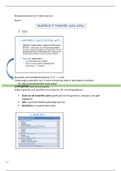
PART !: CELLS STRUCTURE OF THE PLASMA MEMBRANE
Cells – structural units of all living things
- The human body has 50 to 100 trillion
cells.
OVERVIEW OF THE CELLULAR BASIS OF LIFE
• Cell Theory
1. A cell is the basic structural and functional
unit of living organisms
2. The activity of an organism depends on the
collective activities of its cells
3. Principle of complementarity: biochemical
activities of cells are dictated by their Proteins or Integral proteins
structure (anatomy) which determines their - passageway of ions,
function (physiology): - hold filaments
4. Continuity of life has a cellular basis - responsible in breaking down enzymes
• Most cells are composed of 4 elements: Extracellular fluid
CHON - found outside (from the word "extra" -
1. Carbon outside while the word "intra" - inside)
2. Hydrogen
3. Oxygen • Phospholipid arrangement in the plasma
4. Nitrogen membrane (phospholipid bilayer – by the
• Cells are about 60% of water (the abundant term "bi" back-to-back bilayer. The
chemical of the body) arrangement is also known as Amphipathic:
contains polar head and non-polar tail)
ANATOMY OF GENERALIZEZD CELLS - Hydrophilic ("water loving") polar "heads"
• In general, a cell has 3 main regions or are oriented on the inner and outer
parts: surfaces of the membrane
PNC - Hydrophobic ("water fearing") nonpolar
1. Plasma Membrane "tails" form the center (interior) of the
2. Nucleus membrane
3. Cytoplasm (the fluid inside the cytoplasm o This interior makes the plasma
is called the Cytosol) membrane relatively
impermeable to most water-
PLASMA MEMBRANE soluble molecules
• Also called as Cell Membrane (“impermeable” means it is not
• Transparent barrier for cell contents easy to pass through while
• Contains cell contents “permeable” means it is easy to
• Separate cell contents from surrounding pass through in the water)
environment (separates intern al or external
environment or the barrier of the • Role of Proteins
surrounding) - Responsible for specialized membrane
• Fluid mosaic model is constructed of: functions: TER
- Two layers of phospholipids arranged "tail o Enzymes
to tail" o Receptors for hormones or other
- Cholesterol and proteins scattered chemical messengers
among the phospholipids. o Transport as channels or carriers
- Sugar groups may be attached to the ▪ 2 types of Transports:
phospholipids, forming glycolipids 1. passive and
2. active
,Human Anatomy and Physiology
Chapter 3 Cells and Tissues
• Role of Sugars CELL JUNCTIONS
- Glycoproteins are branched sugars
attached to proteins that abut the
extracellular space (Glycoproteins are
located in the extracellular space which
means that it is the outside of the cell)
- Glycocalyx is the fuzzy, sticky, sugar-rich
area on the cell's surface
• Cell membrane junctions
Cells are bound together in three ways:
1. Glycoproteins in the glycocalyx act as an
adhesive or cellular glue
2. Wavy contours of the membranes of
adjacent cells fit together in a tongue-and-
groove fashion
3. Special cell membrane junctions are THE NUCLEUS
formed, which vary structurally depending on • Control center of the cell
their roles • Contains genetic material known as
o Main types of cell junctions deoxyribonucleic acid, or DNA. So, nucleus
▪ 1. Tight junctions contains genes.
(Binds to provide leakproof. It o DNA
can be seen in the intestine) - needed for building proteins
- Impermeable junctions - necessary for cell production
-Bind cells together into leakproof • Three regions:
sheets o Nuclear envelope
- Plasma membranes fuse like a o Nucleolus
zipper to prevent substances Or nucleoli - site where the ribosome
from passing through are assembled.
extracellular space between cells Ribosomes - protein synthesis
o Chromatin - formation of
▪ 2. Desmosomes Chromatin
- Anchoring junctions, like rivets, ▪ If the cell is not dividing:
that prevent cells from being DNA + Protein = Chromatin
pulled apart as a result of
mechanical stress ▪ If the cell is dividing
- Created by buttonlike Chromatin...and then it will
thickenings of adjacent plasma coil first = turning or forming
membranes chromosomes
▪ Gap Junctions ANATOMY OF THE GENERALIZED ANIMAL CELL
(communicating junctions) NUCLEUS
(Communication of ions which
can be seen in the heart)
- Allow communication between
cells
- Hollow cylinders of proteins
(connexons) span the width of the
abutting membranes
- Molecules can travel directly from
one cell to the next through these
, Human Anatomy and Physiology
Chapter 3 Cells and Tissues
o Many are membrane-bound,
allowing for
compartmentalization of their
functions (membrane bound
means that it has many
compartments)
STRUCTURE OF THE GENERALIZED CELL
• Nuclear Envelope
- Consists of a double membrane that
bounds the nucleus
- Contains nuclear pores that allow for
exchange of material with the rest of the
cell Lysosome – is a powerful digestive enzyme.
- Encloses the jellylike fluid called the Peroxisome – it destroys free radicals
nucleoplasm Centrioles – mitotic spindle
• Nucleolus Golgi Apparatus – responsible in packaging
- Contains one or more dark-staining Endoplasmic reticulum – use in
nucleoli transportation
- Sites of ribosome assembly
- Ribosomes migrate into the cytoplasm • Mitochondria
through nuclear pores to serve as the site -It has the energy, thus it only has an ATP
of protein synthesis (Adenosine Triphosphate)
• Chromatin - “Powerhouses” of the cell
- Composed of DNA wound around - Mitochondrial walls consist of a double
histones (proteins) membrane with cristae on the inner
- Scattered throughout the nucleus and membrane
present when the cell is not dividing - Carry out reaction in which oxygen is
- Condenses to form dense, rodlike bodies used to break down food into ATP
called - chromosomes when the cell molecules
divides • Ribosomes
- Made of protein and ribosomal RNA
(Ribonucleic Acid)
THE CYTOPLASM - Sites of protein synthesis in the cell
• The cellular material outside the nucleus and - Found at 2 locations:
inside the plasma membrane o Free in the cytoplasm
• Site of most cellular activities o Attached to the rough
• Includes cytosol, inclusions, and organelles endoplasmic reticulum
o Organelles – are also known as the • Endoplasmic reticulum (ER)
little organs - transport protein
• Three major components of the cytoplasm: - Fluid-filled tunnels (or canals) that carry
1. Cytosol: Fluid that suspends other substances within the cell
elements and contains nutrients and - Continuous with the nuclear membrane
electrolytes - Two types:
Chapter 3 Cells and Tissues
PART !: CELLS STRUCTURE OF THE PLASMA MEMBRANE
Cells – structural units of all living things
- The human body has 50 to 100 trillion
cells.
OVERVIEW OF THE CELLULAR BASIS OF LIFE
• Cell Theory
1. A cell is the basic structural and functional
unit of living organisms
2. The activity of an organism depends on the
collective activities of its cells
3. Principle of complementarity: biochemical
activities of cells are dictated by their Proteins or Integral proteins
structure (anatomy) which determines their - passageway of ions,
function (physiology): - hold filaments
4. Continuity of life has a cellular basis - responsible in breaking down enzymes
• Most cells are composed of 4 elements: Extracellular fluid
CHON - found outside (from the word "extra" -
1. Carbon outside while the word "intra" - inside)
2. Hydrogen
3. Oxygen • Phospholipid arrangement in the plasma
4. Nitrogen membrane (phospholipid bilayer – by the
• Cells are about 60% of water (the abundant term "bi" back-to-back bilayer. The
chemical of the body) arrangement is also known as Amphipathic:
contains polar head and non-polar tail)
ANATOMY OF GENERALIZEZD CELLS - Hydrophilic ("water loving") polar "heads"
• In general, a cell has 3 main regions or are oriented on the inner and outer
parts: surfaces of the membrane
PNC - Hydrophobic ("water fearing") nonpolar
1. Plasma Membrane "tails" form the center (interior) of the
2. Nucleus membrane
3. Cytoplasm (the fluid inside the cytoplasm o This interior makes the plasma
is called the Cytosol) membrane relatively
impermeable to most water-
PLASMA MEMBRANE soluble molecules
• Also called as Cell Membrane (“impermeable” means it is not
• Transparent barrier for cell contents easy to pass through while
• Contains cell contents “permeable” means it is easy to
• Separate cell contents from surrounding pass through in the water)
environment (separates intern al or external
environment or the barrier of the • Role of Proteins
surrounding) - Responsible for specialized membrane
• Fluid mosaic model is constructed of: functions: TER
- Two layers of phospholipids arranged "tail o Enzymes
to tail" o Receptors for hormones or other
- Cholesterol and proteins scattered chemical messengers
among the phospholipids. o Transport as channels or carriers
- Sugar groups may be attached to the ▪ 2 types of Transports:
phospholipids, forming glycolipids 1. passive and
2. active
,Human Anatomy and Physiology
Chapter 3 Cells and Tissues
• Role of Sugars CELL JUNCTIONS
- Glycoproteins are branched sugars
attached to proteins that abut the
extracellular space (Glycoproteins are
located in the extracellular space which
means that it is the outside of the cell)
- Glycocalyx is the fuzzy, sticky, sugar-rich
area on the cell's surface
• Cell membrane junctions
Cells are bound together in three ways:
1. Glycoproteins in the glycocalyx act as an
adhesive or cellular glue
2. Wavy contours of the membranes of
adjacent cells fit together in a tongue-and-
groove fashion
3. Special cell membrane junctions are THE NUCLEUS
formed, which vary structurally depending on • Control center of the cell
their roles • Contains genetic material known as
o Main types of cell junctions deoxyribonucleic acid, or DNA. So, nucleus
▪ 1. Tight junctions contains genes.
(Binds to provide leakproof. It o DNA
can be seen in the intestine) - needed for building proteins
- Impermeable junctions - necessary for cell production
-Bind cells together into leakproof • Three regions:
sheets o Nuclear envelope
- Plasma membranes fuse like a o Nucleolus
zipper to prevent substances Or nucleoli - site where the ribosome
from passing through are assembled.
extracellular space between cells Ribosomes - protein synthesis
o Chromatin - formation of
▪ 2. Desmosomes Chromatin
- Anchoring junctions, like rivets, ▪ If the cell is not dividing:
that prevent cells from being DNA + Protein = Chromatin
pulled apart as a result of
mechanical stress ▪ If the cell is dividing
- Created by buttonlike Chromatin...and then it will
thickenings of adjacent plasma coil first = turning or forming
membranes chromosomes
▪ Gap Junctions ANATOMY OF THE GENERALIZED ANIMAL CELL
(communicating junctions) NUCLEUS
(Communication of ions which
can be seen in the heart)
- Allow communication between
cells
- Hollow cylinders of proteins
(connexons) span the width of the
abutting membranes
- Molecules can travel directly from
one cell to the next through these
, Human Anatomy and Physiology
Chapter 3 Cells and Tissues
o Many are membrane-bound,
allowing for
compartmentalization of their
functions (membrane bound
means that it has many
compartments)
STRUCTURE OF THE GENERALIZED CELL
• Nuclear Envelope
- Consists of a double membrane that
bounds the nucleus
- Contains nuclear pores that allow for
exchange of material with the rest of the
cell Lysosome – is a powerful digestive enzyme.
- Encloses the jellylike fluid called the Peroxisome – it destroys free radicals
nucleoplasm Centrioles – mitotic spindle
• Nucleolus Golgi Apparatus – responsible in packaging
- Contains one or more dark-staining Endoplasmic reticulum – use in
nucleoli transportation
- Sites of ribosome assembly
- Ribosomes migrate into the cytoplasm • Mitochondria
through nuclear pores to serve as the site -It has the energy, thus it only has an ATP
of protein synthesis (Adenosine Triphosphate)
• Chromatin - “Powerhouses” of the cell
- Composed of DNA wound around - Mitochondrial walls consist of a double
histones (proteins) membrane with cristae on the inner
- Scattered throughout the nucleus and membrane
present when the cell is not dividing - Carry out reaction in which oxygen is
- Condenses to form dense, rodlike bodies used to break down food into ATP
called - chromosomes when the cell molecules
divides • Ribosomes
- Made of protein and ribosomal RNA
(Ribonucleic Acid)
THE CYTOPLASM - Sites of protein synthesis in the cell
• The cellular material outside the nucleus and - Found at 2 locations:
inside the plasma membrane o Free in the cytoplasm
• Site of most cellular activities o Attached to the rough
• Includes cytosol, inclusions, and organelles endoplasmic reticulum
o Organelles – are also known as the • Endoplasmic reticulum (ER)
little organs - transport protein
• Three major components of the cytoplasm: - Fluid-filled tunnels (or canals) that carry
1. Cytosol: Fluid that suspends other substances within the cell
elements and contains nutrients and - Continuous with the nuclear membrane
electrolytes - Two types: