COMPLETE SOLUTIONS BREAST SURGERY
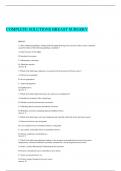
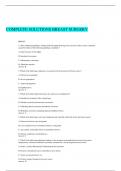
COMPLETE SOLUTIONS BREAST SURGERY BREAST 1. After intraductal papilloma, unilateral bloody nipple discharge from one duct orifice is most commonly caused by which of the following pathologic conditions? A. Paget's disease of the nipple. B. Intraductal carcinoma. C. Inflammatory carcinoma. D. Subareolar mastitis. Answer: B 2. Which of the following conditions is associated with increased risk of breast cancer? A. Fibrocystic mastopathy. B. Severe hyperplasia. C. Atypical hyperplasia. D. Papillomatosis. Answer: C 3. Which of the following breast lesions are noninvasive malignancies? A. Intraductal carcinoma of the comedo type. B. Tubular carcinoma and mucinous carcinoma. C. Infiltrating ductal carcinoma and lobular carcinoma. D. Medullary carcinoma, including atypical medullary lesions. Answer: A 4. Which of the following are the most important and clinically useful risk factors for breast cancer? A. Fibrocystic disease, age, and gender. B. Cysts, family history in immediate relatives, and gender. C. Age, gender, and family history in immediate relatives. D. Obesity, nulliparity, and alcohol use. Answer: C 5. Which of the following pathologic findings is the strongest contraindication to breast preservation (lumpectomy with breast radiation) as primary treatment for a newly diagnosed breast cancer? A. Grade 3, poorly differentiated, infiltrating ductal carcinoma. B. Extensive intraductal cancer around the invasive lesion. C. Tumor size greater than 3 cm. D. Positive surgical margin for invasive cancer. Answer: D 6. Axillary lymph node dissection is routinely used for all of the following conditions except; A. 2-cm. pure comedo-type intraductal carcinoma. B. 1-cm. infiltrating lobular carcinoma. C. 8-mm. infiltrating ductal carcinoma. D. A pure medullary cancer in the upper inner quadrant. Answer: A 7. Failure to perform radiation after wide excision of an invasive cancer risks which of the following outcomes? A. Recurrence of cancer in the ipsilateral breast. B. Shorter survival time. C. Regional nodal recurrence. D. Greater chance of breast cancer mortality. Answer: A 8. Which of the following treatments should never be recommended to a patient with purely intraductal carcinoma? A. Modified radical mastectomy. B. Lumpectomy to clear surgical margins, followed by observation. C. Incisional biopsy with an involved margin, followed by radiation. D. Excisional biopsy to clear margins, followed by radiation. Answer: C 9. The proper treatment for lobular carcinoma in situ (LCISJ includes which of the following components? A. Close follow-up. B. Radiation after excision. C. Mirror-image biopsy of the opposite breast. D. Mastectomy and regional node dissection. Answer: A 1 0. Which of the following statements most accurately reflects the findings of large overview analyses of clinical trials in which adjuvant chemotherapy for early-stage breast cancer was compared to a control group treated only with surgery? A. The benefit of adjuvant therapy is confined to young patients. B. Adjuvant therapy benefits all patients and is independent of age or node status. C. Adjuvant therapy does not work in estrogen-positive patients. D. The magnitude of benefit is very large. Answer: B 1 1 . Which of the following statements are true about reconstruction of the breast following mastectomy? A. A permanent prosthesis or tissue expander may be inserted at the time of the ablative surgery. B. If the patient requires adjuvant chemotherapy or radiation therapy, reconstruction of the breast is delayed until completion of the treatment. C. Extensive postmastectomy defects require the use of a flap. Answer: ABC 1 2. Which of the following statements are true about the management of mammary hyperplasia? A. Reduction mammaplasty can be performed only on women younger than 40 years. B. Removal of breast tissue to reduce size of the breast is usually predicated on the use of a nipple, areola, and dermal pedicle flap. C. If removal of 2000 gm. of breast tissue is needed, breast amputation with immediate free nipple-areola grafting is performed. Answer: BC 1 3. Which of the following statement(s) is/are true concerning the anatomy of the breast? a. About 25% of the lymphatic drainage of the breast courses to the internal mammary nodes b. Nerves within the axillary fat pad include the intercostal brachial nerve, the long thoracic nerve, and thoracodorsal nerve c. Fascial bands projecting through the breast to the skin form a supporting framework known as Cooper's ligaments d. The ductal system of the breast from the alveoli to the skin are lined with columnar epithelium Answer: b, c 1 4. Which of the following statement (s) is/are true concerning the recurrence of breast cancer? a. The majority of patients recur within five years of diagnosis b. More than 70% of breast cancer recurrence involve distant metastases c. Pulmonary metastases are the most common initial site of distant recurrence d. The local recurrence rate following breast-conserving procedures varies from 1 0% to 40% whether or not radiation was used e. Recurrent disease will be seen in at least 35% of node-negative patients undergoing appropriate primary breast therapy Answer: a, b, d 1 5. Which of the following statement(s) is/are true concerning mammography? a. Up to 50% of cancers detected mammographically are not palpable b. One third of palpable breast cancers are not detected by mammography c. The sensitivity of mammography increases with age d. The American Cancer Society currently recommends routine screening mammography beginning at age 40 e. Only about 10% of nonpalpable lesions detection mammographically are found to be malignant at biopsy Answer: a, c, d
Escuela, estudio y materia
- Institución
- BREAST SURGERY
- Grado
- BREAST SURGERY
Información del documento
- Subido en
- 18 de agosto de 2023
- Número de páginas
- 261
- Escrito en
- 2023/2024
- Tipo
- Examen
- Contiene
- Preguntas y respuestas
Temas
-
complete solutions breast surgery breast