Overview
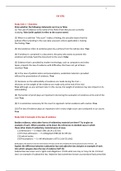
Read through the overview at the beginning of the study guide as this will equip you with the skills you need
to complete the Assignments as well as answer the questions in the examination. In the learning outcomes,
you will get an understanding of what is expected of you.
Study Unit 1
In study Unit 1 you are introduced to the nature of a contract. Although contracts are referred to as
agreements, not all agreements are contracts.
Contract as an agreement intended to create enforceable obligations
There must be a serious intention to create legally enforceable obligations. (animus contrahendi)
Legally binding agreements that are not contracts
Obligationary agreements – whereby one or more obligations are created
Absolving agreements – whereby obligations are discharged or extinguished
Real (or transfer) agreements – whereby rights are transferred
Legally binding agreements that are more than just contracts
Marriage and judgement by consent are examples of legally binding agreements that cannot be regarded
as merely contracts.
Definition of a contract
An agreement entered into by two or more persons with the intention of creating a legal obligation or
obligations.
Requirements for a valid contract
Consensus
Capacity
Formalities
Legality
Possibility
Certainty
The nature of contract
A contract is a bilateral (or multilateral) juristic act, that entails undertakings on one or both sides, to do
something or not to do something. Most contracts entail reciprocity.
There is freedom of contract and all contracts are consensual and are bona fidei.
1
,Contracts and the law of obligations
The concept of obligations
An obligation is a legal bond between 2 or more people, obliging the one to give, do or refrain from doing
something to the other. An obligation comprises a right and a corresponding duty.
The legal relationship created by an obligation is a personal one, the right created is a personal right.
Contract and delict
A delict is a wrongful act which causes harm to a person. Such conduct obliges the wrongdoer to
compensate the injured party. Contracting parties agree on the terms of their contract, any breach of these
terms might entail legal consequences, including a duty to pay damages. There is a close similarity
between breach of contract and delict; both are civil wrongs giving rise to a duty to pay damages as
compensation.
Contract and enrichment
Unjustified enrichment occurs when there is a shift of wealth from one persons estate to another’s, without a
good legal cause for this shift. The enrichment must be unjustified, and the enriched party is under a legal
duty to make restitution to the aggrieved party.
Understanding the nature of a contract is essential to determine if the agreement is in fact a “contract”. A
useful exercise is to think of daily “agreements” that you are party to, and apply the requirements for a valid
contract to determine if these are, in fact, valid contracts. The example given in the study guide of filling
petrol at a petrol station is a good example of where to begin.
Weekly summary
Study unit 1
Understand the differences between a contract and an agreement, as well as
The requirements for a valid contract.
The consequences of a valid contract (obligations created).
Understand the relationship between the law of contract and the law of obligations, with regard to
Contract and delict
Contract and enrichment
Contract and the law of property
Pay special attention to the values that influence and shape the law of contract.
In study unit 2 the will theory (subjective approach), the declaration theory (objective approach)and the
reliance theory (compromise approach) are discussed. You need to understand these approaches as well
as what approach is preferred in South Africa.
Note the dual basis of contract, namely actual consensus in terms of the will theory (meeting of the minds of
the parties), and the alternate basis being the reliance theory.
Study the cases prescribed and you will see the fluctuating approach of the court as to which approach is
preferable.
Remember that the onus of proving a contract rests on the party who alleges the contract exists.
2
, Study unit 3 deals with the freedom and sanctity of contracts, as well as the principals of good faith and
equity in contracts. A balance needs to be established between the freedom of parties to enter into
contracts, and that the contracts should be fair to both parties and not unjustifiably prejudice one party.
The prescribed cases illustrate the struggle of the courts to establish this fine balance.
3
, Study Unit 2
The basis of contract
Actual subjective agreement
An actual meeting of the minds (subjective consensus) occurs when all the parties involved:
Seriously intend to contract
Are of one mind as to the material aspects of the contract (the terms, the parties identities)
Are conscious of the fact that their minds are met
Apparent or objective agreement
There is sometimes some divergence between the true intention and the expressed or perceived
intention.
When there is dissensus rather than consensus the question is whether any contract has come into
being between the parties.
Is the legal systems approach to contracts wholly subjective, or to some extent, objective?
Theories of contract
The will theory – the basis of contract is to be found in the individual will. The parties are bound
because they choose to be bound. This is an extremely subjective approach, thus when a party is
mistaken about a material aspect of the proposed agreement, there is no binding contract. This
approach is unfair and ignores the need for legal certainty.
The declaration theory – this theory is the opposite of the will theory. In this theory, what the parties
think is irrelevant, only what they say or do is taken into account. This is an extremely objective
approach and would be unacceptable in practice, unless qualified. It would permit parties to
disguise their transactions, it would leave no room for doctrine of mistake, it wouldn’t allow for
rectification.
The reliance theory – the basis of contract is the reasonable belief in the existence of consensus,
induced by the conduct of the parties. It protects a party’s reasonable expectation of a contract.
Approach to contract: subjective or objective – south African law has changed between a subjective
an objective approach to contracts. The earlier cases say our law has followed an objective
approach, but more recent cases have followed a subjective approach, while considering
dissensus.
Dual basis of contract in modern law – there are 2 bases on which to establish a contract in South
African law; consensus and reasonable reliance. The primary basis is consensus,
1. Ascertain if the minds of the parties actually met, this is the will theory and is essentially subjective.
2. If consensus was reached, the parties are bound. If the minds of the parties never truly met, the
enquiry must go one step further
3. Did either party by their words or actions lead the other party to believe that consensus had been
reached?
4. If so, the contract will be upheld on the grounds of reasonable reliance (secondly apply the reliance
theory)
Proving the existence of a contract – the onus of proving the existence of a contract rests on the
person who alleges that the contract exists. This onus will be discharged by adducing evidence of
either consensus or reasonable reliance on the appearance of consensus.
4
Read through the overview at the beginning of the study guide as this will equip you with the skills you need
to complete the Assignments as well as answer the questions in the examination. In the learning outcomes,
you will get an understanding of what is expected of you.
Study Unit 1
In study Unit 1 you are introduced to the nature of a contract. Although contracts are referred to as
agreements, not all agreements are contracts.
Contract as an agreement intended to create enforceable obligations
There must be a serious intention to create legally enforceable obligations. (animus contrahendi)
Legally binding agreements that are not contracts
Obligationary agreements – whereby one or more obligations are created
Absolving agreements – whereby obligations are discharged or extinguished
Real (or transfer) agreements – whereby rights are transferred
Legally binding agreements that are more than just contracts
Marriage and judgement by consent are examples of legally binding agreements that cannot be regarded
as merely contracts.
Definition of a contract
An agreement entered into by two or more persons with the intention of creating a legal obligation or
obligations.
Requirements for a valid contract
Consensus
Capacity
Formalities
Legality
Possibility
Certainty
The nature of contract
A contract is a bilateral (or multilateral) juristic act, that entails undertakings on one or both sides, to do
something or not to do something. Most contracts entail reciprocity.
There is freedom of contract and all contracts are consensual and are bona fidei.
1
,Contracts and the law of obligations
The concept of obligations
An obligation is a legal bond between 2 or more people, obliging the one to give, do or refrain from doing
something to the other. An obligation comprises a right and a corresponding duty.
The legal relationship created by an obligation is a personal one, the right created is a personal right.
Contract and delict
A delict is a wrongful act which causes harm to a person. Such conduct obliges the wrongdoer to
compensate the injured party. Contracting parties agree on the terms of their contract, any breach of these
terms might entail legal consequences, including a duty to pay damages. There is a close similarity
between breach of contract and delict; both are civil wrongs giving rise to a duty to pay damages as
compensation.
Contract and enrichment
Unjustified enrichment occurs when there is a shift of wealth from one persons estate to another’s, without a
good legal cause for this shift. The enrichment must be unjustified, and the enriched party is under a legal
duty to make restitution to the aggrieved party.
Understanding the nature of a contract is essential to determine if the agreement is in fact a “contract”. A
useful exercise is to think of daily “agreements” that you are party to, and apply the requirements for a valid
contract to determine if these are, in fact, valid contracts. The example given in the study guide of filling
petrol at a petrol station is a good example of where to begin.
Weekly summary
Study unit 1
Understand the differences between a contract and an agreement, as well as
The requirements for a valid contract.
The consequences of a valid contract (obligations created).
Understand the relationship between the law of contract and the law of obligations, with regard to
Contract and delict
Contract and enrichment
Contract and the law of property
Pay special attention to the values that influence and shape the law of contract.
In study unit 2 the will theory (subjective approach), the declaration theory (objective approach)and the
reliance theory (compromise approach) are discussed. You need to understand these approaches as well
as what approach is preferred in South Africa.
Note the dual basis of contract, namely actual consensus in terms of the will theory (meeting of the minds of
the parties), and the alternate basis being the reliance theory.
Study the cases prescribed and you will see the fluctuating approach of the court as to which approach is
preferable.
Remember that the onus of proving a contract rests on the party who alleges the contract exists.
2
, Study unit 3 deals with the freedom and sanctity of contracts, as well as the principals of good faith and
equity in contracts. A balance needs to be established between the freedom of parties to enter into
contracts, and that the contracts should be fair to both parties and not unjustifiably prejudice one party.
The prescribed cases illustrate the struggle of the courts to establish this fine balance.
3
, Study Unit 2
The basis of contract
Actual subjective agreement
An actual meeting of the minds (subjective consensus) occurs when all the parties involved:
Seriously intend to contract
Are of one mind as to the material aspects of the contract (the terms, the parties identities)
Are conscious of the fact that their minds are met
Apparent or objective agreement
There is sometimes some divergence between the true intention and the expressed or perceived
intention.
When there is dissensus rather than consensus the question is whether any contract has come into
being between the parties.
Is the legal systems approach to contracts wholly subjective, or to some extent, objective?
Theories of contract
The will theory – the basis of contract is to be found in the individual will. The parties are bound
because they choose to be bound. This is an extremely subjective approach, thus when a party is
mistaken about a material aspect of the proposed agreement, there is no binding contract. This
approach is unfair and ignores the need for legal certainty.
The declaration theory – this theory is the opposite of the will theory. In this theory, what the parties
think is irrelevant, only what they say or do is taken into account. This is an extremely objective
approach and would be unacceptable in practice, unless qualified. It would permit parties to
disguise their transactions, it would leave no room for doctrine of mistake, it wouldn’t allow for
rectification.
The reliance theory – the basis of contract is the reasonable belief in the existence of consensus,
induced by the conduct of the parties. It protects a party’s reasonable expectation of a contract.
Approach to contract: subjective or objective – south African law has changed between a subjective
an objective approach to contracts. The earlier cases say our law has followed an objective
approach, but more recent cases have followed a subjective approach, while considering
dissensus.
Dual basis of contract in modern law – there are 2 bases on which to establish a contract in South
African law; consensus and reasonable reliance. The primary basis is consensus,
1. Ascertain if the minds of the parties actually met, this is the will theory and is essentially subjective.
2. If consensus was reached, the parties are bound. If the minds of the parties never truly met, the
enquiry must go one step further
3. Did either party by their words or actions lead the other party to believe that consensus had been
reached?
4. If so, the contract will be upheld on the grounds of reasonable reliance (secondly apply the reliance
theory)
Proving the existence of a contract – the onus of proving the existence of a contract rests on the
person who alleges that the contract exists. This onus will be discharged by adducing evidence of
either consensus or reasonable reliance on the appearance of consensus.
4