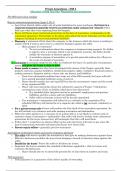
Private Acquisitions – SGS 4
Allocation of Risk Part One: Warranties and indemnities
Pre-SGS notes from reading:
Buyer’s contractual protections (page 2, Ch 3)
® Apart from limited rights under sale of goods legislation for asset purchases, the buyer in a
corporate transaction generally receives no protection under common law / statute if they
didn’t get what they were expecting from the bargain.
® Buyer will hence want contractual protections in the form of warranties + indemnities in the
acquisition agreement. Particularly so for share sales where the buyer will take over the whole
company including its actual and potential liabilities.
® Warranty = statement of fact about the company or the business which the buyer is seeking to
acquire which if untrue, gives rise to a claim for damages against the seller.
o Main purpose of a warranty?
§ To root out information about the company or business being acquired. If a Seller
is asked to give a warranty which is not completely accurate, the Seller should
modify the warranty or disclose against it.
§ A secondary purpose of warranties is to provide potential redress for a Buyer in
the event of a breach of warranty.
® Indemnity = a promise made by the seller to reimburse the buyer if a particular circumstance
arises, and gives the buyer a claim in debt.
® Buyer needs to ensure that they have investigated the nature of the Target; especially their
property interests, pension liabilities, intellectual property rights, workforce, financial matters,
trading contracts, litigation and on a share sale, tax history and liabilities.
o Even if no substantial problems have come out of the DD research, the buyer will still
have spotted potential problems/ areas of concern.
o Buyer should consider not only legal DD but also the accountants’ report and the result
of any commercial DD.
o Buyer will want warranties about the substantive aspects of Target + indemnities
covering key areas of loss or liability which have been discovered
§ E.g, doubtful debts, litigation (actual or potential), employment and pension
liabilities and (for a share sale) tax liabilities.
§ Seller will be reluctant so these will be heavily negotiated.
o Tax warranties + indemnities will either be in a schedule to the acquisition (Tax
schedule) OR they will instead be in a separate doc called a tax covenant, indemnity or
deed.
® For a private treaty sale = buyer will produce the first draft of the acquisition agreement. So,
doc will include very extensive and wide-ranging warranties and indemnities.
® When the seller produces it, i.e because of an auction bid, it is not likely to contain such an
extensive range of warranties + indemnities. But seller will need to include some contractual
protections for the buyer because they will anticipate that they will need them.
® If they don’t = could have an adverse effect on the price the buyer will want to pay since the
lack of contractual protection will mean they’ll pay less! (more risk).
® Private equity sellers = generally give few warranties.
Amendment of disclosure letter and review of matters disclosed
o The seller will want to qualify the warranties it does give by making disclosures against them.
o Effective disclosure precludes the buyer from bringing a breach of warranty claim against the
seller.
o Benefit for the buyer? Forces the seller to disclose any issues.
o Important the buyer considers the standard of disclosure applicable + that it reviews and
evaluates all disclosures.
o Buyer should also try to amend the general disc to limit them in number and scope.
Title guarantee
o Title guarantee is a guarantee of the seller’s quality of ownership.
, o A title guarantee implies certain covenants / obligations on the part of the seller (LPMPA
1994).
o In the event of a breach of any of the terms of the title guarantee = buyer can sue the seller for
the breach.
Full title guarantee:
® The seller has the right to sell the asset (i.e shares)
® The asset is free from all charges and incumbrances and other rights exercisable by the third
parties other than those which
o Are disclosed in the contract and
o It did not, and could not reasonably, have known about.
Limited title guarantee:
® Given by sellers who have little relevant knowledge of the asset, or have a limited interest such
as trustees + personal representatives.
® Limited title guarantee is similar in nature + extent to full title guarantee, but there is no
guarantee that the property is free from all 3rd party rights etc.
® Replaced by a guarantee that the seller has not, since the last sale, created any incumbrances
over the asset + isn’t aware that anyone else has done so.
The seller’s position (page 8, Ch3)
To reduce the seller’s exposure under the agreement, the following can be done:
1. Negotiation – seeking to amend, or even strike out, those of the warranties which are too broad
in scope and/or cover matters outside the control of the seller and, where possible, avoiding
indemnities altogether.
2. Disclosure – disclosing against those of the remaining warranties that are incorrect /
inaccurate.
3. Limitation – including a series of vendor protection provisions limiting the seller’s liability
under the acquisition agreement
Negotiating the acquisition agreement:
® Striking out or amending warranties
o Seek to have warranties removed altogether if the seller is being required to give a
statement in relation to something over which it has no control.
§ Ex – buyer’s solicitors may have included a warranty to the effect that none of
the target’s customers will terminate their business dealings with target as a
result of the sale or that all of the debts owing to target will be recovered within 1
month.
§ Over this the buyer has no control; they should not be warranted in that form by
the seller.
o other cases, the warranty could be amended if it is acceptable in principle to get rid of
ambiguity and/or narrow its scope (to make it more practical to disclose against)
§ ex – warranty that the target is not involved in any litigation or disputes of any
nature.
§ Even if Target is not involved in any major litigation it may be involved in small
disputes with customers as a result of routine debt collection.
§ If warranty = left unamended, the seller will have to disclose details of all these
small disputes to be sure of avoiding liability for breach of warranty under the
acquisition agreement.
§ To avoid this = warranty amended to only cover litigation + disputes having a
value over a min amount, i.e £5000.
® Limiting the indemnities
o Ensure that indemnities refer only to very specific types of risks.
o Seller should not accept indemnities which are general in nature.
o Indemnities should refer only to particular identifiable and quantifiable types of
liability.
, Who can bring a breach of warranty claim? (page 15, Ch3)
® Buyer will be able to bring an action against the seller in the event of a breach of warranty.
® Might be some circumstances where a person who is not a party to the agreement wants to
bring a claim.
o i.e, following completion there might be a reorganisation of the corporate buyer’s group
+ Target might be transferred within the group, so not directly owned by the buyer
anymore
o or, it could be sold to a third party and outside the buyer’s group altogether.
® Two ways that a party who is not a party to the acquisition agreement might be able to bring a
claim against the seller
o Assignment
§ Benefit of warranties + indemnities might be assigned to a third party if that is
permitted by the agreement (unusual for seller to agree to an external party
except where it is for security to the bank financing the acquisition for ex).
§ Intra-group assignments are usually accepted and often included though.
§ Buyer will try to include an express provision in the acquisition agreement to
allow such an assignment and the seller will try to resist such a clause. Outcome
will depend on the bargaining power of the parties.
§ If assignment is permitted, under equitable principles, an assignee cannot
recover from the debtor (here the seller) more than the assignor could have
recovered had the assignment never taken place
o Contracts (Rights of Third Parties) Act 1999 (CRoTPA)
§ Parties might be able to take advantage of CRoTPA (rarely used in practice).
§ Warranties + indemnities can be given for the benefit of 3rd parties.
§ Allows for a third party to enforce a term of a contract if:
• The contract expressly provides that it may, or
• the term purports to confer a benefit on it (unless it appears on a true
construction of the contract that the contracting parties did not intend the
third party to have the right to enforce it).
§ If third party has the right to enforce a particular term = same remedies as if it
was a party to the contract.
§ Most common? This is expressly excluded in the agreement preserving privity of
contract.
§ But – could provide that certain terms do confer rights, i.e buyer transferring the
target within their group.
§ Seller would resist any attempt to confer rights to an unconnected party.
How are damages calculated for breach of warranty? (page 16, Ch 3)
® If warranty = true, buyer’s remedy is for breach of contract.
® Any award of damages would seek to put the injured party in the position in which it would
have been in had there been no breach, in this case if the warranty had been true.
® Buyer needs to note that it must prove loss + will be affected by remoteness and requirement to
mitigate.
Proving loss?
® Under normal contractual principles, claimant must prove loss to make a claim.
® Context of acquisition – buyer must establish that the value of Target has diminished by the
breach of warranty.
® Proving loss can hence have practical problems.
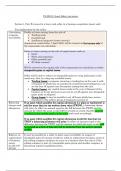
Exercise 2:
Warranty given that:
‘All statutory books and registers of the Company have been properly kept and are complete and up to
date’
After completion – turned out it wasn’t the case.
What damages can be brought on breach of warranty?
Allocation of Risk Part One: Warranties and indemnities
Pre-SGS notes from reading:
Buyer’s contractual protections (page 2, Ch 3)
® Apart from limited rights under sale of goods legislation for asset purchases, the buyer in a
corporate transaction generally receives no protection under common law / statute if they
didn’t get what they were expecting from the bargain.
® Buyer will hence want contractual protections in the form of warranties + indemnities in the
acquisition agreement. Particularly so for share sales where the buyer will take over the whole
company including its actual and potential liabilities.
® Warranty = statement of fact about the company or the business which the buyer is seeking to
acquire which if untrue, gives rise to a claim for damages against the seller.
o Main purpose of a warranty?
§ To root out information about the company or business being acquired. If a Seller
is asked to give a warranty which is not completely accurate, the Seller should
modify the warranty or disclose against it.
§ A secondary purpose of warranties is to provide potential redress for a Buyer in
the event of a breach of warranty.
® Indemnity = a promise made by the seller to reimburse the buyer if a particular circumstance
arises, and gives the buyer a claim in debt.
® Buyer needs to ensure that they have investigated the nature of the Target; especially their
property interests, pension liabilities, intellectual property rights, workforce, financial matters,
trading contracts, litigation and on a share sale, tax history and liabilities.
o Even if no substantial problems have come out of the DD research, the buyer will still
have spotted potential problems/ areas of concern.
o Buyer should consider not only legal DD but also the accountants’ report and the result
of any commercial DD.
o Buyer will want warranties about the substantive aspects of Target + indemnities
covering key areas of loss or liability which have been discovered
§ E.g, doubtful debts, litigation (actual or potential), employment and pension
liabilities and (for a share sale) tax liabilities.
§ Seller will be reluctant so these will be heavily negotiated.
o Tax warranties + indemnities will either be in a schedule to the acquisition (Tax
schedule) OR they will instead be in a separate doc called a tax covenant, indemnity or
deed.
® For a private treaty sale = buyer will produce the first draft of the acquisition agreement. So,
doc will include very extensive and wide-ranging warranties and indemnities.
® When the seller produces it, i.e because of an auction bid, it is not likely to contain such an
extensive range of warranties + indemnities. But seller will need to include some contractual
protections for the buyer because they will anticipate that they will need them.
® If they don’t = could have an adverse effect on the price the buyer will want to pay since the
lack of contractual protection will mean they’ll pay less! (more risk).
® Private equity sellers = generally give few warranties.
Amendment of disclosure letter and review of matters disclosed
o The seller will want to qualify the warranties it does give by making disclosures against them.
o Effective disclosure precludes the buyer from bringing a breach of warranty claim against the
seller.
o Benefit for the buyer? Forces the seller to disclose any issues.
o Important the buyer considers the standard of disclosure applicable + that it reviews and
evaluates all disclosures.
o Buyer should also try to amend the general disc to limit them in number and scope.
Title guarantee
o Title guarantee is a guarantee of the seller’s quality of ownership.
, o A title guarantee implies certain covenants / obligations on the part of the seller (LPMPA
1994).
o In the event of a breach of any of the terms of the title guarantee = buyer can sue the seller for
the breach.
Full title guarantee:
® The seller has the right to sell the asset (i.e shares)
® The asset is free from all charges and incumbrances and other rights exercisable by the third
parties other than those which
o Are disclosed in the contract and
o It did not, and could not reasonably, have known about.
Limited title guarantee:
® Given by sellers who have little relevant knowledge of the asset, or have a limited interest such
as trustees + personal representatives.
® Limited title guarantee is similar in nature + extent to full title guarantee, but there is no
guarantee that the property is free from all 3rd party rights etc.
® Replaced by a guarantee that the seller has not, since the last sale, created any incumbrances
over the asset + isn’t aware that anyone else has done so.
The seller’s position (page 8, Ch3)
To reduce the seller’s exposure under the agreement, the following can be done:
1. Negotiation – seeking to amend, or even strike out, those of the warranties which are too broad
in scope and/or cover matters outside the control of the seller and, where possible, avoiding
indemnities altogether.
2. Disclosure – disclosing against those of the remaining warranties that are incorrect /
inaccurate.
3. Limitation – including a series of vendor protection provisions limiting the seller’s liability
under the acquisition agreement
Negotiating the acquisition agreement:
® Striking out or amending warranties
o Seek to have warranties removed altogether if the seller is being required to give a
statement in relation to something over which it has no control.
§ Ex – buyer’s solicitors may have included a warranty to the effect that none of
the target’s customers will terminate their business dealings with target as a
result of the sale or that all of the debts owing to target will be recovered within 1
month.
§ Over this the buyer has no control; they should not be warranted in that form by
the seller.
o other cases, the warranty could be amended if it is acceptable in principle to get rid of
ambiguity and/or narrow its scope (to make it more practical to disclose against)
§ ex – warranty that the target is not involved in any litigation or disputes of any
nature.
§ Even if Target is not involved in any major litigation it may be involved in small
disputes with customers as a result of routine debt collection.
§ If warranty = left unamended, the seller will have to disclose details of all these
small disputes to be sure of avoiding liability for breach of warranty under the
acquisition agreement.
§ To avoid this = warranty amended to only cover litigation + disputes having a
value over a min amount, i.e £5000.
® Limiting the indemnities
o Ensure that indemnities refer only to very specific types of risks.
o Seller should not accept indemnities which are general in nature.
o Indemnities should refer only to particular identifiable and quantifiable types of
liability.
, Who can bring a breach of warranty claim? (page 15, Ch3)
® Buyer will be able to bring an action against the seller in the event of a breach of warranty.
® Might be some circumstances where a person who is not a party to the agreement wants to
bring a claim.
o i.e, following completion there might be a reorganisation of the corporate buyer’s group
+ Target might be transferred within the group, so not directly owned by the buyer
anymore
o or, it could be sold to a third party and outside the buyer’s group altogether.
® Two ways that a party who is not a party to the acquisition agreement might be able to bring a
claim against the seller
o Assignment
§ Benefit of warranties + indemnities might be assigned to a third party if that is
permitted by the agreement (unusual for seller to agree to an external party
except where it is for security to the bank financing the acquisition for ex).
§ Intra-group assignments are usually accepted and often included though.
§ Buyer will try to include an express provision in the acquisition agreement to
allow such an assignment and the seller will try to resist such a clause. Outcome
will depend on the bargaining power of the parties.
§ If assignment is permitted, under equitable principles, an assignee cannot
recover from the debtor (here the seller) more than the assignor could have
recovered had the assignment never taken place
o Contracts (Rights of Third Parties) Act 1999 (CRoTPA)
§ Parties might be able to take advantage of CRoTPA (rarely used in practice).
§ Warranties + indemnities can be given for the benefit of 3rd parties.
§ Allows for a third party to enforce a term of a contract if:
• The contract expressly provides that it may, or
• the term purports to confer a benefit on it (unless it appears on a true
construction of the contract that the contracting parties did not intend the
third party to have the right to enforce it).
§ If third party has the right to enforce a particular term = same remedies as if it
was a party to the contract.
§ Most common? This is expressly excluded in the agreement preserving privity of
contract.
§ But – could provide that certain terms do confer rights, i.e buyer transferring the
target within their group.
§ Seller would resist any attempt to confer rights to an unconnected party.
How are damages calculated for breach of warranty? (page 16, Ch 3)
® If warranty = true, buyer’s remedy is for breach of contract.
® Any award of damages would seek to put the injured party in the position in which it would
have been in had there been no breach, in this case if the warranty had been true.
® Buyer needs to note that it must prove loss + will be affected by remoteness and requirement to
mitigate.
Proving loss?
® Under normal contractual principles, claimant must prove loss to make a claim.
® Context of acquisition – buyer must establish that the value of Target has diminished by the
breach of warranty.
® Proving loss can hence have practical problems.
Exercise 2:
Warranty given that:
‘All statutory books and registers of the Company have been properly kept and are complete and up to
date’
After completion – turned out it wasn’t the case.
What damages can be brought on breach of warranty?