Intermediate and Senior and FET Phase
May/June 2010
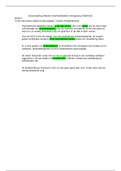
True or false Statements
1. Crowded classrooms cannot be regarded as a causative factor of barriers to learning as the teacher can pay
individual attention to learners in groups
False
2 A barrier becomes a disability when the social environment excludes the learner or does not give the learner the
necessary support
True
3 The stigma attach to learners experiencing a physical and/or physiological impairment is worse in the rural area,
as everybody knows everybody
False
4 Researchers (eg Turnbull, 1999) believe that the father is more adversely affected by a son who experiences a
physical and/or physiological impairment, than he is affected by a daughter experiencing such an impairment
True
5 The intellectually disabled/impaired are categorized as “mentally retarded”
True
6 The request to “stop discrimination” is only relevant to the Constitution and not to the White Paper 6
False
7 Full-Service schools will be equipped and supported to provide for the full range of educational needs
True
8 The method of asking questions used whilst identifying barriers experienced by a learner, is in no way different
from asking questions when having an ordinary discussion
False
9 The learner’s personal characteristics do impact on his or her motivation
True
10 Cooperative learning methods do not stimulate a better performance when the classroom is a multicultural
classroom
False
October/November 2010
2 Epilepsy is a discharge of normal electric activity in the brain
False
May/June 2010
True or false Statements
1. Crowded classrooms cannot be regarded as a causative factor of barriers to learning as the teacher can pay
individual attention to learners in groups
False
2 A barrier becomes a disability when the social environment excludes the learner or does not give the learner the
necessary support
True
3 The stigma attach to learners experiencing a physical and/or physiological impairment is worse in the rural area,
as everybody knows everybody
False
4 Researchers (eg Turnbull, 1999) believe that the father is more adversely affected by a son who experiences a
physical and/or physiological impairment, than he is affected by a daughter experiencing such an impairment
True
5 The intellectually disabled/impaired are categorized as “mentally retarded”
True
6 The request to “stop discrimination” is only relevant to the Constitution and not to the White Paper 6
False
7 Full-Service schools will be equipped and supported to provide for the full range of educational needs
True
8 The method of asking questions used whilst identifying barriers experienced by a learner, is in no way different
from asking questions when having an ordinary discussion
False
9 The learner’s personal characteristics do impact on his or her motivation
True
10 Cooperative learning methods do not stimulate a better performance when the classroom is a multicultural
classroom
False
October/November 2010
2 Epilepsy is a discharge of normal electric activity in the brain
False