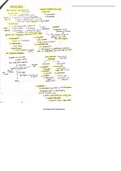
Prompt engineering-Randomness
Randomness in outputs refers to the generation of unpredictable or diverse responses from a
language model when given the same prompt multiple times. Prompt engineering involves
designing and utilizing prompts to guide the language model's behavior and produce desired
outputs.
To achieve randomness in outputs, you can introduce randomness in various ways during
prompt engineering:
Temperature: Language models like GPT-3.5 use a parameter called "temperature" to control
the randomness of their output. A higher temperature (e.g., 0.8 or 1.0) leads to more diverse and
creative responses, while a lower temperature (e.g., 0.2 or 0.5) produces more focused and
deterministic outputs.
Random Sampling: Instead of selecting the most likely word at each step of generation, you can
randomly sample words from the model's distribution of possible words. This technique
introduces a degree of randomness into the output.
Nucleus (Top-p) Sampling: This is a variant of random sampling where you sample from the
smallest possible set of words that make up a certain cumulative probability (e.g., 90% of the
probability mass). This approach helps maintain the overall coherence of the response while
still allowing for diverse outputs.
Prompts with Diverse Endings: Crafting prompts that have multiple possible ways to conclude
or resolve a task can encourage the model to generate varied responses.
Random Seed: You can introduce randomness by using a random seed value that affects the
model's internal processes, such as selecting different initial states or generating random noise
during sampling.
Reinforcement Learning: Employing reinforcement learning techniques can encourage the
model to explore different outputs and reward it for generating diverse and desirable responses.
It's essential to strike a balance between randomness and coherence when using these
techniques. Too much randomness might lead to incoherent outputs, while too little could result
in the model being too deterministic and repetitive.
Ultimately, the goal of using randomness in prompt engineering is to enhance the creativity and
diversity of the language model's responses while still ensuring they remain relevant and useful
for the given task or application.
Randomness in outputs refers to the generation of unpredictable or diverse responses from a
language model when given the same prompt multiple times. Prompt engineering involves
designing and utilizing prompts to guide the language model's behavior and produce desired
outputs.
To achieve randomness in outputs, you can introduce randomness in various ways during
prompt engineering:
Temperature: Language models like GPT-3.5 use a parameter called "temperature" to control
the randomness of their output. A higher temperature (e.g., 0.8 or 1.0) leads to more diverse and
creative responses, while a lower temperature (e.g., 0.2 or 0.5) produces more focused and
deterministic outputs.
Random Sampling: Instead of selecting the most likely word at each step of generation, you can
randomly sample words from the model's distribution of possible words. This technique
introduces a degree of randomness into the output.
Nucleus (Top-p) Sampling: This is a variant of random sampling where you sample from the
smallest possible set of words that make up a certain cumulative probability (e.g., 90% of the
probability mass). This approach helps maintain the overall coherence of the response while
still allowing for diverse outputs.
Prompts with Diverse Endings: Crafting prompts that have multiple possible ways to conclude
or resolve a task can encourage the model to generate varied responses.
Random Seed: You can introduce randomness by using a random seed value that affects the
model's internal processes, such as selecting different initial states or generating random noise
during sampling.
Reinforcement Learning: Employing reinforcement learning techniques can encourage the
model to explore different outputs and reward it for generating diverse and desirable responses.
It's essential to strike a balance between randomness and coherence when using these
techniques. Too much randomness might lead to incoherent outputs, while too little could result
in the model being too deterministic and repetitive.
Ultimately, the goal of using randomness in prompt engineering is to enhance the creativity and
diversity of the language model's responses while still ensuring they remain relevant and useful
for the given task or application.