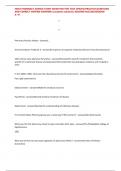
Compare + Contrast how personal advisors have increased the power of UK PM + US President.
Para Key Points Key Points
1 Despite continuing importance of cabinet (UK), role played by Especially, if one key players is appointed personal adviser
personal advisors influencing PM decision making grown from PMO not an elected minister.
significantly. Many say PM has their own department, in PMO = de facto
All PM's -surround with collection close friends + advisors - but not formalised PM department.
trusted, even if choices lack formal position of power. Large number of advisers brought in at any moments - keep
This kind of loose + informal 'kitchen cabinet' = resentments PM informed on policy developments + potential difficulties.
among others in party.
2 Emphasis on presentation. Increased role Press Office indicates Give advice + played key role for Blair.
importance. Policy Unit - no more than 8 appointees before Blair, he
Four main sections PMO = Private Office, Political Office, Policy considerably strengthened his unit.
Unit + Press Office. 2001 - 13 members + well placed to convey his views to
Private Office manages PM's engagement + relations - departments.
Parliament + Whitehall. Peter Hennessey - help 'justified impression of No.10
Political Office - links PM with between Parliament + Party, becoming more like the White House'.
advises them on political tactics, preparing speeches + Press Office handles relations with TV, radio + press.
important documents. Press secretaries - Bernard Ingham - Thatcher + Blair =
Policy Unit - made up of advisors drawn from outside Alistair Campbell - most influential.
government + few career officials.
3 Cabinet not mentioned -US Constitution, although all Presidents Blair - cabinet to impose his will, not always staying once his
have one. views were made.
Cabinet - lower status than Britain + influence on decline since Meetings = brief + less collegiate.
1930's (EXOP) created similar time (1939). Number of personal advisers in PMO doubled under Blair
PM rely Cabinet greater or lesser extent. compared to Major.
John Major - extensive use of Cabinet than predecessor + less He departed from Major's collegiate style more a more
use of cabinet committees + bilaterals. 'Presidential' style of leadership.
4 Britain, Cabinet - main decision making body. May choose to consult but does not feel bound to.
Co-ordinates policy + court of appeal when agreement cannot View members as spokespersons for departments.
be reached. Presidents - no particular reasons why Cabinet members
PM very powerful, role of Cabinet - still major, commentator’s interested in/agreed upon all aspects.
debate balance of power between premier + colleagues. John F.Kennedy 'Why should the postmaster sit there + listen
PM needs cabinet backing. American cabinet - advisory body to a discussion of the problems of Laos?'
only + final analysis President - may choose to ignore it. American cabinet - contributes less. Walles' "no party
Lincoln asked cabinet to vote - unanimity in opposition he pressures to induce a sense of collectively... no electoral
announced his decision "7 nays + 1 aye, the ayes have it". demands impose an outward unity"
Major decisions remain in his hands, - enhance power in Presidents - disillusioned with creation, Carter favoured
relation to PM but leaves him exposed. strong Cabinet + meet frequently in first two years.
Role can be lonely, cannot count on party support. By 1979 inviting all Cabinet Secretaries to resign in economic
President looks elsewhere - policy advice, coordination + crisis.
support + turn to White House Office Staff. No question of him + his team sinking or swimming together.
5 British system demand more collegiality. Increasing use cabinet Major + controversial issues - require backing of at least
committees, bi-laterals + sofa style - personal advisors same heavyweights, fool to pursue policy lacking support of
influence as ministers. Cabinet.
Function - decision making body frequently bypassed, more Presidential system - single chief executive, departmental
ratifying + legitimising decisions made elsewhere. heads follow own agenda + cabinet meetings described by
PM's increasing use personal advisors - alternative source of Hague 'little more than a presidential photo-opportunity'.
consul.
6 Presidents do not have degree of backing + support from President relies Executive Office - background info, detailed
Cabinet the PM, is accustomed to receiving. analysis + informed policy recommendations.
Have other sources of help - E.X.O.P. e.g. White House Staff - Takes place - heart of admin. giving advice he depends on,
personal appointees of President - relies upon for general conducting many dealings with Congress, publicise, supervise
strategy + advice. + implementation of decisions.
Members of inner clique - deny access to President + Cabinet. Freed to deal with top level matters + future planning.
Con. Despite gradual demise influence, UK still more significant than Existence of unelected, unaccountable, spin doctors in Blair’s
US counterpart. gov. – called into question culture of ‘sofa-style’ government
Cabinet ministers UK more powerful in comparison to EOP blamed for scandals – ‘dodgy dossier’ on WMD’s sell Iraq War
advisors only compete with insignificant cabinet officers. to Parliament.
EOP PA + cabinet officers – unelected, thus no moral obligation PA = increased power offering leaders support perform
for President – limit power + influence to ensure cabinet team increasingly demanding range of roles.
doesn’t get side-lined. Heavy criticism being too close + not telling inconvenient
Tony Blair’s Press Secretary Campbell became more powerful, truths = ill-advised policies.
pressure on PM from media to get rid of him. He ended up Effect of personal advisors greater increasing power of
resigning. President – singular executive lends itself to this style.
UK tempered – culture + history of cabinet – mistrust of
faceless, shadowy figures that can’t be removed.
Para Key Points Key Points
1 Despite continuing importance of cabinet (UK), role played by Especially, if one key players is appointed personal adviser
personal advisors influencing PM decision making grown from PMO not an elected minister.
significantly. Many say PM has their own department, in PMO = de facto
All PM's -surround with collection close friends + advisors - but not formalised PM department.
trusted, even if choices lack formal position of power. Large number of advisers brought in at any moments - keep
This kind of loose + informal 'kitchen cabinet' = resentments PM informed on policy developments + potential difficulties.
among others in party.
2 Emphasis on presentation. Increased role Press Office indicates Give advice + played key role for Blair.
importance. Policy Unit - no more than 8 appointees before Blair, he
Four main sections PMO = Private Office, Political Office, Policy considerably strengthened his unit.
Unit + Press Office. 2001 - 13 members + well placed to convey his views to
Private Office manages PM's engagement + relations - departments.
Parliament + Whitehall. Peter Hennessey - help 'justified impression of No.10
Political Office - links PM with between Parliament + Party, becoming more like the White House'.
advises them on political tactics, preparing speeches + Press Office handles relations with TV, radio + press.
important documents. Press secretaries - Bernard Ingham - Thatcher + Blair =
Policy Unit - made up of advisors drawn from outside Alistair Campbell - most influential.
government + few career officials.
3 Cabinet not mentioned -US Constitution, although all Presidents Blair - cabinet to impose his will, not always staying once his
have one. views were made.
Cabinet - lower status than Britain + influence on decline since Meetings = brief + less collegiate.
1930's (EXOP) created similar time (1939). Number of personal advisers in PMO doubled under Blair
PM rely Cabinet greater or lesser extent. compared to Major.
John Major - extensive use of Cabinet than predecessor + less He departed from Major's collegiate style more a more
use of cabinet committees + bilaterals. 'Presidential' style of leadership.
4 Britain, Cabinet - main decision making body. May choose to consult but does not feel bound to.
Co-ordinates policy + court of appeal when agreement cannot View members as spokespersons for departments.
be reached. Presidents - no particular reasons why Cabinet members
PM very powerful, role of Cabinet - still major, commentator’s interested in/agreed upon all aspects.
debate balance of power between premier + colleagues. John F.Kennedy 'Why should the postmaster sit there + listen
PM needs cabinet backing. American cabinet - advisory body to a discussion of the problems of Laos?'
only + final analysis President - may choose to ignore it. American cabinet - contributes less. Walles' "no party
Lincoln asked cabinet to vote - unanimity in opposition he pressures to induce a sense of collectively... no electoral
announced his decision "7 nays + 1 aye, the ayes have it". demands impose an outward unity"
Major decisions remain in his hands, - enhance power in Presidents - disillusioned with creation, Carter favoured
relation to PM but leaves him exposed. strong Cabinet + meet frequently in first two years.
Role can be lonely, cannot count on party support. By 1979 inviting all Cabinet Secretaries to resign in economic
President looks elsewhere - policy advice, coordination + crisis.
support + turn to White House Office Staff. No question of him + his team sinking or swimming together.
5 British system demand more collegiality. Increasing use cabinet Major + controversial issues - require backing of at least
committees, bi-laterals + sofa style - personal advisors same heavyweights, fool to pursue policy lacking support of
influence as ministers. Cabinet.
Function - decision making body frequently bypassed, more Presidential system - single chief executive, departmental
ratifying + legitimising decisions made elsewhere. heads follow own agenda + cabinet meetings described by
PM's increasing use personal advisors - alternative source of Hague 'little more than a presidential photo-opportunity'.
consul.
6 Presidents do not have degree of backing + support from President relies Executive Office - background info, detailed
Cabinet the PM, is accustomed to receiving. analysis + informed policy recommendations.
Have other sources of help - E.X.O.P. e.g. White House Staff - Takes place - heart of admin. giving advice he depends on,
personal appointees of President - relies upon for general conducting many dealings with Congress, publicise, supervise
strategy + advice. + implementation of decisions.
Members of inner clique - deny access to President + Cabinet. Freed to deal with top level matters + future planning.
Con. Despite gradual demise influence, UK still more significant than Existence of unelected, unaccountable, spin doctors in Blair’s
US counterpart. gov. – called into question culture of ‘sofa-style’ government
Cabinet ministers UK more powerful in comparison to EOP blamed for scandals – ‘dodgy dossier’ on WMD’s sell Iraq War
advisors only compete with insignificant cabinet officers. to Parliament.
EOP PA + cabinet officers – unelected, thus no moral obligation PA = increased power offering leaders support perform
for President – limit power + influence to ensure cabinet team increasingly demanding range of roles.
doesn’t get side-lined. Heavy criticism being too close + not telling inconvenient
Tony Blair’s Press Secretary Campbell became more powerful, truths = ill-advised policies.
pressure on PM from media to get rid of him. He ended up Effect of personal advisors greater increasing power of
resigning. President – singular executive lends itself to this style.
UK tempered – culture + history of cabinet – mistrust of
faceless, shadowy figures that can’t be removed.