The Problem of Evil
Logical Problem of Evil
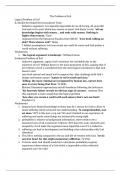
JL Mackie developed the Inconsistent Triad
- deductive argument: it is logically impossible for an all-loving, all-powerful
God and evil to exist which uses reason to assert God doesn’t exist. ‘all our
knowledge begins with senses… and ends with reason. Nothing is
higher than reason.’ Kant
- originates from the Epicurean Paradox from 300 BC. ‘Is he both willing an
able? Then whence evil?’ Hume
- 2 hidden assumptions: God can create any world he wants and God prefers a
world without suffering
Weaknesses
1. ‘the logical argument is bankrupt.’ William Paston
Evidential Problem of Evil
- inductive argument: argues God’s existence isn’t probable due to the
existence of evil. William Rower is the main proponent of this, arguing that if
all evidence of evil is considered then the most logical conclusion is that God
doesn’t exist
- uses both natural and moral evil to support this: they challenge both God’s
design and human nature. ‘nature is red in tooth and claw.’
- ‘killing, the most criminal act recognised by human law, nature does
once to every being that lives.’ JS Mills
- Richard J Bernstein opposed any and all theodicies following the holocaust
- ‘his heavenly father reveals no obvious sign of concern.’ Anthony Flew
- this argument is more sound than the logical problem
- ‘how dare you create a world with such misery that’s not our fault.’
Stephen Fry
Weaknesses
1. humans have limited knowledge so there may be a reason for God to allow so
much suffering which is beyond our understanding. ‘Si comprehendisti, non
est deus.’ BUT is this just a cop out? We aren’t limited in our experience of
suffering and surely some things are intrinsically wrong/right
2. probability is relative to background information, there needs to be a
measured view of all a posteriori evidence. BUT does the scale, intensity and
inequality of evil make the argument more impactful even if it is inductive
3. suffering can lead to development and building a free relationship with God
(theodicy)
4. This life is nothing compared to the joy and life of eternity with God. ‘we do
not lose heart for this slight momentary affliction.’ St Paul
5. To know what God should/would do to determine probability requires
experience/observations of a God which is impossible so the evidential
argument can’t be valid
Logical Problem of Evil
JL Mackie developed the Inconsistent Triad
- deductive argument: it is logically impossible for an all-loving, all-powerful
God and evil to exist which uses reason to assert God doesn’t exist. ‘all our
knowledge begins with senses… and ends with reason. Nothing is
higher than reason.’ Kant
- originates from the Epicurean Paradox from 300 BC. ‘Is he both willing an
able? Then whence evil?’ Hume
- 2 hidden assumptions: God can create any world he wants and God prefers a
world without suffering
Weaknesses
1. ‘the logical argument is bankrupt.’ William Paston
Evidential Problem of Evil
- inductive argument: argues God’s existence isn’t probable due to the
existence of evil. William Rower is the main proponent of this, arguing that if
all evidence of evil is considered then the most logical conclusion is that God
doesn’t exist
- uses both natural and moral evil to support this: they challenge both God’s
design and human nature. ‘nature is red in tooth and claw.’
- ‘killing, the most criminal act recognised by human law, nature does
once to every being that lives.’ JS Mills
- Richard J Bernstein opposed any and all theodicies following the holocaust
- ‘his heavenly father reveals no obvious sign of concern.’ Anthony Flew
- this argument is more sound than the logical problem
- ‘how dare you create a world with such misery that’s not our fault.’
Stephen Fry
Weaknesses
1. humans have limited knowledge so there may be a reason for God to allow so
much suffering which is beyond our understanding. ‘Si comprehendisti, non
est deus.’ BUT is this just a cop out? We aren’t limited in our experience of
suffering and surely some things are intrinsically wrong/right
2. probability is relative to background information, there needs to be a
measured view of all a posteriori evidence. BUT does the scale, intensity and
inequality of evil make the argument more impactful even if it is inductive
3. suffering can lead to development and building a free relationship with God
(theodicy)
4. This life is nothing compared to the joy and life of eternity with God. ‘we do
not lose heart for this slight momentary affliction.’ St Paul
5. To know what God should/would do to determine probability requires
experience/observations of a God which is impossible so the evidential
argument can’t be valid