India, c1914-48: The road to Independence
June 2022: Section B
‘The impact of the salt satyagraha (1930) was more significant than the impact of any other civil disobedience
campaign in the years 1920-42.’ How far do you agree?
Introduction
• Gandhi embarked 3 main satyagraha campaigns years 1920-42
• If one was to define ‘more significant’ as causing the largest advancement towards independence, accurate sympathise with
statement to large extent; overall salt satyagraha proved most effective + largest impact
• Assess statement greater depth: all 3 civil disobedience campaigns will be examined to justify large extent
Conclusion
• Reiterate large extent concur with statement as caused largest advancement towards independence
• Evaluate the limits of the 1920-21 campaign + ‘Quit India’ 1942
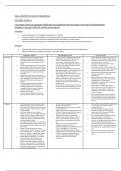
Satyagraha 1920-21 Salt Satyagraha 1930 Quit India 1942
Successes • Intervened local situations: peasant farmers • L. James synopsis: ‘independent India lived off • Gandhi urged every demonstrator become own
Champaran forced by white planters grow its last legacy,’ with Gandhi’s ability combine leaders: horrific riots, killings + destruction gov
indigo disadvantaged terms + Gurjarat where ‘radical + moderate demand’ (M. Ali) buildings/revenue offices (most alarming postal
cotton mill workers earning pittance (Gandhi • French argues ‘its greatest strength was its services/train strikes at time war)
fasted) simplicity’ while ‘challenging heart of imperial • Linlithgow to WC Aug 31st: ‘worst rebellion
• 1919/20 Gandhi forged relationships upcoming rule’ due to the emotive + symbolic nature of since 1857’…’rampant protest’.
regional leaders: Patel, Prasad + young J. Nehru salt (Britain Salt Act 1882) • New leaders such as Aruna Ali emerged out of
(astute political awareness for future struggles) • Gandhi won propaganda battle against British vacuum leadership: hoisted Indian National Flag
• Businessmen hitherto ignored by Congress (pay- within global opinion, ‘a consummate showman’ at the Gavalia Tark Maidan, Bombay 1942
rolled campaign; 10m rupees collected April- (French) with >250 journalists from USA • Madhuban (UP): local policemen barricaded vs
June 1921) documenting the march (attracted 75k 1st day) 4k weaponised villagers + 2 elephants:
• Targeted areas gov Indian non-cooperation • ‘Vital Congress gathered as many discontent defenders fired
unlikely bring conflict with police: 90% qualified under its wings’ (James) + able to ‘re enforce • Affected many aspects both British + Indian
voters UP abandoned 1920 elections; Prince Congress’ self-image as tribune of entire nation’ lifestyles: kept Congress Party united through
Wales visit 1921 shops closed throughout (James): British lost considerable portions challenging times; ‘placed demand
Calcutta Bombay, UP successful land tax + NWF full scale independence immediate agenda nationalist
• Gandhi adjusted philosophical ideologies to rebellion Afridis movement’ (A. Upadhyay)
incorporate different shades of opinion • Gandhi-Irwin Pact: treated equally with Viceroy • Independence ‘no longer matter bargain +
campaign needed (most successful where (de-facto leader Indian nationalism) + clear any became clear after the war’ (Chandra); led to
campaigns linked prior patterns nationalist solution impossible without Gandhi/Congress
independence some regard, instilling new
institution building: Gov Bengal ‘built
confidence among masses + induced spirit
organisation real power’
sacrifice to Congress
• Lucknow + Benares (Gangetic North) 100k
joined peasant associations 1st months 1920 • British understood power masses + potential
threat able propose to Raj; ‘fast running out
space to manoeuvre’ (Spear); painful situation
to continue rule economically, politically, and
socially
Failures • 1921 initial optimism melted away by internal • By 1931, British effectively back in control; • 9th Aug: British arrested 100k first weeks; Nehru
difference/popular apathy proved misplaced physical authority British re- + most Congress party leaders arrested +
(most who quit institutions eventually returned, established/maintained easily when campaign interned; 3k injured
already Indianized + ‘infinitesimal’ according to resumed (1933-34) • 14th Aug RAF began flying against crowds
Viceroy Reading) • Indian army defeated riots Peshawar April 1930 threatening railways UP + Bihar (ordered
• Small dent submission Indian soldiers to (33 killed + 30 injured); end 1930 60k Congress machine gun if didn’t disperse); 35k British
imperial command: ‘even at height of campaign, supporters jailed + 29k still there 1931 troops available support police
enough Indian tax collectors, police officers + • 215k police stayed loyal + demonstrations • WC: ‘I will not preside over liquidation British
magistrates maintain limited but functioning ‘depleted ranks’ (James); Congress ran out of Empire’ (Churchillian conservatism)
control of Raj’ (Brown) + middle classes didn’t steam + quality leadership varied due to de- • 1942 British intelligence expect likelihood
fear administrative collapse centralised nature of satyagraha (unlike 1920- outcome: raid Congress branch offices yielded
• Lala Lajapat criticised movement: students at his 21) more info positioning local disturbances +
Dayananda Anglo Vedic college in Lahore asked • Wisdom of Irwin: to many Indians British undercover agents penetrated most Congress.
join boycott but institution ‘taught order, renew leadership reasonable; Pact clear • Ballia, Uttar Pradesh: outnumbered magistrate
skill + honour’ compromise/willingness consult (Gandhi refuses burnt 400k rupees to stop falling into hands of
• Gandhi’s refusal exclude anyone from his 1st RTC + intransigent 2nd) + chose not to mob
political coalition ‘sowed the seeds of disruption implement martial law (awareness zeitgeist) • Hindu areas such as Bihar, military remained
within his movement’… ‘a charismatic + naïve • Campaign didn’t enter Princely States: Maharaja loyal to raj as ‘ultimate pillar colonial state’
idealist’ (R. Williams) + imperial state ‘obliged of Kashmir forbade all meetings/support for
(Khan)
issue more repressive approach’ (E. Wilson) Congress + Maharaja Hyderabad sent 200k
• Moplah Rebellion: >600 killed + 2.5k forcibly rupees to British pay for action against
converted to Islam, 66 suffocated in train disturbances
wagon; ‘ominous character of communal
violence cast shadow over non-cooperation’
(James) + Chauri Chaura (6th Feb 1922) protest
mob burnt 22 policemen to death (movement
called off + Gandhi arrested on charge sedition
for 6 years 10th March 1922)
, How accurate is it to say that Gandhi’s poor political skills were the principal reason for the failure of the
Second Round Table Conference in 1931?
Introduction
• New Labour gov 1929 committed clear change relationship Britain/India; Dominion/Irwin Declaration 1929 made clear current
British policy build upon Montagu Declaration + move towards eventual granting Dominion Status India.
• If one was to define ‘principal reason’ as the main cause of failure 2nd RTC, accurate sympathise with statement to large extent;
overall Gandhi’s claim represent ‘all India’ alienated other Indian political parties + played into hands of the British
• Assess statement greater depth: Gandhi’s poor political skills, actions of other Indian parties/Jinnah + British
government/situation in Britain will be examined to justify large extent
Conclusion
• Reiterate large extent concur with statement as Gandhi’s poor political skills principal reason failure 2nd RTC
• Evaluate that both other Indian political parties/Jinnah + British intransigence/changing political scene also contributed to
failure; Gandhi’s poor political skills meant foundations conference failed + Gandhi instigated the failure through his actions
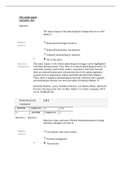
Gandhi’s poor political skills Other Indian political parties/Jinnah British government/situation in Britain
• Similar mix delegates: Gandhi attends • All parties demanded separate • Communal question brought
as sole representative Congress electorates: ‘well-chewed bone of deliberately forefront + magnified by
• Gandhi hoped symbolise unity Indian contention’ (James); focused government who didn’t intend part
Nationalist movement (insisted ‘with desirability reserving seats with power
God as my guide’ went as far question racial/religious minorities + how could • Gandhi told MacDonald no meaning
right fellow delegates be present) affect resulting balance power bringing Ambedkar unless create
• All it symbolised was arrogance • Conference began unravel: difficulties (intransigent) - Gandhi
believing able represent such vast + Hindu/Muslim disagreements; argued represented depressed classes
diverse organisation alone + lack Congress worried possible alliance more effectively + expressed similar
judgement maintaining could speak for Princes + Muslims, could outweigh any views
all India recommendations Congress might • Overwhelming no. Indian delegates
• Gandhi states ‘Congress platform make, ‘derailed by bickering over highlighting extent issue at stake,
universal’: naive given permutations electoral power’ (James) loyalists, communalists, careerists,
attendees at Conference (yet no • Collapse talks exposes self-interest landlords (British claimed Congress
separate electorates Muslims/other Indian parties gain own cause + ignore didn’t represent all India)
minorities) united struggle • Situation in Britain: Nov 1930 → Dec
• Iqbal the Aga Khan + Jinnah (alienated • Historical representation Muslims + 1932, British political situation
by Gandhi’s behaviour) attended Sikhs proved intensely unpopular with changed: April 1931 Viceroy Irwin
representing ML; Master Singh (Sikhs) most delegates (demanded separate replaced by Lord Willingdon (rigid
+ Dr Ambedkar (untouchables Gandhi electorates) conservative compared conciliatory
demanded not be treated as • Jinnah’s attitude surprised everyone: likeable persona Irwin)
‘minority’) deceitful in effort gain concessions + • British 1st Labour gov replaced by Tory
• Gandhi aware couldn’t accept anything privately asking MacDonald in dominated coalition: cabinet facing
involving dominion status (sided with bargaining spirit: ‘Hindus prepared Great Depression 1929, unemployment
‘Young Hooligans’/salt satyagraha) give, how much more British prepared + recession (political/financial
• Gandhi vs Jinnah selfishness + give Muslims’ pressure); New Sec of S for India Sir
disagreements all Indians: self-interest • Method bargaining became notorious Samuel Hoare more reservations about
own parties + not united struggle; of talks + demanded stop self-gov
Congress inability recognise (unscrupulous way Jinnah prepared • Churchill: ‘Gandhi naked seditious
opinions/outrage ML bargain for Muslim cause) fakir;’ argued totally unsuited
• Jinnah complicated situation with democracy + remain subordinated, sets
manipulative tactics, ‘playing one up India Defence League in attempt
group of another’ (James) in seeking galvanise support against purna swaraj
gain concessions • Coalition gov altered atmosphere
conferences 1931: sole outcome
session widening divisions Congress +
minorities with ‘antagonistic British
gov’ (James) complete opposite Indian
aspirations
•
June 2022: Section B
‘The impact of the salt satyagraha (1930) was more significant than the impact of any other civil disobedience
campaign in the years 1920-42.’ How far do you agree?
Introduction
• Gandhi embarked 3 main satyagraha campaigns years 1920-42
• If one was to define ‘more significant’ as causing the largest advancement towards independence, accurate sympathise with
statement to large extent; overall salt satyagraha proved most effective + largest impact
• Assess statement greater depth: all 3 civil disobedience campaigns will be examined to justify large extent
Conclusion
• Reiterate large extent concur with statement as caused largest advancement towards independence
• Evaluate the limits of the 1920-21 campaign + ‘Quit India’ 1942
Satyagraha 1920-21 Salt Satyagraha 1930 Quit India 1942
Successes • Intervened local situations: peasant farmers • L. James synopsis: ‘independent India lived off • Gandhi urged every demonstrator become own
Champaran forced by white planters grow its last legacy,’ with Gandhi’s ability combine leaders: horrific riots, killings + destruction gov
indigo disadvantaged terms + Gurjarat where ‘radical + moderate demand’ (M. Ali) buildings/revenue offices (most alarming postal
cotton mill workers earning pittance (Gandhi • French argues ‘its greatest strength was its services/train strikes at time war)
fasted) simplicity’ while ‘challenging heart of imperial • Linlithgow to WC Aug 31st: ‘worst rebellion
• 1919/20 Gandhi forged relationships upcoming rule’ due to the emotive + symbolic nature of since 1857’…’rampant protest’.
regional leaders: Patel, Prasad + young J. Nehru salt (Britain Salt Act 1882) • New leaders such as Aruna Ali emerged out of
(astute political awareness for future struggles) • Gandhi won propaganda battle against British vacuum leadership: hoisted Indian National Flag
• Businessmen hitherto ignored by Congress (pay- within global opinion, ‘a consummate showman’ at the Gavalia Tark Maidan, Bombay 1942
rolled campaign; 10m rupees collected April- (French) with >250 journalists from USA • Madhuban (UP): local policemen barricaded vs
June 1921) documenting the march (attracted 75k 1st day) 4k weaponised villagers + 2 elephants:
• Targeted areas gov Indian non-cooperation • ‘Vital Congress gathered as many discontent defenders fired
unlikely bring conflict with police: 90% qualified under its wings’ (James) + able to ‘re enforce • Affected many aspects both British + Indian
voters UP abandoned 1920 elections; Prince Congress’ self-image as tribune of entire nation’ lifestyles: kept Congress Party united through
Wales visit 1921 shops closed throughout (James): British lost considerable portions challenging times; ‘placed demand
Calcutta Bombay, UP successful land tax + NWF full scale independence immediate agenda nationalist
• Gandhi adjusted philosophical ideologies to rebellion Afridis movement’ (A. Upadhyay)
incorporate different shades of opinion • Gandhi-Irwin Pact: treated equally with Viceroy • Independence ‘no longer matter bargain +
campaign needed (most successful where (de-facto leader Indian nationalism) + clear any became clear after the war’ (Chandra); led to
campaigns linked prior patterns nationalist solution impossible without Gandhi/Congress
independence some regard, instilling new
institution building: Gov Bengal ‘built
confidence among masses + induced spirit
organisation real power’
sacrifice to Congress
• Lucknow + Benares (Gangetic North) 100k
joined peasant associations 1st months 1920 • British understood power masses + potential
threat able propose to Raj; ‘fast running out
space to manoeuvre’ (Spear); painful situation
to continue rule economically, politically, and
socially
Failures • 1921 initial optimism melted away by internal • By 1931, British effectively back in control; • 9th Aug: British arrested 100k first weeks; Nehru
difference/popular apathy proved misplaced physical authority British re- + most Congress party leaders arrested +
(most who quit institutions eventually returned, established/maintained easily when campaign interned; 3k injured
already Indianized + ‘infinitesimal’ according to resumed (1933-34) • 14th Aug RAF began flying against crowds
Viceroy Reading) • Indian army defeated riots Peshawar April 1930 threatening railways UP + Bihar (ordered
• Small dent submission Indian soldiers to (33 killed + 30 injured); end 1930 60k Congress machine gun if didn’t disperse); 35k British
imperial command: ‘even at height of campaign, supporters jailed + 29k still there 1931 troops available support police
enough Indian tax collectors, police officers + • 215k police stayed loyal + demonstrations • WC: ‘I will not preside over liquidation British
magistrates maintain limited but functioning ‘depleted ranks’ (James); Congress ran out of Empire’ (Churchillian conservatism)
control of Raj’ (Brown) + middle classes didn’t steam + quality leadership varied due to de- • 1942 British intelligence expect likelihood
fear administrative collapse centralised nature of satyagraha (unlike 1920- outcome: raid Congress branch offices yielded
• Lala Lajapat criticised movement: students at his 21) more info positioning local disturbances +
Dayananda Anglo Vedic college in Lahore asked • Wisdom of Irwin: to many Indians British undercover agents penetrated most Congress.
join boycott but institution ‘taught order, renew leadership reasonable; Pact clear • Ballia, Uttar Pradesh: outnumbered magistrate
skill + honour’ compromise/willingness consult (Gandhi refuses burnt 400k rupees to stop falling into hands of
• Gandhi’s refusal exclude anyone from his 1st RTC + intransigent 2nd) + chose not to mob
political coalition ‘sowed the seeds of disruption implement martial law (awareness zeitgeist) • Hindu areas such as Bihar, military remained
within his movement’… ‘a charismatic + naïve • Campaign didn’t enter Princely States: Maharaja loyal to raj as ‘ultimate pillar colonial state’
idealist’ (R. Williams) + imperial state ‘obliged of Kashmir forbade all meetings/support for
(Khan)
issue more repressive approach’ (E. Wilson) Congress + Maharaja Hyderabad sent 200k
• Moplah Rebellion: >600 killed + 2.5k forcibly rupees to British pay for action against
converted to Islam, 66 suffocated in train disturbances
wagon; ‘ominous character of communal
violence cast shadow over non-cooperation’
(James) + Chauri Chaura (6th Feb 1922) protest
mob burnt 22 policemen to death (movement
called off + Gandhi arrested on charge sedition
for 6 years 10th March 1922)
, How accurate is it to say that Gandhi’s poor political skills were the principal reason for the failure of the
Second Round Table Conference in 1931?
Introduction
• New Labour gov 1929 committed clear change relationship Britain/India; Dominion/Irwin Declaration 1929 made clear current
British policy build upon Montagu Declaration + move towards eventual granting Dominion Status India.
• If one was to define ‘principal reason’ as the main cause of failure 2nd RTC, accurate sympathise with statement to large extent;
overall Gandhi’s claim represent ‘all India’ alienated other Indian political parties + played into hands of the British
• Assess statement greater depth: Gandhi’s poor political skills, actions of other Indian parties/Jinnah + British
government/situation in Britain will be examined to justify large extent
Conclusion
• Reiterate large extent concur with statement as Gandhi’s poor political skills principal reason failure 2nd RTC
• Evaluate that both other Indian political parties/Jinnah + British intransigence/changing political scene also contributed to
failure; Gandhi’s poor political skills meant foundations conference failed + Gandhi instigated the failure through his actions
Gandhi’s poor political skills Other Indian political parties/Jinnah British government/situation in Britain
• Similar mix delegates: Gandhi attends • All parties demanded separate • Communal question brought
as sole representative Congress electorates: ‘well-chewed bone of deliberately forefront + magnified by
• Gandhi hoped symbolise unity Indian contention’ (James); focused government who didn’t intend part
Nationalist movement (insisted ‘with desirability reserving seats with power
God as my guide’ went as far question racial/religious minorities + how could • Gandhi told MacDonald no meaning
right fellow delegates be present) affect resulting balance power bringing Ambedkar unless create
• All it symbolised was arrogance • Conference began unravel: difficulties (intransigent) - Gandhi
believing able represent such vast + Hindu/Muslim disagreements; argued represented depressed classes
diverse organisation alone + lack Congress worried possible alliance more effectively + expressed similar
judgement maintaining could speak for Princes + Muslims, could outweigh any views
all India recommendations Congress might • Overwhelming no. Indian delegates
• Gandhi states ‘Congress platform make, ‘derailed by bickering over highlighting extent issue at stake,
universal’: naive given permutations electoral power’ (James) loyalists, communalists, careerists,
attendees at Conference (yet no • Collapse talks exposes self-interest landlords (British claimed Congress
separate electorates Muslims/other Indian parties gain own cause + ignore didn’t represent all India)
minorities) united struggle • Situation in Britain: Nov 1930 → Dec
• Iqbal the Aga Khan + Jinnah (alienated • Historical representation Muslims + 1932, British political situation
by Gandhi’s behaviour) attended Sikhs proved intensely unpopular with changed: April 1931 Viceroy Irwin
representing ML; Master Singh (Sikhs) most delegates (demanded separate replaced by Lord Willingdon (rigid
+ Dr Ambedkar (untouchables Gandhi electorates) conservative compared conciliatory
demanded not be treated as • Jinnah’s attitude surprised everyone: likeable persona Irwin)
‘minority’) deceitful in effort gain concessions + • British 1st Labour gov replaced by Tory
• Gandhi aware couldn’t accept anything privately asking MacDonald in dominated coalition: cabinet facing
involving dominion status (sided with bargaining spirit: ‘Hindus prepared Great Depression 1929, unemployment
‘Young Hooligans’/salt satyagraha) give, how much more British prepared + recession (political/financial
• Gandhi vs Jinnah selfishness + give Muslims’ pressure); New Sec of S for India Sir
disagreements all Indians: self-interest • Method bargaining became notorious Samuel Hoare more reservations about
own parties + not united struggle; of talks + demanded stop self-gov
Congress inability recognise (unscrupulous way Jinnah prepared • Churchill: ‘Gandhi naked seditious
opinions/outrage ML bargain for Muslim cause) fakir;’ argued totally unsuited
• Jinnah complicated situation with democracy + remain subordinated, sets
manipulative tactics, ‘playing one up India Defence League in attempt
group of another’ (James) in seeking galvanise support against purna swaraj
gain concessions • Coalition gov altered atmosphere
conferences 1931: sole outcome
session widening divisions Congress +
minorities with ‘antagonistic British
gov’ (James) complete opposite Indian
aspirations
•