Politics Essay Plans (Core Ideologies)
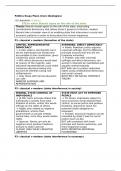
(1) Liberalism (4 plans)
ETE to which liberals agree on the role of the state
Thesis: liberals mostly agree on the role of the state, advocating
constitutional democracy that allows those it governs to flourish; modern
liberals take a broader view of an enabling state that intervenes in social and
economic patterns in order to bring about this human happiness
P1- classical v modern (formation of the state)
LIMITED, REPRESENTATIVE EXPANDED, DIRECT DEMOCRACY
DEMOCRACY -> Rawls: Rawlsian justice requires
-> Locke: state is mechanistic (as it universal suffrage, but his difference
serves individuals) but limited and principle ensures that this will not
accountable to the constitution, given tyrannise minorities
consent by social contract -> Friedan: only with universal
-> Mill: direct democracy would lead suffrage and direct democracy can
to tyranny of the majority; well- women’s interests be manifested and
educated representatives could make equality worked towards
consensus decisions taking into BUT both aim to protect individual
account all interests (using rule- rights using constitutional democracy
utilitarianism) and social consent
-> Only those with formal education BOTH RELY ON SOCIAL CONTRACT
can vote THEORY
NARROW SUFFRAGE AND
REPRESENTATION
P2- classical v modern (state interference in society)
MINIMAL STATE CONTROL OF STATE MUST ACT TO EMPOWER
INDIVIDUALS PEOPLE
-> JS Mill: harm principle states that -> TH Green: individuals subject to
individuals in society have total socio-economic forces beyond their
freedom of action, unless this would control, so social justice and positive
infringe on the rights of others freedoms required to reach full
-> Rights only viewed as negative potential (state obligation to
prohibitions, actions than empower)
governments or private entities -> Freidan: structural injustice can be
cannot take, since they would violate remedied by state’s laws for social
rights justice (such as AA)
-> Spencer: liberty can only be BUT still consistent with harm
negative since positive freedoms principle and human autonomy, just
amount to state coercion more expansive scope
CLASSIC USES SOLELY NEGATIVE BOTH PRIORITISE INDIVIDUAL
LIBERTIES FLOURISHING
P3- classical v modern (state interference in economy)
, LAISSEZ-FAIRE UNREGULATED BY STATE MUST INTERVENE IN
STATE ECONOMY
-> Smith: free markets enable the -> Rawls: state must intervene in
‘invisible hand’ of market forces to economic distributions to ensure that
generate wealth to trickle down to inequalities work to the benefit of the
everyone participating in the worst off in society
economy, with no need for state -> Keynes: promotes dirigisme, where
intervention the state manages market forces,
-> Capitalism is ‘of ultimate benefit to because only with full employment is
all,’ and able to optimistically offer individual liberty possible
equal opportunity -> BUT still prioritises capitalism and
-> Regulations hinder growth so individual liberty in context of modern
ultimately restrict future potential for economies
individual progress BOTH PRIORITISE INDIVIDUAL LIBERTY
CLASSIC PREFERS UNMODERATED
CAPITALISM
ETE to which liberals agree on the nature of society
Thesis: liberals mostly agree on the nature of society as governed by
consent/prioritising freedom/ progressive, although modern liberals prefer a
more expansive state and community-based view of society, that
acknowledges its oppressive aspects. Typical liberal individual freedom is still
central.
P1- classical v modern (state intervention in society)
SOCIETY REQUIRES LIMITED STATE MUST ALLEVIATE
STATE INEQUALITIES
-> Locke: all individuals are born with -> Rawls: prefers enabling state that
natural equality so deserve limited extends its activities to liberate
constitutional government with checks individuals from restrictive
and balances, unable to infringe upon socioeconomic problems, enabling
self-sovereignty them to fulfil their potential (through
-> Humans are egotistical and redistributive taxation)
atomistic, so human nature lacks a -> BUT formal equality and state
social compulsion towards the intervention use justice principle
common good: foundational equality assembled from behind a veil of
is enough to enable self-actualisation ignorance (which means individuals
SOCIETY IS LOOSE AND STATE IS provide consent, self-sovereignty
ABSENT intact)
BOTH AGREE SOCIETY GOVERNED BY
CONSENT
P2- classical v modern (freedoms within society)
CLASSIC HUMAN NEGATIVE MODERN HUMAN POSITIVE
LIBERTY FREEDOMS
-> JS Mill: harm principle states that -> TH Green: individuals subject to
individuals in society have total socio-economic forces beyond their
freedom of action, unless this would control, so social justice and positive
infringe on the rights of others freedoms required to reach full
-> Rights only viewed as negative potential (just tolerance is not
(1) Liberalism (4 plans)
ETE to which liberals agree on the role of the state
Thesis: liberals mostly agree on the role of the state, advocating
constitutional democracy that allows those it governs to flourish; modern
liberals take a broader view of an enabling state that intervenes in social and
economic patterns in order to bring about this human happiness
P1- classical v modern (formation of the state)
LIMITED, REPRESENTATIVE EXPANDED, DIRECT DEMOCRACY
DEMOCRACY -> Rawls: Rawlsian justice requires
-> Locke: state is mechanistic (as it universal suffrage, but his difference
serves individuals) but limited and principle ensures that this will not
accountable to the constitution, given tyrannise minorities
consent by social contract -> Friedan: only with universal
-> Mill: direct democracy would lead suffrage and direct democracy can
to tyranny of the majority; well- women’s interests be manifested and
educated representatives could make equality worked towards
consensus decisions taking into BUT both aim to protect individual
account all interests (using rule- rights using constitutional democracy
utilitarianism) and social consent
-> Only those with formal education BOTH RELY ON SOCIAL CONTRACT
can vote THEORY
NARROW SUFFRAGE AND
REPRESENTATION
P2- classical v modern (state interference in society)
MINIMAL STATE CONTROL OF STATE MUST ACT TO EMPOWER
INDIVIDUALS PEOPLE
-> JS Mill: harm principle states that -> TH Green: individuals subject to
individuals in society have total socio-economic forces beyond their
freedom of action, unless this would control, so social justice and positive
infringe on the rights of others freedoms required to reach full
-> Rights only viewed as negative potential (state obligation to
prohibitions, actions than empower)
governments or private entities -> Freidan: structural injustice can be
cannot take, since they would violate remedied by state’s laws for social
rights justice (such as AA)
-> Spencer: liberty can only be BUT still consistent with harm
negative since positive freedoms principle and human autonomy, just
amount to state coercion more expansive scope
CLASSIC USES SOLELY NEGATIVE BOTH PRIORITISE INDIVIDUAL
LIBERTIES FLOURISHING
P3- classical v modern (state interference in economy)
, LAISSEZ-FAIRE UNREGULATED BY STATE MUST INTERVENE IN
STATE ECONOMY
-> Smith: free markets enable the -> Rawls: state must intervene in
‘invisible hand’ of market forces to economic distributions to ensure that
generate wealth to trickle down to inequalities work to the benefit of the
everyone participating in the worst off in society
economy, with no need for state -> Keynes: promotes dirigisme, where
intervention the state manages market forces,
-> Capitalism is ‘of ultimate benefit to because only with full employment is
all,’ and able to optimistically offer individual liberty possible
equal opportunity -> BUT still prioritises capitalism and
-> Regulations hinder growth so individual liberty in context of modern
ultimately restrict future potential for economies
individual progress BOTH PRIORITISE INDIVIDUAL LIBERTY
CLASSIC PREFERS UNMODERATED
CAPITALISM
ETE to which liberals agree on the nature of society
Thesis: liberals mostly agree on the nature of society as governed by
consent/prioritising freedom/ progressive, although modern liberals prefer a
more expansive state and community-based view of society, that
acknowledges its oppressive aspects. Typical liberal individual freedom is still
central.
P1- classical v modern (state intervention in society)
SOCIETY REQUIRES LIMITED STATE MUST ALLEVIATE
STATE INEQUALITIES
-> Locke: all individuals are born with -> Rawls: prefers enabling state that
natural equality so deserve limited extends its activities to liberate
constitutional government with checks individuals from restrictive
and balances, unable to infringe upon socioeconomic problems, enabling
self-sovereignty them to fulfil their potential (through
-> Humans are egotistical and redistributive taxation)
atomistic, so human nature lacks a -> BUT formal equality and state
social compulsion towards the intervention use justice principle
common good: foundational equality assembled from behind a veil of
is enough to enable self-actualisation ignorance (which means individuals
SOCIETY IS LOOSE AND STATE IS provide consent, self-sovereignty
ABSENT intact)
BOTH AGREE SOCIETY GOVERNED BY
CONSENT
P2- classical v modern (freedoms within society)
CLASSIC HUMAN NEGATIVE MODERN HUMAN POSITIVE
LIBERTY FREEDOMS
-> JS Mill: harm principle states that -> TH Green: individuals subject to
individuals in society have total socio-economic forces beyond their
freedom of action, unless this would control, so social justice and positive
infringe on the rights of others freedoms required to reach full
-> Rights only viewed as negative potential (just tolerance is not