

Literature notes
Rathert, Cheryl, Wyrwich, Mary D., Boren, Suzanne Austin. (2012). Patient-Centered
Care and Outcomes: A Systematic Review of the Literature. Medical Care Research and
Review, 70(4), 351–379. https://doi.org/10.1177/1077558712465774
Patient-centered care (PCC) has been studied for several decades. Yet a clear definition of
PCC is lacking, as is an understanding of how specific PCC processes relate to patient
outcomes. We conducted a systematic review of the PCC literature to examine the evidence
for PCC and outcomes. Three databases were searched for all years through September
2012. We retained 40 articles for the analysis. Results found mixed relationships between
PCC and clinical outcomes, that is, some studies found significant relationships between
specific elements of PCC and outcomes but others found no relationship. There was
stronger evidence for positive influences of PCC on satisfaction and self-management.
Future research should examine specific dimensions of PCC and how they relate to
technical care quality, particularly some dimensions that have not been studied extensively.
Future research also should identify moderating and mediating variables in the
PPC–outcomes relationship.
Jayadevappa, Ravishankar. (2011). Patient Centered Care - A Conceptual Model and
Review of the State of the Art. The Open Health Services and Policy Journal, 4(1), 15–25.
https://doi.org/10.2174/1874924001104010015
Background: Patient-centered care that encompasses informed decision making can
improve treatment choice, quality of care and outcomes. Patient-centered care recognizes
the need for major changes in the process of care that arranges the health care system
around the patient.
1
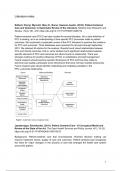
, Objective: Study objective was to evaluate and discuss the interplay of components of
patient- centered care by developing a conceptual model of patient-centered care.
Methods: Comprehensive literature review was conducted using Medline, CINAHL, and
Cochrane databases. Included were English language studies addressing issues related to
patient-centered-care and patient reported outcomes.
Results: Though the concept of patient-centered care emerged in the early 50s, it exploded
in the health care research policy arena exponentially in the late nineties. The conceptual
model described here can aid objective and subjective evaluation of patient-centered care.
As we strive to improve the quality of care, patient-centered care can play a pivotal role in
this process. This however requires changes in our healthcare system so as to improve
overall quality of care by minimizing wasteful health resource consumption.
Conclusions: With healthcare costs projected to continue their rapid increase, the current
paradigm of healthcare is unsustainable. More research is needed to explore the various
attributes of patient-centered care, its acceptability, and comparative effectiveness in the
healthcare arena.
Naomi L Lacy, Elisabeth L Backer. (2008). Evidence-based and patient-centered care:
Results from an STFM group project. Family Medicine, 40(6), 417–422.
This study's purpose was to identify the elements of a definition of evidence-based
patient-centered care (EBPCC), the barriers to using EBPCC, and strategies for overcoming
these barriers. This research project used focus group methodology with participants drawn
from Society of Teachers of Family Medicine (STFM) members who attend STFM meetings
and are interested in the integration of evidence-based medicine and patient-centered care.
Forty-five self-selected STFM members-participants attended one of five total focus groups
between September 2004 and May 2005. Focus groups were audiotaped Data were
transcribed and analyzed using an immersion crystallization style. There was no single,
consistent definition about what constitutes EBPCC. Several common themes arose, with
the conceptual models of EBPCC varied across groups and individuals. The barriers to using
2
Rathert, Cheryl, Wyrwich, Mary D., Boren, Suzanne Austin. (2012). Patient-Centered
Care and Outcomes: A Systematic Review of the Literature. Medical Care Research and
Review, 70(4), 351–379. https://doi.org/10.1177/1077558712465774
Patient-centered care (PCC) has been studied for several decades. Yet a clear definition of
PCC is lacking, as is an understanding of how specific PCC processes relate to patient
outcomes. We conducted a systematic review of the PCC literature to examine the evidence
for PCC and outcomes. Three databases were searched for all years through September
2012. We retained 40 articles for the analysis. Results found mixed relationships between
PCC and clinical outcomes, that is, some studies found significant relationships between
specific elements of PCC and outcomes but others found no relationship. There was
stronger evidence for positive influences of PCC on satisfaction and self-management.
Future research should examine specific dimensions of PCC and how they relate to
technical care quality, particularly some dimensions that have not been studied extensively.
Future research also should identify moderating and mediating variables in the
PPC–outcomes relationship.
Jayadevappa, Ravishankar. (2011). Patient Centered Care - A Conceptual Model and
Review of the State of the Art. The Open Health Services and Policy Journal, 4(1), 15–25.
https://doi.org/10.2174/1874924001104010015
Background: Patient-centered care that encompasses informed decision making can
improve treatment choice, quality of care and outcomes. Patient-centered care recognizes
the need for major changes in the process of care that arranges the health care system
around the patient.
1
, Objective: Study objective was to evaluate and discuss the interplay of components of
patient- centered care by developing a conceptual model of patient-centered care.
Methods: Comprehensive literature review was conducted using Medline, CINAHL, and
Cochrane databases. Included were English language studies addressing issues related to
patient-centered-care and patient reported outcomes.
Results: Though the concept of patient-centered care emerged in the early 50s, it exploded
in the health care research policy arena exponentially in the late nineties. The conceptual
model described here can aid objective and subjective evaluation of patient-centered care.
As we strive to improve the quality of care, patient-centered care can play a pivotal role in
this process. This however requires changes in our healthcare system so as to improve
overall quality of care by minimizing wasteful health resource consumption.
Conclusions: With healthcare costs projected to continue their rapid increase, the current
paradigm of healthcare is unsustainable. More research is needed to explore the various
attributes of patient-centered care, its acceptability, and comparative effectiveness in the
healthcare arena.
Naomi L Lacy, Elisabeth L Backer. (2008). Evidence-based and patient-centered care:
Results from an STFM group project. Family Medicine, 40(6), 417–422.
This study's purpose was to identify the elements of a definition of evidence-based
patient-centered care (EBPCC), the barriers to using EBPCC, and strategies for overcoming
these barriers. This research project used focus group methodology with participants drawn
from Society of Teachers of Family Medicine (STFM) members who attend STFM meetings
and are interested in the integration of evidence-based medicine and patient-centered care.
Forty-five self-selected STFM members-participants attended one of five total focus groups
between September 2004 and May 2005. Focus groups were audiotaped Data were
transcribed and analyzed using an immersion crystallization style. There was no single,
consistent definition about what constitutes EBPCC. Several common themes arose, with
the conceptual models of EBPCC varied across groups and individuals. The barriers to using
2

