The Pancreas
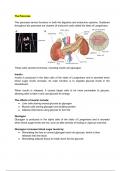
The pancreas serves functions in both the digestive and endocrine systems. Scattered
throughout the pancreas are clusters of endocrine cells called the islets of Langerhans.
These cells secrete hormones, including insulin and glucagon.
Insulin
Insulin is produced in the beta cells of the islets of Langerhans and is secreted when
blood sugar levels increase. Its main function is to regulate glucose levels in the
bloodstream.
When insulin is released, it causes target cells to be more permeable to glucose,
allowing cells to take in and use glucose for energy.
The effects of insulin include:
● Liver cells storing excess glucose as glycogen
● Muscle cells storing glycogen and building protein
● Adipose (fat) tissue using glucose to form fat.
Glucagon
Glucagon is produced in the alpha cells of the islets of Langerhans and is secreted
when blood sugar levels are low, such as after periods of fasting or vigorous exercise.
Glucagon increases blood sugar levels by:
● Stimulating the liver to convert glycogen back into glucose, which is then
released into the blood.
● Stimulating adipose tissue to break down fat into glucose.
The pancreas serves functions in both the digestive and endocrine systems. Scattered
throughout the pancreas are clusters of endocrine cells called the islets of Langerhans.
These cells secrete hormones, including insulin and glucagon.
Insulin
Insulin is produced in the beta cells of the islets of Langerhans and is secreted when
blood sugar levels increase. Its main function is to regulate glucose levels in the
bloodstream.
When insulin is released, it causes target cells to be more permeable to glucose,
allowing cells to take in and use glucose for energy.
The effects of insulin include:
● Liver cells storing excess glucose as glycogen
● Muscle cells storing glycogen and building protein
● Adipose (fat) tissue using glucose to form fat.
Glucagon
Glucagon is produced in the alpha cells of the islets of Langerhans and is secreted
when blood sugar levels are low, such as after periods of fasting or vigorous exercise.
Glucagon increases blood sugar levels by:
● Stimulating the liver to convert glycogen back into glucose, which is then
released into the blood.
● Stimulating adipose tissue to break down fat into glucose.