Homeostasis
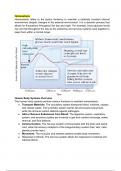
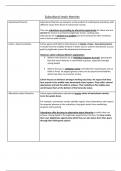
Homeostasis refers to the body's tendency to maintain a relatively constant internal
environment despite changes in the external environment. It is a dynamic process that
allows for fluctuations throughout the day and night. For example, blood glucose levels
rise and fall throughout the day as the endocrine and nervous systems work together to
keep them within a normal range.
Human Body Systems Overview
The human body systems perform various functions to maintain homeostasis:
● Transport Materials: The circulatory system transports blood, nutrients, oxygen,
and cellular waste. The lymphatic system carries fat and excess tissue fluid,
while the immune system defends against pathogens.
● Add or Remove Substances from Blood: The digestive system, respiratory
system, and excretory system are involved in gas and nutrient exchange, waste
removal, and fluid balance.
● Communication: The nervous system communicates with the brain and spinal
cord, while the sensory receptors of the integumentary system (hair, skin, nails,
glands) provide input.
● Movement: The muscular and skeletal systems enable body movement.
● Response to Stimuli: The nervous system allows for responses to external and
internal stimuli.
Homeostasis refers to the body's tendency to maintain a relatively constant internal
environment despite changes in the external environment. It is a dynamic process that
allows for fluctuations throughout the day and night. For example, blood glucose levels
rise and fall throughout the day as the endocrine and nervous systems work together to
keep them within a normal range.
Human Body Systems Overview
The human body systems perform various functions to maintain homeostasis:
● Transport Materials: The circulatory system transports blood, nutrients, oxygen,
and cellular waste. The lymphatic system carries fat and excess tissue fluid,
while the immune system defends against pathogens.
● Add or Remove Substances from Blood: The digestive system, respiratory
system, and excretory system are involved in gas and nutrient exchange, waste
removal, and fluid balance.
● Communication: The nervous system communicates with the brain and spinal
cord, while the sensory receptors of the integumentary system (hair, skin, nails,
glands) provide input.
● Movement: The muscular and skeletal systems enable body movement.
● Response to Stimuli: The nervous system allows for responses to external and
internal stimuli.