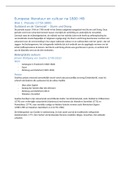
FTCE Elementary Education (Florida Teacher Certification Examination), Exam Bank
FTCE Elementary Education (Florida Teacher Certification Examination), Exam Bank The reading process is made up of these five components: Phonemic Awareness, Fluency, Phonics, Comprehension, and Vocabulary. Components of Emergent Literacy are: Print Awareness, Print Motivation, Oral Language, Letter Knowledge, Phonological awareness, Narrative skills. Emergent Literacy Consists of reading-related knowldge and skills that children develop prior to formal instruction in reading. Print Motivation Interest in and enjoyment of printed materials. Print Awareness Interest and interaction with print; pretending to read. Listening and Oral Vocabularies Words understood when heard; words used in speech. Narrative Skills Ability to retell stories or describe events. Letter Knowledge Understand letter names and shapes. Phonological Awareness Ability to understand the sound of language and manipulate or play with speech sounds. Up to age 5, children are exposed to reading and learn about it without reading. What are some examples of this? Print differs from other visual patterns. Books contain print. Readers glean information from print. Print can be translated into speech. Reading follows certain conventions. Emergent literacy forms the foundation of future reading and writing development. True or False? True Emergent literacy is understood to develop at individual rates. True or False? True Certain criteria that could determine whether or not a child is ready for reading include: Concepts of print, oral language development, and understanding of the alphabetic principle; the relationship between letters (graphemes) and the sounds they represent (phonemes) Grapheme The relationship between letters. Phoneme The sounds that letters represent. Marie M. Clay developed a formal procedure for what? For observing a child's behavior with bookjs to determine the extent of a child's print-related concepts. Marie M. Clay's formal procedures include assessment checks such as? If the child can: Find the title of a book, show where to start reading and locate the last page or end of the book. A critical pre-reading skill is being able to indicate the directionality of what? Print Readers in the U.S. must start where on the page and read to where? The left side of the page and read to the right. How can teachers or parents model directionality in reading? By passing their hands or fingers under the words or sentences as they read aloud. What four dimensions does language have? Speaking, listening, reading, and writing Oral language is the subset of what? Language Oral language has two dimensions, which are: Speaking and listening Listening is the precursor to what? Speaking Children have to _____________ language before they can speak it. Hear Why is oral language important? It provides the mental framework for what words mean and how language works. 1 Oral language starts where? At home What did Hart and Risley investigate in the way of socio/econmic status level? The number and kind of words children heard in terms of their SES. What are the components of oral language? Phonological awareness, semantic understanding, syntactic understanding, and pragmatics. Phonological Awareness A broad understanding of the sound of language and occurs as children begin to hear speech sounds and play with them. Semantic Understanding Understanding the morphology or meanings of words: vocabulary. Syntactic Understanding Understanding the rules for using words in sentences: grammar. Pragmatics Understanding the social and cultural use of langauge. Phonological awareness sub-skills include: Children should be able to distinguish between spoken language from other environmental sounds and focusing on the structure of syllables in words and onset/rime tasks. What happens next when children increase their phonological awareness? They begin to develop their phonemic awareness. How is a phoneme represented? As a letter within slashes (i.e. /b/) Phonemic Isolation Recognition of individual sounds. (What is the first sound in top?) Phonemic Identification Recognition of the same sounds. (What sound is the same in these words? top, ten, tall) Phonemic Categorization Recognition of similar sounds and choosing the different sound. (Which word doesn't beleong? dip, dime, sun) Phonemic Addition / Subtraction Making a new word by adding or subtracting a phoneme. (What word is "stop" without /s/? What word do you get if you add /s/ to the beginning of "top"?) Phonemic Blending Combining phonemes into a word. (What word is /c/ /a/ /t/? ) Phonemic Segmentation Breaking words into separte phonems. (how many sounds are in stop?) Phonemic Substitution Replacing one phoneme with another to make a new word. (What word is formed if the /t/ in tap is replaced with /m/?) When children understand how oral language works, what do they begin to connect? They begin to connect that knowledge to print. Shared reading can help children gain what? It can help children gain an understanding that printed words represent speech. Alphabet knowledge involves understanding what? The relationship between letters and sounds. Alphabetic Principle The understanding that written words are composed of letters and that groups of letters represenet the sounds of spoken words. How many phonemes are in the English Language? 44 The English alphabet has how many letters? 26 There is an exact one-to-one correspondence between letters and sounds. True or False? False. Alphabet knowledge is a precursor to what? Decoding. Decoding is the application of the alphabetic principle to correctly say or read written words with understanding. True or False? True
Escuela, estudio y materia
- Institución
- FTCE Elementary Education
- Grado
- FTCE Elementary Education
Información del documento
- Subido en
- 8 de julio de 2023
- Número de páginas
- 96
- Escrito en
- 2022/2023
- Tipo
- Examen
- Contiene
- Desconocido
Temas
-
ftce elementary education florida teacher certifi