Trespass to land scenario knowledge:
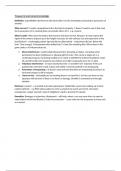
Definition: unjustifiable interference with land which is in the immediate and exclusive possession of
another.
Who can sue?: C needs a proprietary link to the land or property. C doesn’t need to own it but must
be in possession of it, meaning they can exclude others of it . e.g a tenant.
What is land?: Who owns the land to the heavens and down to hell. Airspace- D must respect the
rights of the owners airspace up to the height necessary for the ordinary use and enjoyment of the
land [kelson] – overhanging advert sign had this but [Bernstein] – arial photos did not. Below the
land - [Star energy]- D trespassed when drilled into C’s land. But anything after 300 m down is fair
game under s.43 infrastructure act.
1. Direct interference- could include physical entry, throwing an object, remaining when
permission has been withdrawn or abusing right of entry. This can be a single act or a
continuing trespass. E.g leaving rubbish on C’s land. It CANNOT be indirect [Southport corp]-
oil carried by tide onto property was indirect as D didn’t purposely put it on C’s land.
2. Voluntary interference - D must voluntarily enter c’s land BUT isn’t voluntary if they are
pushed onto someone’s land. [stone and smith]- someone pushed is not trespassing.
3. Awareness of trespassing – D doesn’t need to know that they are trespassing [Conway]- an
innocent trespass is still a trespass.
4. Harm or loss – Actionable per se meaning there is no need for C to have any harm or loss.
Quantum will be lower if there is no harm or damage. [franklin]- unwanted arm through
window.
Defences: consent – e.g invited onto land expressed or implied like a post man walking up to door.
Lawful authority – e.g PACE allows police to enter a property to search and arrest. Necessity -
emergencies. [cope]- burned a strip of neighbour’s land to prevent fire spread.
Remedies: Damages or injunction. Abatement – self-help, where c can use some force to repel or
expel objects off of land [burton]. Order for possession – court order for the trespasser to leave such
as a tenant.
Definition: unjustifiable interference with land which is in the immediate and exclusive possession of
another.
Who can sue?: C needs a proprietary link to the land or property. C doesn’t need to own it but must
be in possession of it, meaning they can exclude others of it . e.g a tenant.
What is land?: Who owns the land to the heavens and down to hell. Airspace- D must respect the
rights of the owners airspace up to the height necessary for the ordinary use and enjoyment of the
land [kelson] – overhanging advert sign had this but [Bernstein] – arial photos did not. Below the
land - [Star energy]- D trespassed when drilled into C’s land. But anything after 300 m down is fair
game under s.43 infrastructure act.
1. Direct interference- could include physical entry, throwing an object, remaining when
permission has been withdrawn or abusing right of entry. This can be a single act or a
continuing trespass. E.g leaving rubbish on C’s land. It CANNOT be indirect [Southport corp]-
oil carried by tide onto property was indirect as D didn’t purposely put it on C’s land.
2. Voluntary interference - D must voluntarily enter c’s land BUT isn’t voluntary if they are
pushed onto someone’s land. [stone and smith]- someone pushed is not trespassing.
3. Awareness of trespassing – D doesn’t need to know that they are trespassing [Conway]- an
innocent trespass is still a trespass.
4. Harm or loss – Actionable per se meaning there is no need for C to have any harm or loss.
Quantum will be lower if there is no harm or damage. [franklin]- unwanted arm through
window.
Defences: consent – e.g invited onto land expressed or implied like a post man walking up to door.
Lawful authority – e.g PACE allows police to enter a property to search and arrest. Necessity -
emergencies. [cope]- burned a strip of neighbour’s land to prevent fire spread.
Remedies: Damages or injunction. Abatement – self-help, where c can use some force to repel or
expel objects off of land [burton]. Order for possession – court order for the trespasser to leave such
as a tenant.