P3: The Problem of Evil & Theodicies
The Problem of Evil:
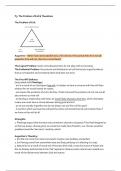
Augustine: “either God cannot abolish evil, or he will not. If he cannot then he is not all-
powerful. If he will not, then he is not all Good”
The Logical Problem: God’s omnicharacteristics do not align with evil existing
The Evidential Problem: the amount and distribution of evil that exists is good evidence
that an omnipotent and omnibenevolent God does not exist
The Free Will Defence:
[associated with Plantinga]
- evil is a result of our God-given free will; it is better to have a universe with free will than
without for we would merely be robots
- we require the existence of evil to be free- if God removed the existence of evil, He would
also remove our free will
- to develop a relationship with God, we must freely choose to love him, which ultimately
means one must have a choice between doing good and evil
- as we are morally imperfect we do not always use our free will for good
- A world in which we have free will and thus there will sometimes be evil is better than if
we have no free will at all
Strengths:
1. Plantinga argues that humans only sometimes choose to do good; if God had designed us
so that we always choose good, we would not really have freedom, our choices would be
predetermined like ‘decisions’ made by robots
Augustine’s Theodicy:
1. Evil did not come from God since God’s creation was faultless and perfect
2. Evil having come from somewhere else and God justifying it in allowing it to stay
3. Natural evil is a result of moral evil of humans (free will); it was the choice of Adam and
Eve to disobey God that led to the ‘Fall’ (epistemic distance) also natural was created as a
result of the disharmony between God and nature
The Problem of Evil:
Augustine: “either God cannot abolish evil, or he will not. If he cannot then he is not all-
powerful. If he will not, then he is not all Good”
The Logical Problem: God’s omnicharacteristics do not align with evil existing
The Evidential Problem: the amount and distribution of evil that exists is good evidence
that an omnipotent and omnibenevolent God does not exist
The Free Will Defence:
[associated with Plantinga]
- evil is a result of our God-given free will; it is better to have a universe with free will than
without for we would merely be robots
- we require the existence of evil to be free- if God removed the existence of evil, He would
also remove our free will
- to develop a relationship with God, we must freely choose to love him, which ultimately
means one must have a choice between doing good and evil
- as we are morally imperfect we do not always use our free will for good
- A world in which we have free will and thus there will sometimes be evil is better than if
we have no free will at all
Strengths:
1. Plantinga argues that humans only sometimes choose to do good; if God had designed us
so that we always choose good, we would not really have freedom, our choices would be
predetermined like ‘decisions’ made by robots
Augustine’s Theodicy:
1. Evil did not come from God since God’s creation was faultless and perfect
2. Evil having come from somewhere else and God justifying it in allowing it to stay
3. Natural evil is a result of moral evil of humans (free will); it was the choice of Adam and
Eve to disobey God that led to the ‘Fall’ (epistemic distance) also natural was created as a
result of the disharmony between God and nature