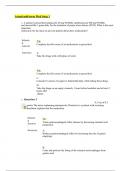
Week 16: Pathophysiology Final Exam(Proctored)
A patient with type 1 diabetes asks the nurse what causes polyuria. What is the nurse’s best response? The symptom of polyuria in diabetes mellitus (DM) is caused by: a reduced ADH response caused by insulin deficiency. the loss of protein across the glomerular membrane. the production of ketones. increased glucose in the urine. The presence of glucose in the urine filtrate draws water into the tubules, causing an "osmotic diuresis." If a patient with diabetes has advanced glycosylation end products (AGEs), what does the nurse suspect is happening in the patient's body? Increased ketone formation AGEs cause tissue injury through a variety of mechanisms, including the production of free radicals and the induction of microvascular/macrovascular disease. AGEs do not affect ketone formation. Tissue/cellular injury Dawn phenomenon Reduction of chronic complications Which information should the nurse include in a lecture on syndrome of inappropriate antidiuretic hormone (SIADH)? SIADH results in excessive: renal retention of sodium and water. renal excretion of sodium without water retention. .........................................CONTINUED............................................
Escuela, estudio y materia
- Institución
- Pathophysiology
- Grado
- Pathophysiology
Información del documento
- Subido en
- 3 de julio de 2023
- Número de páginas
- 25
- Escrito en
- 2022/2023
- Tipo
- Examen
- Contiene
- Preguntas y respuestas
Temas
-
week 16 pathophysiology final exam
-
which information should the nurse include in a le