Osmosis
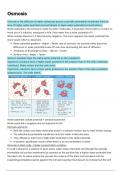
Osmosis is the diffusion of water molecules across a partially permeable membrane from an
area of higher water potential (concentration) to lower water potential (concentration).
Water potential is the pressure create by water molecules, it describes the tendency of water to
move out of a solution, measured in kPa. Pure water has a water potential of 0.
When solutes dissolve in it they become negative. The more negative the water potential the
more solute which is dissolved.
Water potential gradient - higher = faster rate of osmosis. As osmosis takes place the
difference in water potential levels off over time decreasing the rate of diffusion.
Thickness of Exchange surface - thinner = faster
Surface Area - larger = faster
Isotonic solutions have the same water potential as the cytoplasm.
Hypotonic solutions have a higher water potential in the solution than in the cells cytoplasm
(cytolysis). Water enters and the cells burst.
Hypertonic solutions have a lower water potential in the solution than in the cells cytoplasm
(plasmolysis). The cells shrink.
Water potential: solute potential + pressure potential
Water potential is negative and is measured in kPa
Osmosis works by:
Both the solute and water molecules move in a random motion due to their kinetic energy
The selectively permeable membrane only lets water molecules pass
They diffuse an area from a high water potential to low water potential
A dynamic equilibrium occurs when there is no net movement of water
Osmosis in plant cells - higher concentration solution:
If a cell is placed in a solution of pure water, water enters the plant cell through the partially
permeable cell surface membrane by osmosis as the solution has a higher water potential than
the plant cell. As water enters the vacuole the volume of the plant cell increases and the
expanding protoplast pushes against the cell wall causing the pressure to increase but the cell
Osmosis is the diffusion of water molecules across a partially permeable membrane from an
area of higher water potential (concentration) to lower water potential (concentration).
Water potential is the pressure create by water molecules, it describes the tendency of water to
move out of a solution, measured in kPa. Pure water has a water potential of 0.
When solutes dissolve in it they become negative. The more negative the water potential the
more solute which is dissolved.
Water potential gradient - higher = faster rate of osmosis. As osmosis takes place the
difference in water potential levels off over time decreasing the rate of diffusion.
Thickness of Exchange surface - thinner = faster
Surface Area - larger = faster
Isotonic solutions have the same water potential as the cytoplasm.
Hypotonic solutions have a higher water potential in the solution than in the cells cytoplasm
(cytolysis). Water enters and the cells burst.
Hypertonic solutions have a lower water potential in the solution than in the cells cytoplasm
(plasmolysis). The cells shrink.
Water potential: solute potential + pressure potential
Water potential is negative and is measured in kPa
Osmosis works by:
Both the solute and water molecules move in a random motion due to their kinetic energy
The selectively permeable membrane only lets water molecules pass
They diffuse an area from a high water potential to low water potential
A dynamic equilibrium occurs when there is no net movement of water
Osmosis in plant cells - higher concentration solution:
If a cell is placed in a solution of pure water, water enters the plant cell through the partially
permeable cell surface membrane by osmosis as the solution has a higher water potential than
the plant cell. As water enters the vacuole the volume of the plant cell increases and the
expanding protoplast pushes against the cell wall causing the pressure to increase but the cell