Involuntary Manslaughter Exam Technique
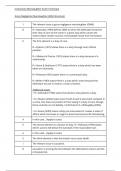
Gross Negligence Manslaughter (IDEA Structure)
I The relevant issue is gross negligence manslaughter (GNM).
D R v Adomako (1994) defines GNM as when the defendant breaches
their duty of care to the victim in a gross way which causes the
victims death. Death must be a foreseeable result from the breach.
E The first element is a duty of care.
R v Dytham (1979) states there is a duty through one’s official
position.
R v Gibbons & Proctor (1918) states there is a duty because of a
relationship.
R v Stone & Dobinson (1977) states there is a duty which has been
taken on voluntarily.
R v Pittwood (1902) states there is a contractual duty.
R v Miller (1983) states there is a duty which arises because the
defendant has set in motion a chain of events.
Additional Cases:
> R v Adomako (1994) states that doctors owe patients a duty.
> R v Wacker (2002) states even if both D and V were both complicit in
a crime, this does not prevent D from owing V a duty of care, though
there could be no civil liability. Confirmed in R v Willoughby (2005).
> R v Evans (2009) states a duty can arise where D creates a state of
affairs which he knows or ought to know has become life threatening.
A In this case… (Apply to case).
E The second element is a breach of duty. R v Holloway (1994) states
did D’s actions fall below the standard of the reasonable man.
A In this case… (Apply to case).
E The third element is that the breach must cause death.
I The relevant issue is causation.
D Causation is proving the link between the defendants actions and the
consequences.
Gross Negligence Manslaughter (IDEA Structure)
I The relevant issue is gross negligence manslaughter (GNM).
D R v Adomako (1994) defines GNM as when the defendant breaches
their duty of care to the victim in a gross way which causes the
victims death. Death must be a foreseeable result from the breach.
E The first element is a duty of care.
R v Dytham (1979) states there is a duty through one’s official
position.
R v Gibbons & Proctor (1918) states there is a duty because of a
relationship.
R v Stone & Dobinson (1977) states there is a duty which has been
taken on voluntarily.
R v Pittwood (1902) states there is a contractual duty.
R v Miller (1983) states there is a duty which arises because the
defendant has set in motion a chain of events.
Additional Cases:
> R v Adomako (1994) states that doctors owe patients a duty.
> R v Wacker (2002) states even if both D and V were both complicit in
a crime, this does not prevent D from owing V a duty of care, though
there could be no civil liability. Confirmed in R v Willoughby (2005).
> R v Evans (2009) states a duty can arise where D creates a state of
affairs which he knows or ought to know has become life threatening.
A In this case… (Apply to case).
E The second element is a breach of duty. R v Holloway (1994) states
did D’s actions fall below the standard of the reasonable man.
A In this case… (Apply to case).
E The third element is that the breach must cause death.
I The relevant issue is causation.
D Causation is proving the link between the defendants actions and the
consequences.