Pharmacology Medications (NUR)
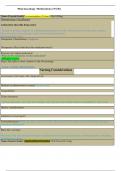
Name (Generic/trade): Acetaminophen (Tylenol) Oral 650mg
Pharmacologic Classification: Para-aminophenol
Action (how does this drug work):
Thought to produce analgesia by inhibiting prostaglandin and other substances that sensitize pain receptors.
Drug may relieve fever through central action in the hypothalamic
Heat-regulating center.
Therapeutic Classification: Analgesics
Therapeutic effect (what does this medication treat?)
Reason(s) for taking medication:
What are the indications for this medication?
Mild pain or fever
Major Side Effects (most common or life threatening):
nausea, vomiting, abdominal pain
Nursing Considerations
Assessments (vital signs, labs, diagnostics):
Methods of administration (route): PO, IV, rectal
Compatibility:
Client education:
calculate daily dose, can cause liver damage, stop drug and seek medical attention immediately if rash occurs
Dietary considerations:
Antidotes/reversal agent:
Contraindications: Drug can cause acute liver failure. Most cases of liver injury are associated with drug doses
exceeding 4,000mg/day.
Black Box warning:
Maximum daily dose includes all routes of administration and all acetaminophen- containing products, including
combination products.
Name (Generic/trade): Aspirin (Bayer Chewable) Oral/Chewable 81mg
, Pharmacology Medications (NUR)
Pharmacologic Classification: Salicylates
Action (how does this drug work): Thought to produce analgesia and exert its anti-inflammatory effect by
inhibiting prostaglandin and other substances that sensitize pain receptors. Drug may relieve fever through central
action in the hypothalamic heat-regulating center. In low doses, drug also appears to interfere with clotting by
keeping a platelet-aggregating substance from forming.
Therapeutic Classification: Anti-inflammatory drugs
Name (Generic/trade): Acetaminophen (Tylenol) Oral 650mg
Pharmacologic Classification: Para-aminophenol
Action (how does this drug work):
Thought to produce analgesia by inhibiting prostaglandin and other substances that sensitize pain receptors.
Drug may relieve fever through central action in the hypothalamic
Heat-regulating center.
Therapeutic Classification: Analgesics
Therapeutic effect (what does this medication treat?)
Reason(s) for taking medication:
What are the indications for this medication?
Mild pain or fever
Major Side Effects (most common or life threatening):
nausea, vomiting, abdominal pain
Nursing Considerations
Assessments (vital signs, labs, diagnostics):
Methods of administration (route): PO, IV, rectal
Compatibility:
Client education:
calculate daily dose, can cause liver damage, stop drug and seek medical attention immediately if rash occurs
Dietary considerations:
Antidotes/reversal agent:
Contraindications: Drug can cause acute liver failure. Most cases of liver injury are associated with drug doses
exceeding 4,000mg/day.
Black Box warning:
Maximum daily dose includes all routes of administration and all acetaminophen- containing products, including
combination products.
Name (Generic/trade): Aspirin (Bayer Chewable) Oral/Chewable 81mg
, Pharmacology Medications (NUR)
Pharmacologic Classification: Salicylates
Action (how does this drug work): Thought to produce analgesia and exert its anti-inflammatory effect by
inhibiting prostaglandin and other substances that sensitize pain receptors. Drug may relieve fever through central
action in the hypothalamic heat-regulating center. In low doses, drug also appears to interfere with clotting by
keeping a platelet-aggregating substance from forming.
Therapeutic Classification: Anti-inflammatory drugs