The Supreme Court and Civil Rights
Membership of the Supreme court
- 9 justices who are nominated by the president
- Appointments confirmed by a simple majority in the senate
- Appointed for life
- Anthony Kennedy served for more than 30 years
- Chief Justice: John Roberts (Bush)
- Newest member: Amy Coney Barrett (Trump)
- No Supreme court justice has ever been impeached, although Associate
Justice Abe Fortas resigned rather than face impeachment
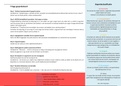
N.B. in the above table Stephen Breyer has been replaced with Ketanji Brown-
Jackson who was appointed by president Biden (D)
Independence of the Supreme Court
- Article III of the Constitution gives Congress the power to change the
composition of the Supreme Court
- Article III states that justices are guaranteed in their role for life and their
salary is protected – they can disappoint their patrons (e.g. former VP Mike
Pence called Justice Roberts a ‘great disappointment’ to American
conservatives and Roberts voted to uphold Obamacare in NFIB v Sebelius in
2012)
- The American Bar Association rates the suitability of the nominees
- Roosevelt considered increasing the size of Congress to pass the New Deal,
but this never happened
- Justices can only be removed through the impeachment process – House
must impeach by a simple majority and the Senate must try the justice
- Supreme Court lacks enforcement powers, e.g. Brown v Board of Education
of Topeka (1954)
The process of Judicial Review
- Marbury v Madison (1803) – first time the Supreme Court declared an Act of
Congress unconstitutional
, - Fletcher v Peck (1810) – first time the Supreme Court declared a state law
unconstitutional
Political importance of the Supreme Court
- demonstrated by Bush v Gore (2000)
- determined that Trump’s executive order was constitutional in Trump v
Hawaii (2018) (Breyer and Sotomayor both read their dissents from the
bench)
- Court upheld the lower court injunction blocking Obama’s DAPA program in
United States v Texas (2016)
Appointment process and the confirmation process
Increasingly political?
- Supreme Court Justices used to be approved by overwhelmingly bipartisan
votes (e.g. Anthony Kennedy 97-0 in 1988)
- Votes now much more likely to be split across party lines, e.g. Brett
Kavanaugh, 50-48 in 2018, Amy Coney Barrett
- The Federalist Society (conservative) and the American Constitution Society
(progressive) are pressure groups who seek to influence judicial
appointments
Strengths and weaknesses
- Trump was able to nominate three justices to the Supreme Court in just one
4-year term (Gorsuch, Kavanaugh and Coney Barrett) while Jimmy Carter
appointed none
- The longest-serving current justice on the court is Clarence Thomas, who
was nominated back in 1991 by George HW Bush
- Senate Judiciary Committee votes on whether there is a need to recommend
further action, but this is only a recommendatory vote
- The Senate has formally rejected 12 nominations since 1789
o The most recent formal rejection was that of Reagan’s nominee
Robert Bork in 1987 by 42 votes to 58 (seen as too conservative and
too closely associated with Richard Nixon)
o Clarence Thomas’s confirmation hearings were dominated by
accusations of sexual harassment and he was felt to be inexperienced
o In 2005, George W Bush’s nominee Harriet Miers withdrew once it
became clear she would not secure the needed votes
o Obama’s nomination of Merrick Garland in 2016 failed
o There were explosive hearings for Trump’s nominee Brett Kavanaugh
in 2018
o Susan Collins voted against the confirmation of Coney Barrett
- Presidents almost always politicise their nominations by attempting to
choose justices who share their political views and judicial philosophy (e.g.
Obama with Kagan)
- The process is a thorough one – the full Senate vote on Brett Kavanaugh was
delayed until an FBI investigation was conducted on the sexual assault
allegations against him
- The Senate Judiciary Committee undertakes detailed scrutiny
- Justices often disappoint their patrons
Membership of the Supreme court
- 9 justices who are nominated by the president
- Appointments confirmed by a simple majority in the senate
- Appointed for life
- Anthony Kennedy served for more than 30 years
- Chief Justice: John Roberts (Bush)
- Newest member: Amy Coney Barrett (Trump)
- No Supreme court justice has ever been impeached, although Associate
Justice Abe Fortas resigned rather than face impeachment
N.B. in the above table Stephen Breyer has been replaced with Ketanji Brown-
Jackson who was appointed by president Biden (D)
Independence of the Supreme Court
- Article III of the Constitution gives Congress the power to change the
composition of the Supreme Court
- Article III states that justices are guaranteed in their role for life and their
salary is protected – they can disappoint their patrons (e.g. former VP Mike
Pence called Justice Roberts a ‘great disappointment’ to American
conservatives and Roberts voted to uphold Obamacare in NFIB v Sebelius in
2012)
- The American Bar Association rates the suitability of the nominees
- Roosevelt considered increasing the size of Congress to pass the New Deal,
but this never happened
- Justices can only be removed through the impeachment process – House
must impeach by a simple majority and the Senate must try the justice
- Supreme Court lacks enforcement powers, e.g. Brown v Board of Education
of Topeka (1954)
The process of Judicial Review
- Marbury v Madison (1803) – first time the Supreme Court declared an Act of
Congress unconstitutional
, - Fletcher v Peck (1810) – first time the Supreme Court declared a state law
unconstitutional
Political importance of the Supreme Court
- demonstrated by Bush v Gore (2000)
- determined that Trump’s executive order was constitutional in Trump v
Hawaii (2018) (Breyer and Sotomayor both read their dissents from the
bench)
- Court upheld the lower court injunction blocking Obama’s DAPA program in
United States v Texas (2016)
Appointment process and the confirmation process
Increasingly political?
- Supreme Court Justices used to be approved by overwhelmingly bipartisan
votes (e.g. Anthony Kennedy 97-0 in 1988)
- Votes now much more likely to be split across party lines, e.g. Brett
Kavanaugh, 50-48 in 2018, Amy Coney Barrett
- The Federalist Society (conservative) and the American Constitution Society
(progressive) are pressure groups who seek to influence judicial
appointments
Strengths and weaknesses
- Trump was able to nominate three justices to the Supreme Court in just one
4-year term (Gorsuch, Kavanaugh and Coney Barrett) while Jimmy Carter
appointed none
- The longest-serving current justice on the court is Clarence Thomas, who
was nominated back in 1991 by George HW Bush
- Senate Judiciary Committee votes on whether there is a need to recommend
further action, but this is only a recommendatory vote
- The Senate has formally rejected 12 nominations since 1789
o The most recent formal rejection was that of Reagan’s nominee
Robert Bork in 1987 by 42 votes to 58 (seen as too conservative and
too closely associated with Richard Nixon)
o Clarence Thomas’s confirmation hearings were dominated by
accusations of sexual harassment and he was felt to be inexperienced
o In 2005, George W Bush’s nominee Harriet Miers withdrew once it
became clear she would not secure the needed votes
o Obama’s nomination of Merrick Garland in 2016 failed
o There were explosive hearings for Trump’s nominee Brett Kavanaugh
in 2018
o Susan Collins voted against the confirmation of Coney Barrett
- Presidents almost always politicise their nominations by attempting to
choose justices who share their political views and judicial philosophy (e.g.
Obama with Kagan)
- The process is a thorough one – the full Senate vote on Brett Kavanaugh was
delayed until an FBI investigation was conducted on the sexual assault
allegations against him
- The Senate Judiciary Committee undertakes detailed scrutiny
- Justices often disappoint their patrons