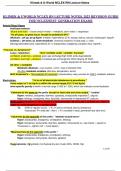
Klimek & U-World NCLEX RN Lecture Notes for next generation NCLEX Upcoming EXAMS
Arterial Blood Gases Acid/base balance: “Bicarb both bolic” = bicarb and pH match = metabolic; don't match = respiratory “As pH goes, so goes my pt. except for potassium (K+)” Alkalosis = pH up, pt up/hyper: irritable, hyperreflexia (3-4), tachyp, tachyc, seizure, borborygmi, hypoK+ Acidosis = pH down, pt. down/shutdown: chemical reactions in body stop = slow lethargy/obtunded/coma, hyporeflexia (0-1), bradycardia, bradypnea, paralytic ileus, hyperK+ “?Causes vs. Symptoms?” Lung = respiratory “Over ventilate under ventilate translate” ventilation under/low = acidosis (poor gas exchange/high CO2) ambu bag bedside ventilation over/high = alkalosis (increased gas exchange/low CO2, blowing off CO2) suction equipment for seizure bedside All other = metabolic Metabolic alkalosis = over suction, vomit = loss of stomach HCL All other metabolic acidosis (diarrhea, dehydration, burns) MAC Kussmaul's = “M=metabolic AC=acidosis” compensatory resp. process for ONLY metabolic acidosis Electrolytes: “1st sx of all electrolyte imbalances is paresthesia.” Urine output of 1 mL/kg/hr is within the normal range (0.5-1.0 mL/kg/hr) urine specific gravity is within a normal range (1.003 to 1.030), which can indicate normal hydration “Kalemias do the same as the prefix except for heart rate and urine output.” *cardiac* Hyper: restless, tachypnea, diarrhea, spasticity, bradycardia w/peaked T, oliguria Hypo: lethargy, bradypnea, ileus, flaccidity, tachycardia w/ depressed ST, polyuria Never push potassium IV, IM or SubQ!!!!!! Not more than: 40 of K+ per L of fluid, or 10ml / hr Hyper K+ most dangerous = cardiac arrest Tx: D5W w/ regular insulin: - K+ in cell out of blood; fast but temporary Kayexalate “K+ exits late”: (Na+) - K+ excreted in stool, permanent but slow (hrs) “Calcemias do the opposite of the prefix.” *skeletal muscle/nerve* Hyper: bradycardia, bradypnea, constipation, lethargy Hypo: tachypnea, tachycardia, diarrhea, agitation, Chevosteck sx = tap cheek - spasm & Trousseau’s = tighten cuff - hand spasm “Magnesemias do the opposite of the prefix.” Hyper: bradycardia, bradypnea, constipation, lethargy Hypo: tachypnea, tachycardia, diarrhea, agitation Hypernatremia: Dehydration; hot flushed dry skin; fluids; DKA, HHNK, DIp
Escuela, estudio y materia
- Institución
- NCLEX RN
- Grado
- NCLEX RN
Información del documento
- Subido en
- 19 de junio de 2023
- Número de páginas
- 38
- Escrito en
- 2022/2023
- Tipo
- NOTAS DE LECTURA
- Profesor(es)
- Klimek
- Contiene
- Todas las clases
Temas
-
u world
-
klimek
-
nclex rn

Documento también disponible en un lote