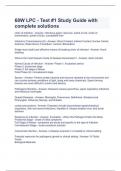
68W LPC - Test #1 Study Guide with complete solutions
chain of infection - Answer- infectious agent, reservoir, portal of exit, mode of transmission, portal of entry, susceptible host Vehicle to Transmissions (8) - Answer- Direct Contact; Indirect Contact; Human Carrier; Airborne; Water Borne; Food-Born; Vectors; Blood-Born Single most useful and effective means of breaking chain of infection - Answer- Hand washing What is the most frequent mode of disease transmission? - Answer- direct contact Normal Cause of Infection - Answer- Phase 1: Incubation period Phase 2: prodromal stage Phase 3: full stage of illness Final Phase (4): convalescent stage Spores - Answer- Protect certain bacteria and become resistant to the environment and can cursive extreme conditions of light, dying and many chemicals. Spore forming bacteria are most difficult to control and destroy Pathogenic Bacteria - Answer- Neisseria causes gonorrhea, upper respiratory infections and infectious meningitis. Droplet Diseases - Answer- Meningitis, Pneumonia, Diphtheria, Streptococcal Pharyngitis, Influenza, Mumps, and Rubella contact precautions - Answer- Diseases include drug-resistant gastrointestinal, respiratory, skin and wound infections, hepatitis A, herpes simplex virus, and acute diarrhea Response to infection - Answer- Incubation - When the Pathogen Enters the Body Prodromal Stage - onset of initial symptoms Full Stage of Illness - symptoms are acute and specific to the type of infection Convalescent Stage - acute symptoms subside nosocomial infection - Answer- a disease acquired in a hospital or clinical setting Potential reservoirs for pathogenic growth in clinical setting - Answer- IV Fluids Foods Biological Materials Equipment host resistance - Answer- Naturally occurring body floras have an antibiotic relationship with pathogens and contribute to an individual's health side effects - Answer- Negative effects or actions other than the desired actions Contraindications - Answer- Situations where you would NOT administer the medication because it may do more harm than good Therapeutic Effects - Answer- Expected positive effect of a drug What factors increase a pathogen's virulence? - Answer- - Ability to produce enzymes that destroy blood cells - Ability to produce enzymes that stop normal blood clotting - Ability to produce enzymes that consume muscle fibers - Ability to form protective capsules What microorganism needs a host to make protein and energy? - Answer- Virus trade name - Answer- The name a pharmaceutical company gives to a drug. It could also be referred to as the brand name. Indications - Answer- The reason the medication is administered is actuallly guided by the conditions being treated Route - Answer- How the medication is administered Dose - Answer- How much of the medications is administered Mechanism of Action - Answer- Certain responses expected in the body can also be described as chemical reaction — how the drug works Side Effects - Answer- Negative effects or actions other than the desired actions Contraindiciations - Answer- Situations where you wouldn't administer the medication because it may do more harm than good. Preexisiting conditions commmonly result in a contraindication Drug Dependence (Psychological Dependence) - Answer- Patient is convinced that they have a need for the drug Drug Depednence (Physiological Dependence) - Answer- The body has developed a physical need for the drug. This occurs commonly in patients being treated for chronic pain syndromes with narcotics. Drug Tolerance - Answer- Progressive decrease in the effectiveness of a drug. This occurs when the patient receives the same drug for long periods of time and requires higher doses to produce the same effect. Drug Interactions - Answer- One drug modifies the action of another drug. Drug interactions are common in patients who take many medications. A drug may enhance or diminish the effects of another drug. Six Rights of Medication Administra
Escuela, estudio y materia
- Institución
- 68W LPC
- Grado
- 68W LPC
Información del documento
- Subido en
- 16 de junio de 2023
- Número de páginas
- 4
- Escrito en
- 2022/2023
- Tipo
- Examen
- Contiene
- Preguntas y respuestas
Temas
-
68w lpc test 1 study guide with complete soluti

Documento también disponible en un lote