COMPOUNDS AND CHEMICAL REACTIONS
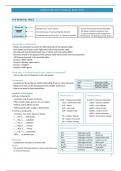
THE PERIODIC TABLE
Atomic No.
Number of p+ in the nucleus -As you move across the periodic table,
Symbol ,the radius of atoms increase in size.
name Shortened way of representing the element
-7 rows correspond to the energy level
Atomic Mass Combined mass of all p+ & n0 in 1 atom of element of the atoms, increasing as you go down
Classification of elements
- Metals are elements found on the left-hand side of the periodic table.
- Non-metals are found on the right-hand side of the periodic table.
- The physical and chemical properties of metals and non-metals differ.
- Elements found in the groups of the periodic table have similar chemical properties.
- 120 known elements in the periodic table.
- Group 1: Alkali metals
- Group 2: Alkaline earth metals
- Group 7: Halogens
- Group 8: Noble gases
What does a chemical formula tell us about a compound?
- Tells us the ratio of elements in the compound.
Compounds Common compounds
Al2O3 Aluminium oxide
- A substance formed by the chemical bonding of two or more elements. H2S Hydrogen sulphide
- Substances that can be decomposed into simpler substances. BeI2 Beryllium iodide
- Atoms are ways in fixed proportions. CaCl2 Calcium chloride
NAMING COMPOUNDS
Binary compounds Examples [Rule 1] Examples [Rule 3]
-Contains only 2 types of atoms 1) KBr = Potassium bromide 3) KOH = Potassium hydroxide
*Non-metal oxides [mono-;di-;tri-oxide] Al2O3 = Aluminium oxide CaSO4 = Calcium sulphate
*Metal oxides [Metal oxide] H2O = Water FeSO3 = Iron sulphate
*Metal halides [No oxygen= Metal+ide] FeO = Iron oxide AgNO3 = Silver nitrate
Tertiary compounds CuO = Copper oxide NaNO2 = Sodium nitrite
-Contains 3 or more types of atoms NiCO3 = Nickel carbonate
*……OH is ……hydroxide SO2 = Sulphur dioxide NH4Cl = Ammonium chloride
CO = Carbon monoxide
*……SO4 is ……sulphate
SO3 = Sulphur trioxide
*……SO3 is ……sulphite
*……NO3 is ……nitrate
*……NO2 is ……nitrite Common compounds
*……CO3 is ……carbonate
H2O Hydrogen oxide Water
*NH4 ……is ammonium…… NH3 Nitrogen nitride Ammonia
HCL Hydrogen chloride Hydrochloric acid
Molecule H2SO4 Hydrogen sulphate Sulphuric acid
- Combination of atoms in a fixed ratio. HNO3 Hydrogen nitrate Nitric acid
Atom Na2CO3 Sodium carbonate Washing soda
- The smallest indivisible particle in nature that takes part CaCO3 Calcium carbonate Limestone
CH4 Methane Natural gas
in chemical reactions.
1
, CHEMICAL REACTIONS
- When a chemical reaction takes place, the bonds between elements are broken and new bonds form between
different elements.
- These changes are called chemical reactions because a chemical change has occurred and a new substance has
been formed.
- We represent chemical change using a chemical equation. [Word equations, diagrams & chemical equations.]
- A synthesis reaction is when 2 elements react to form a new substance.
- In a decomposition reaction, substances are broken down by heat or electricity to form elements.
Sodium + Chlorine Sodium chloride Mercury oxide Mercury + Oxygen * indicates heat was applied
- Electrolysis is the process of using electricity to break down a compound into its elements.
- The numbers in front of the compounds show us the ratio in which the molecules react.
- No atoms are lost or gained during a chemical reaction, atoms are just rearranged.
Balancing Chemical Equations
- The amount of reactants must equal the amount of products.
- Rules for balancing:
Ca + O2 CaO 2Ca + O2 2 CaO
1)O
2)H
Fe + O2 FeO 2Fe + O2 2FeO
3)Other types
ZnS + AlP Zn3P + Al2S3 3ZnS + 2AlP Zn3P + Al2S3 Mg + O2 2MgO 2Mg + O2 2MgO
REACTIONS OF METALS WITH OXYGEN
- Some metals react with oxygen [combustion]
- When metals are burnt in air containing oxygen, the product is metal oxide. [solids]
- Metals form BASIC oxides.
1) Iron (s) + Oxygen (g) iron oxide (s) [Rust]
(Silver grey) (Colourless) (Black solid) Fe + O2 FeO 2Fe + O2 2FeO
- When Fe is burnt and placed in pure oxygen it produces bright orange sparks. Black solid substance is produced.
- Rust: The process in which Fe reacts with O2 in the presence of water and moisture leading to corrosion which
results in the metal becoming metal oxide. Metal oxides result in the metal becoming weak and brittle.
*Rust is an orange-brown solid that flakes off easily
*Salt concentration & Water/air pollution & Moisture Oxygen increase rate of rust.
- Ways to prevent rusting:
*Painting [Keep air away from the metal surface – easiest and cheapest but risk of paint chipping]
*Oil or grease[Moving parts in a machine need to be coated with a layer of water repellent grease/oil – needs replacement ]
*Galvanising [Fe/steel coated with thin layer of zinc (also oxides) but doesn’t flake as easily as Fe. Protects under]
*Electroplating [Thin layer of chromium/zinc is bonded to the surface of metal by electrolysis. These metals don’t
React easily with oxygen.
2) Magnesium (s) + Oxygen (g) magnesium oxide (s)
Mg + O2 2MgO 2Mg + O2 2MgO
(Silver grey) (Colourless) (White powder)
- Mg ribbon burns in pure oxygen with a blinding white light to produce a white powder. This white powder
dissolves in water forming an alkaline solution.
2
THE PERIODIC TABLE
Atomic No.
Number of p+ in the nucleus -As you move across the periodic table,
Symbol ,the radius of atoms increase in size.
name Shortened way of representing the element
-7 rows correspond to the energy level
Atomic Mass Combined mass of all p+ & n0 in 1 atom of element of the atoms, increasing as you go down
Classification of elements
- Metals are elements found on the left-hand side of the periodic table.
- Non-metals are found on the right-hand side of the periodic table.
- The physical and chemical properties of metals and non-metals differ.
- Elements found in the groups of the periodic table have similar chemical properties.
- 120 known elements in the periodic table.
- Group 1: Alkali metals
- Group 2: Alkaline earth metals
- Group 7: Halogens
- Group 8: Noble gases
What does a chemical formula tell us about a compound?
- Tells us the ratio of elements in the compound.
Compounds Common compounds
Al2O3 Aluminium oxide
- A substance formed by the chemical bonding of two or more elements. H2S Hydrogen sulphide
- Substances that can be decomposed into simpler substances. BeI2 Beryllium iodide
- Atoms are ways in fixed proportions. CaCl2 Calcium chloride
NAMING COMPOUNDS
Binary compounds Examples [Rule 1] Examples [Rule 3]
-Contains only 2 types of atoms 1) KBr = Potassium bromide 3) KOH = Potassium hydroxide
*Non-metal oxides [mono-;di-;tri-oxide] Al2O3 = Aluminium oxide CaSO4 = Calcium sulphate
*Metal oxides [Metal oxide] H2O = Water FeSO3 = Iron sulphate
*Metal halides [No oxygen= Metal+ide] FeO = Iron oxide AgNO3 = Silver nitrate
Tertiary compounds CuO = Copper oxide NaNO2 = Sodium nitrite
-Contains 3 or more types of atoms NiCO3 = Nickel carbonate
*……OH is ……hydroxide SO2 = Sulphur dioxide NH4Cl = Ammonium chloride
CO = Carbon monoxide
*……SO4 is ……sulphate
SO3 = Sulphur trioxide
*……SO3 is ……sulphite
*……NO3 is ……nitrate
*……NO2 is ……nitrite Common compounds
*……CO3 is ……carbonate
H2O Hydrogen oxide Water
*NH4 ……is ammonium…… NH3 Nitrogen nitride Ammonia
HCL Hydrogen chloride Hydrochloric acid
Molecule H2SO4 Hydrogen sulphate Sulphuric acid
- Combination of atoms in a fixed ratio. HNO3 Hydrogen nitrate Nitric acid
Atom Na2CO3 Sodium carbonate Washing soda
- The smallest indivisible particle in nature that takes part CaCO3 Calcium carbonate Limestone
CH4 Methane Natural gas
in chemical reactions.
1
, CHEMICAL REACTIONS
- When a chemical reaction takes place, the bonds between elements are broken and new bonds form between
different elements.
- These changes are called chemical reactions because a chemical change has occurred and a new substance has
been formed.
- We represent chemical change using a chemical equation. [Word equations, diagrams & chemical equations.]
- A synthesis reaction is when 2 elements react to form a new substance.
- In a decomposition reaction, substances are broken down by heat or electricity to form elements.
Sodium + Chlorine Sodium chloride Mercury oxide Mercury + Oxygen * indicates heat was applied
- Electrolysis is the process of using electricity to break down a compound into its elements.
- The numbers in front of the compounds show us the ratio in which the molecules react.
- No atoms are lost or gained during a chemical reaction, atoms are just rearranged.
Balancing Chemical Equations
- The amount of reactants must equal the amount of products.
- Rules for balancing:
Ca + O2 CaO 2Ca + O2 2 CaO
1)O
2)H
Fe + O2 FeO 2Fe + O2 2FeO
3)Other types
ZnS + AlP Zn3P + Al2S3 3ZnS + 2AlP Zn3P + Al2S3 Mg + O2 2MgO 2Mg + O2 2MgO
REACTIONS OF METALS WITH OXYGEN
- Some metals react with oxygen [combustion]
- When metals are burnt in air containing oxygen, the product is metal oxide. [solids]
- Metals form BASIC oxides.
1) Iron (s) + Oxygen (g) iron oxide (s) [Rust]
(Silver grey) (Colourless) (Black solid) Fe + O2 FeO 2Fe + O2 2FeO
- When Fe is burnt and placed in pure oxygen it produces bright orange sparks. Black solid substance is produced.
- Rust: The process in which Fe reacts with O2 in the presence of water and moisture leading to corrosion which
results in the metal becoming metal oxide. Metal oxides result in the metal becoming weak and brittle.
*Rust is an orange-brown solid that flakes off easily
*Salt concentration & Water/air pollution & Moisture Oxygen increase rate of rust.
- Ways to prevent rusting:
*Painting [Keep air away from the metal surface – easiest and cheapest but risk of paint chipping]
*Oil or grease[Moving parts in a machine need to be coated with a layer of water repellent grease/oil – needs replacement ]
*Galvanising [Fe/steel coated with thin layer of zinc (also oxides) but doesn’t flake as easily as Fe. Protects under]
*Electroplating [Thin layer of chromium/zinc is bonded to the surface of metal by electrolysis. These metals don’t
React easily with oxygen.
2) Magnesium (s) + Oxygen (g) magnesium oxide (s)
Mg + O2 2MgO 2Mg + O2 2MgO
(Silver grey) (Colourless) (White powder)
- Mg ribbon burns in pure oxygen with a blinding white light to produce a white powder. This white powder
dissolves in water forming an alkaline solution.
2