More Pneumothorax
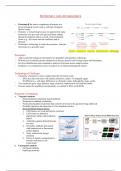
Air in pleural cavity, due to rupture of
lung/chest wall Risk Factors:
causing lung collapse.
-
Male OGD
I
I
- -
Type Respiratory
1 Failure via V/amismatch. Tall,
skinny -CF
/zo
·
Causes
-
-
FH
↑ -
Asthma
Types: Smoking
· -
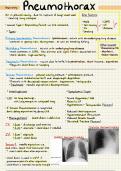
mryspontaneousgrewmothoraxspontaneous occurwithweunderlyinglung
disease
other causes:
Secondary Pneumothorax: occurs with
underlyinglung disease.
-
Pneumonia/TB
·
most common in COPD, then asthma and
cystic Fibrosis exacerbations. -
Marfan's,
high mortality. Ehlers Danlos
·
More severe,
-
Traumatic Pneumothorax: occurs due to knife/rib penetration, trauma,
blunt aspiration.
Requires Chestdrain
Surgery.
·
or
Tension Pneumothorax: pleural cavity pressure atmospheric pressure.
·
can cause mediastinal shiftand diaphragm depression.
·
Presents with decreased venous return, hypotension, tachycardia.
Treatment:needle aspiration/decompression.
·
Investigations: symptoms/Signs:
· ·
CXR:
lung markings, Acute Dyspnoea /
·
SOB
-
no
with lung margin or collapsed
lung. pleuritic CP
-
Hypotension Tachycardia (Tension)
-
+
·
If Tension Pneumothorax
is suspected,
delay
don't aspiration by doing (XR. Reduced Chest expansion
-
HyperresonantPercussion
-
definitive.
Management:Chestdrain is Reduced Breath Sounds
· -
-
Deviated Trachea (Tension)
109.:2cm discharge
=
and monitor
chestdrain ifneeded. TENSION PNEUMOTHORAX
2cm aspirate
· =
+
209.:<2cm aspirate
=
·
2cm chest drain
=
SIMPLE PNEUMOTHORAX
Tension P.:needle aspiration via
2nd interc. space mid-clavicular line.
chestdrain after aspiration.
insert
·
drain is used in 1/2°9.
Chest if
pneumonia persists after aspiration.
·
drain is inserted into axilla
Chest
triangle.
Air in pleural cavity, due to rupture of
lung/chest wall Risk Factors:
causing lung collapse.
-
Male OGD
I
I
- -
Type Respiratory
1 Failure via V/amismatch. Tall,
skinny -CF
/zo
·
Causes
-
-
FH
↑ -
Asthma
Types: Smoking
· -
mryspontaneousgrewmothoraxspontaneous occurwithweunderlyinglung
disease
other causes:
Secondary Pneumothorax: occurs with
underlyinglung disease.
-
Pneumonia/TB
·
most common in COPD, then asthma and
cystic Fibrosis exacerbations. -
Marfan's,
high mortality. Ehlers Danlos
·
More severe,
-
Traumatic Pneumothorax: occurs due to knife/rib penetration, trauma,
blunt aspiration.
Requires Chestdrain
Surgery.
·
or
Tension Pneumothorax: pleural cavity pressure atmospheric pressure.
·
can cause mediastinal shiftand diaphragm depression.
·
Presents with decreased venous return, hypotension, tachycardia.
Treatment:needle aspiration/decompression.
·
Investigations: symptoms/Signs:
· ·
CXR:
lung markings, Acute Dyspnoea /
·
SOB
-
no
with lung margin or collapsed
lung. pleuritic CP
-
Hypotension Tachycardia (Tension)
-
+
·
If Tension Pneumothorax
is suspected,
delay
don't aspiration by doing (XR. Reduced Chest expansion
-
HyperresonantPercussion
-
definitive.
Management:Chestdrain is Reduced Breath Sounds
· -
-
Deviated Trachea (Tension)
109.:2cm discharge
=
and monitor
chestdrain ifneeded. TENSION PNEUMOTHORAX
2cm aspirate
· =
+
209.:<2cm aspirate
=
·
2cm chest drain
=
SIMPLE PNEUMOTHORAX
Tension P.:needle aspiration via
2nd interc. space mid-clavicular line.
chestdrain after aspiration.
insert
·
drain is used in 1/2°9.
Chest if
pneumonia persists after aspiration.
·
drain is inserted into axilla
Chest
triangle.