Three Certainties 2
Thursday, 24 February 2022 19:57
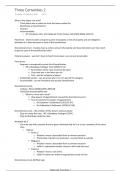
What is the object of a trust?
- Think about who or what the trust has been created for
- Beneficiary or beneficiaries?
- Charity?
- Ascertainability:
○ OT Computers Ltd v First National Tricity Finance Ltd [2003] EWHC 1010 Ch
Fixed trust - where trustees are given a piece of property or lots of property and are obliged to
distribute it in fixed amounts to each of the beneficiaries
Discretionary trust - trustees have a certain amount of property and have discretion over how much
to give to each of the beneficiaries listed
Fiduciary powers - you don't have to hand it out power, you can just accumulate
Fixed trusts
- Requires a conceptually certain list of beneficiaries
○ IRC v Broadway Cottages Trust [1955] Ch 20
▪ All members of the class could not be listed
▪ Clear who was in and who was not
▪ CoA - void for certainty of object
- Evidentially certain - can we prove who is or isn't part of the category
- Ascertainable - can we find them and actually identify them
Discretionary trusts
- Lindsay v Wood [2006] EWHC 2895 QB
- Individual ascertainability test
○ When is a trust not a trust?
▪ How powers of appointment rescued the discretionary trust
▪ Test of certainty for powers of appointment
□ Re Gestetner's Settlement [1953] Ch 672
□ Re Gulbenkian's Settlement [1970] AC 508
Discretionary trusts - the problem of the duty to exercise power
- Duty to survey the class - IRC v Broadway Cottages [1954]
- Duty to distribute inside the class
Re Baden No 2
- Can it be said with certainty that any given individual that he is or is not a member of the same
class
○ 'relative'
▪ Sachs LJ
□ 'Relative' means: descended from a common ancestor
□ The burden of proof is on postulant - no proof treat as outside
▪ Megaw LJ
□ 'Relative' means: descended from a common ancestor
□ Valid if a substantial number shown to fall inside the class
▪ Stamp LJ
□ 'Relative' means: next of kin
□ Valid if trustees can make an appropriate survey of class
Discretionary trusts McPhail type
- Conceptual uncertainty
Equity and Trusts Page 1
Thursday, 24 February 2022 19:57
What is the object of a trust?
- Think about who or what the trust has been created for
- Beneficiary or beneficiaries?
- Charity?
- Ascertainability:
○ OT Computers Ltd v First National Tricity Finance Ltd [2003] EWHC 1010 Ch
Fixed trust - where trustees are given a piece of property or lots of property and are obliged to
distribute it in fixed amounts to each of the beneficiaries
Discretionary trust - trustees have a certain amount of property and have discretion over how much
to give to each of the beneficiaries listed
Fiduciary powers - you don't have to hand it out power, you can just accumulate
Fixed trusts
- Requires a conceptually certain list of beneficiaries
○ IRC v Broadway Cottages Trust [1955] Ch 20
▪ All members of the class could not be listed
▪ Clear who was in and who was not
▪ CoA - void for certainty of object
- Evidentially certain - can we prove who is or isn't part of the category
- Ascertainable - can we find them and actually identify them
Discretionary trusts
- Lindsay v Wood [2006] EWHC 2895 QB
- Individual ascertainability test
○ When is a trust not a trust?
▪ How powers of appointment rescued the discretionary trust
▪ Test of certainty for powers of appointment
□ Re Gestetner's Settlement [1953] Ch 672
□ Re Gulbenkian's Settlement [1970] AC 508
Discretionary trusts - the problem of the duty to exercise power
- Duty to survey the class - IRC v Broadway Cottages [1954]
- Duty to distribute inside the class
Re Baden No 2
- Can it be said with certainty that any given individual that he is or is not a member of the same
class
○ 'relative'
▪ Sachs LJ
□ 'Relative' means: descended from a common ancestor
□ The burden of proof is on postulant - no proof treat as outside
▪ Megaw LJ
□ 'Relative' means: descended from a common ancestor
□ Valid if a substantial number shown to fall inside the class
▪ Stamp LJ
□ 'Relative' means: next of kin
□ Valid if trustees can make an appropriate survey of class
Discretionary trusts McPhail type
- Conceptual uncertainty
Equity and Trusts Page 1