

NURS 5335 Questions with 100% Correct Answers | Verified | Latest Update
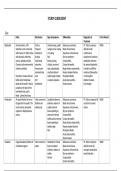
STUDY GUIDE EENT Eye: Patho Risk Factors Signs & Symptoms Differentials Diagnostics & Treatment F/U & Referral Blepharitis Non-Ulcerative: A/W seborrhea; seen commonly with trisomy 21; affects those with psoriasis, seborrhea, eczema, allergies and lice. Chemical and environmental irritants contribute Ulcerative: Involves the lash follicle & the Meibomian glands of the eyelid. May be pustules at the base of the hair follicle that crust & bleed. Lashes break easy. Dry Eye Frequent hordeola or chalazia Facial/scalp seborrhea Immunocompromised state Acne DM Isotretinoin Ocular burning, eyelid margins red w/ scaling or crusting Pain Itching, tearing, chalazia, recurrent styes, photophobia, small ulceration at eyelid margin, broken or absent eyelashes Sebaceous carcinoma, Basal cell carcinoma, Squamous cell carcinoma, Dry eye syndrome, Conjunctivitis, Contact dermatitis, Atopic Kerato-conjunctivitis, Herpes simplex infection, Preseptal cellulitis, Acute dacryocystitis, Ocular rosacea TX: Warm compress; daily lid scrubs; erythromycin, quinolone or bacitracin ophthalmic ointment for anterior blepharitis. Consider oral ABX for resistance (Doxycycline or Tetracycline) Disinfect contacts Lid messages NONE Hordeolum An acute infection of one of the glands in the eyelid. The most common associated organism is Staphylococcus aureus More common in children and adolescents Localized tenderness, erythema, edema of eyelids; internal lesions pointing to external or internal eyelid surface; external lesions pointing to eyelid margin Pain Sebaceous carcinoma, Basal cell carcinoma, Squamous cell carcinoma, Dry eye syndrome, Conjunctivitis, Contact dermatitis, Atopic Kerato-conjunctivitis, Herpes simplex infection, Preseptal cellulitis, Acute dacryocystitis, Ocular rosacea TX: Warm compress; lid scrubs for recurrent lesions NONE Chalazion A granulomatous infection of a Meibomian gland More common in adults Nontender in chronic lesions; localized erythema, edema of eyelids No Pain Sebaceous carcinoma, Basal cell carcinoma, Squamous cell carcinoma, Dry eye syndrome, Conjunctivitis, Contact dermatitis, TX: Warm compress; daily lid scrubs; lid message; intralesional steroid injection NONE Atopic Kerato-conjunctivitis, Herpes simplex infection, Preseptal cellulitis, Acute dacryocystitis, Ocular rosacea Conjunctivitis Inflammation of the conjunctiva covering the front of the eye from a causative agent (bacteria, virus, allergen) Allergic conjunctivitis is seen more in Spring and Summer. Bacterial is seen more in pediatric population. ALLERGIC: Pruritus; conjunctival hyperemia, chemosis; watery or stringy discharge BACTERIAL: Photophobia w/ blepharospasm; mucopurulent discharge w/ eyelash mattering; edema; hyperemia; preauricular adenopathy only w/ hyperacute disorder VIRAL: Acute onset often A/W systemic illness; photophobia or foreign body sensation; preauricular adenopathy; hyperemia; chemosis; watery discharge; classic dendritic corneal lesion present w/ herpes simplex; periocular lesions present w/ herpes zoster opthalmicus RED FLAGS: Subconjunctival hemorrhage, Blepharitis, Dry eye, Pterygium or pinguecula, Episcleritis, Eyelid malposition, Canaliculitis or dacryocystitis, Foreign body, Corneal abrasion, Corneal ulcer, Glaucoma, Lagopthalmos after Bell’s Palsy, Uveitis, Scleritis, Endopthalmitis ALLERGIC: avoid allergen; cold compress; topical &/or systemic medication; (NaphconA, Vasocon-A, Livostin, Emadine [topical decongestants])(Patalol, Optivar [Mast cell stabilizers]) BACTERIAL: topical drops; systemic ABX necessary for gonococcal or chlamydial cause VIRAL: supportive treatment, including cool compress, topical artificial tears Common Sense Stuff: Hand hygiene, use clean wash cloth every time, change pillow cases daily, don’t wear contacts, discard eye makeup Refer to ophthalmology for viral herpetic conjunctivitis and for RED FLAGS Diminished visual acuity, photophobia, severe foreign body sensation preventing pt from keeping eye open, corneal opacity, fixed pupil, or severe HA with nausea Corneal Abrasion Partial or complete defect in the epithelial layer of cells after traumatic event or overexposure to sunlight Overexposure to sunlight, sports, failure to wear eye protection Pain, redness, tearing, photophobia, foreign body sensation Fluorscein stain, C&S TX: Topical ABX (prophylaxis) & systemic pain relievers in abrasions & after foreign body removal, no patching. Urgent referral to ophthalmology for erosions and emergent for ulcers Periorbital Edema Bacterial infections may result from local spread of an adjacent sinusitis or dacryocystitis, from an external ocular infection, or following trauma to the eyelids. The most common organisms are Staphylococcus aureus, Staphylococcus epidermidis, Streptococcus species, and anaerobes, reflecting the organisms that commonly cause upper respiratory tract infections and external eyelid infections. Hordeola, Chalazia, Bug bites, traumarelated lesions, lesions caused by recent surgical procedures near the eyelids, lesions caused by oral procedures, dacryocystitis, Periorbital erythema and edema. Cervical, submandibular, or preauricular lymphadenopat-hy may be present. A tender preauricular lymph node may be suggestive of adenoviral conjunctivitis. Allergic Contact Dermatitis, Bacterial Conjunctivitis (Pink Eye), Carotid-Cavernous Fistula (CCF), Dacryoadenitis, Dacryocystitis, Herpes Simplex, Herpes Zoster, Hordeolum, Orbital Cellulitis, Viral Conjunctivitis (Pink Eye) PE: Be alert for signs of systemic illness (esp. in peds). Look for signs of trauma. VA test & pupillary reaction as wll as EOM. Funduscopic exam. TX: Broad spectrum ABX (Cephalosporin, Ampicillin-Clavulanic acid) F/U exam within 12-24 hours Refer to opthalmologyo r otolaryngology if no response to treatment (for IV ABX) Pingueculum/ Pterygium Degenerative lesions of
Información del documento
- Subido en
- 17 de mayo de 2023
- Número de páginas
- 38
- Escrito en
- 2022/2023
- Tipo
- Otro
- Personaje
- Desconocido

